Voices

  • HerStories Voices: How Do the Dead Drink Tea?

    Alison Lee of Writing, Wishing is a blogging and writing dynamo. She’s a valuable member of our HerStories community, as a contributor to My Other Ex and as a coordinator of our blog tours for that book. Most recently, BonBon Break is lucky enough to claim Alison as an editor. Today Alison writes movingly about a powerful family influence: her grandmother.
    HerStories (3)

    “I want to die.”

    My grandmother said those words to me, my sister, my mother, my father — anyone who would listen, every single day for a period of time which seemed like forever, but it was probably for the few months she was laid up after a stroke. She would call us several times a day, say those four words, and we would mouth well-practiced lines, assuring her that she was very much loved, and no one wanted her to die, least of all herself.

    She assured me that yes, yes she did. What good was life, confined to a wheelchair, unable to go to the bathroom on her own, the last shreds of dignity gone? The cycle of life is cruel. To be old and frail, is cruel.

    She did not die then. She recovered from the stroke, only to break her hip not long after. The death she spoke of so often, in those days of my teenage years, would creep in on us slowly and painfully.


    “Slow down, Grandma!”

    “I think you should hurry up. You and your sister.”

    She always walked quickly, as if her destination and purpose pulled her against her will.  My younger sister and I spent weekends at Grandma’s, where at the crack of dawn, we would wake excitedly because it was market day on Saturday. I loved everything about that huge maze of a place, with perpetually wet floors. The smell that came before the sea of colors. All my senses would be ablaze as I soaked in the freshness of vegetables just pulled from the ground, the sweet stickiness of Malaysian cakes, made with rich coconut milk and rice flour.

    I remember the metallic smell of blood from the poultry section, where we watched with horrified interest, chickens as they were slaughtered.

    Grandma would begin her route, never to deviate, mind you, through the market. The vegetable section was our first stop. Cabbage, spinach, green beans, spring onions, carrots, sweet potatoes, yam, and lotus root (delicious in soups). Of the dozens of vendors, Grandma had her favorites. The bargaining was fascinating, the conclusion always the same. Grandma only paid the prices she wanted to.

    Moving onto the fruit section, Grandma picked the loveliest oranges, always handing my sister and me one each, for us to savor later. Or it could be a distraction from her next stop — for chicken.

    We would peer down from half a floor up to the slaughter section. There was no ceremony in the death of these creatures. They were simply pulled out, held up, and their throats expertly sliced. Sickened as I felt in my stomach, I never turned away a good chicken dish at dinner.

    I became a vegetarian when I was 21.


    “Why do you do that, Grandma?”, as I watched her clean the urn full of what looked like ash mixed with dirt, with stubs of incense sticks embedded deeply.

    “To keep things clean and neat. It’s a sign of respect to your ancestors, those who came before you.”

    My grandmother’s ancestral altar was never a thing of fascination for me. For as long as I could remember, it was always there, prominently placed in a space at the back of the open living area, facing the entrance. At least six feet high and red, it was not just a piece of furniture; it was a physical reflection of my grandmother’s culture (Chinese) and religion (Taoism). It was a thing not to be touched (unless you were cleaning it), but a place to show your respect to the dead, with offerings of fruit and hot Chinese tea.

    I always wondered how the dead could drink tea.


    “You better make plans to come home. It won’t be long now.”

    I was not surprised to receive my father’s call. His mother had been dying for a long time. She seemed ready to meet her husband, long dead at the young age of 45. How do you live without the love of your life for 40 years?

    I was 27 and living in the big city, two hours from home. I had to stay late at the office that day, frantically finishing up work so I could drive home the next day to see my grandmother. My dying grandmother.

    She died that evening, after her youngest son made it to her bedside.

    I did not get to say goodbye in person.

    During the traditional Chinese three day wake, I did not shed a tear. Her dying was expected. She had been bedridden for years, her once robust body, shriveled to a mere 80 pounds. She had gone blind a few years ago, and her mind slowly went with her. She remembered her youth vividly, but could not recall the names of her 30 grandchildren. When I would visit, sitting by her beside and holding her hand, so papery thin, she would run through the names of all her granddaughters, while I silently wept.

    I wish I had visited her more often.

    The dam broke when they nailed her coffin shut, just before the procession to her final resting place. They may as well have driven that nail into my heart. My beloved grandmother was really gone.

    The days of going to the market with her had become just childhood memories. Those angst-filled phone calls of doom (“I want to die”) were reduced to anecdotes, oft repeated for a laugh. However, in that moment when the last nail went into her coffin, they were not just memories and anecdotes. They were tangible reminders that this woman loved me. She was the cornerstone in my young life, a life in which I felt invisible around my own mother.


    One of the only photographs I have of my grandmother, pictured here with my sister, me, and my cousin (I am perched above her left shoulder).

    Rarely a day goes by that I don’t think about Grandma. I miss her of course, but mostly, I regret that I didn’t know her better. I took her love greedily, and in my own childlike way, I loved her back. I never asked why she married my grandfather, a man I never knew, his youthful face enshrined in a large frame at her house. It was a marriage born of matchmaking, my aunt told me. Grandmother was only 18 when she became a bride.

    I never asked her about the two daughters she lost, I only knew that she had lost them.

    I never asked her how she coped with losing her husband when she was only in her 40’s, alone with eight children, the youngest only a few years old. Her oldest son was halfway across the world, pursuing his university education. She did not tell him immediately after his father died, worried she would distract him from his studies. He made the US his home country, years later. Did he regret missing his father’s funeral? Was he ever angry at Grandma for making that decision for him?

    I never asked her what it was like, living in occupied Malaya*, back in the 1940’s. My father told us that sometimes, all they ate was rice soaked in dribbles of soy sauce, for flavor. How did she make money? Who supported them? How did the children get to school and back?

    I only knew her as my grandmother, a gentle quiet woman, who only raised her voice when she really meant business. A woman who bargained with vegetable vendors like it was her job, enjoying every minute. I knew her quirks (ironing her underwear) as well as any child who spent the majority of her childhood at her home, would. I knew her entire repertoire of Chinese dishes, and they were all delicious. I never met anyone else who could reproduce the dishes of my childhood, although my mother gave it a good go. I knew that as much as she enjoyed the huge celebratory party her children threw for her 70th birthday, she was slightly uncomfortable with all the attention. I can see that in the family photo we took, probably the only time all of us were in one place at the same time. I knew that she hated relying on other people, when her health problems took away first, her physical abilities, then her mental acuity.

    I did not know how much her death would blow such a big hole in my life. For 100 days after her death, I wore black. It was not a conscious decision — I was in my 20’s and black was my go-to-color. After realizing I had worn the same color for two weeks, it seemed like the most natural thing to do to honor her memory.

    I have a lot of bright, happy yellow in my life now, because at 38, I am honoring her life. I enjoy a good back and forth on prices with market vendors. I give a nod of respect to any bright red ancestral altars I see in public places. I scour her old photo albums, looking for more hints into a life I am itching to learn more about. I ask my aunt and parents endless questions, probing their memories about the woman I only know as Mah Mah (Cantonese for paternal grandmother).

    I do not, however, iron my underwear.

    I honor her life with the stories I will tell my four children about the great grandmother they will never meet, but who lives on in me.

    I am no longer a vegetarian. Mah Mah would approve.

    *Before Malaysia gained independence from the British in 1957, it was known as Malaya.
    Alison Lee bioAlison Lee is a former PR and marketing professional turned work-at-home mother. After a 10-year career in various PR agencies, and of the world’s biggest sports brands, Alison traded in product launches and world travel, for sippy cups, diapers, and breastfeeding. Alison shares stories of motherhood on her blog, Writing, Wishing. She is one of 35 essayists in the anthology, My Other Ex: Women’s True Stories of Leaving and Losing Friends. In 2012, she founded Little Love Media, a social media consultancy. Alison lives in Kuala Lumpur, Malaysia with her husband and four children (two boys and boy/ girl twins).
    Keep reading

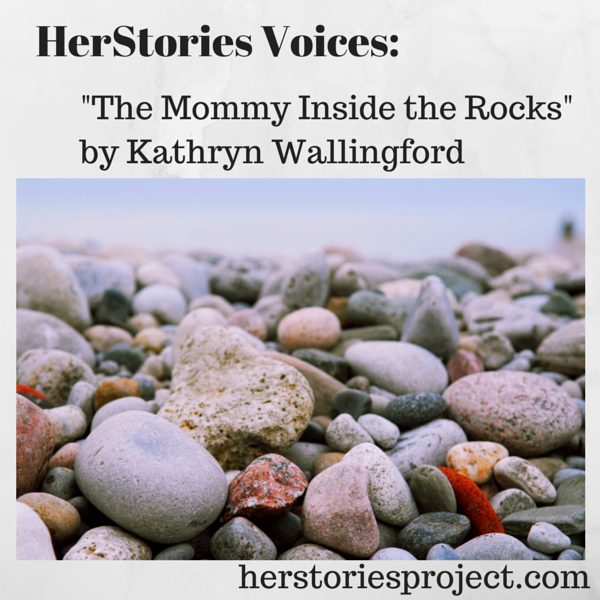
  • HerStories Voices: The Mommy Inside the Rocks

     We’re so happy to present to you the second HerStories Voices column. This week’s essay is from Kathryn Wallingford. In Kathryn’s own words, her essay is about “rocks, remembering why I love Toni Morrison, and teaching my son to put apples in his pocket. How do we allow the continued growth of an imagination when we send our children to a system of order, structure, and real time? This is a mother clinging onto her son.”
    For May, in recognition of Mother’s Day, we’re looking for essays about a moment or an experience during early motherhood that changed you. Our upcoming anthologies Mothering Through the Darkness: Women on the Postpartum Experience and So Glad They Told Me: Women on Getting Real About Motherhood both are about these early days, months, and years of new motherhood. Tell us your stories of about a “moment of change” as a new (or new-ish) mother! For more information about submitting to HerStories Voices, read here. Submit your motherhood-themed essays to us by May 1st!
    HerStories Voices--The Mommy Inside the

    In the beginning, my beginning, I marked time with a rock in my pocket. The smooth glass of the eastern shores. The Bright Angel shale reminded me of the hot Arizona sun. I stole the granite of Wyoming and lined my freshman dorm with pieces of Appalachian quartz.

    Eventually the rocks were thrown into one box. Sand, dirt, silt, and clays sifted together. They were the hot desert air, those cool Montana nights, and the Himalayan sunset, bounded and carried from home to home.

    Until finally my four-year old found them.  One cold, winter day they made their way into his hands.

    “Can I paint on them? Can I give them to my friends at school?” he asked.

    With no hesitation, I replied, “Of course.”

    What else was I saving my memories for? To be thrown on another window sill?

    So he pulled the rocks out one by one.

    It was his Mommy Before.

    Mommy in-love on Roan Mountain.

    Mommy scared, almost ready to jump into Crater Lake.

    I tried to tell him the life behind each rock so he could be there too. In the 5 years that he has been on this earth I have had two additional children. As a result, I have been pregnant for approximately 550 days, a nursing mother for almost 720. He deserves to know this Mommy.

    The Mommy inside the rocks.

    As he paints I also remember how much I love these places. But it is hard to describe what he can not see. His Mommy before. I do not have many pictures to correspond to the collection.

    He picks up the rocks one by one and his questions multiply.

    “How cold was the lake? What did the lake look like? Were you scared? Did you want to jump? What did it feel like? How big was the mountain? You climbed into a canyon? Where was Daddy?”

    The questions seem to exhaust him too. Moving away from my stories and the rocks and my geology 101 lesson, he begins to create a picture of his own. He goes into his own world and I migrate to the laundry pile that needs to be folded. But he soon comes to me with his creation.  His work is red paper smothered in glue and white dots.  I make out my name. I make out his name.

    “It is beautiful. What is it?” I ask.

    “It is a rocket ship taking us to the moon and people are throwing snowballs at us,” he answers.

    “I love it.” And I do.

    I am not sure how my rock collection gave away to the artistic expression or how to explain if snow could or could not land on a spaceship.

    This was his understanding of our conversation. A new world has came alive.

    He has started kindergarten and real time replaces the abstract. School supply list- a plastic, red folder. 24 twistable Crayola crayons. Room- # 223. Rules- three warnings and then time out. “Zero-voice” in halls. 10:45 am- lunch. Curriculum- Science and Math in Spanish. Reading and Writing in English. Estoy contento. There is a correct way to say contento. He will be corrected.

    Before his first day he asks me how to open a 3-ring binder. There is a correct way to do this too. By the end of the day he is tired. There seems to be less time to chat and rummage through a box of rocks.

    In her poetry collection, Life on Mars, Tracy K. Smith writes, “We move in an out of our rooms, leaving our dust, our voices pooled on sills. We hurry from door to door in a downpour.”

    I read this and think about how badly I am getting drenched. My forgotten voice, my racing legs. Where am I going? In and out. Drop off kids at school. Change dirty diaper. Nurse the baby. Time to cook, for who else is going to cook?  Cook dinner. Stop, snap a picture.

    And now he has homework. He knows the bad kids and the good kids. He joins the race. The downpour continues. We both get drenched.

    We race for explanations and for the finite moments, to explain and to store memories. When are we left to imagine, believing in what you can not see?

    As a teenager I read Toni Morrison’s Song of Solomon when I heard about Heaven’s Gate cult mass suicide.  Thirty-nine individuals from Heaven’s Gate took their lives with the belief they could reach an alien spacecraft following the comet Hale-Bopp.  I watched the news coverage from a condo in Steamboat Springs, Colorado. It was my spring break. I obsessed over the news reports when I was supposed to be snow skiing. I tried to imagine the world was really going to end.  It seemed crazy. It seemed unimaginable.

    But as I dismissed the cult members as lunatics I read Song of Solomon engrossed with the character of Pilate, the woman born without a navel. “She was a like a large black tree,” Morrison writes.

    I tried to imagine such a woman. I remember feeling small and that the world was large. I did not know how 39 people could kill themselves. I did not know if a woman could really be born with a smooth stomach.

    I was 18 and and my world was being deconstructed.

    And now here I am again. I have a five year-old to remind me to raise my eyes a bit. To look a little farther. He needs to see outside the present moment. He wants to see a dinosaur. He wants to know how you get to heaven. On an airplane? I need to get him there. Life past our five senses.

    I pick him up for school and he tells me about the fire drill and sings, “Down by the banks where the watermelon grows…” It is his favorite from preschool. He tells me about the school rules and what he had for lunch. I watch him fasten his seatbelt and we drive in silence.

    When we get home I put away the book bag and the homework and we walk outside.We dig at ants, we suck on popsicles. We smell cut grass. The sound of rockets in sky become catalyst for the microcosm of the unknown. He asks if the rocket ship can see us. He asks if I would rather be a bird or a rocket.

    What a damn good question! I tell him a bird.

    He begins to climb our crab- apple tree.

    In two years, he will probably not want me to watch him climb the tree.

    In five years, he will have soccer or band or art practice after school.

    In ten years, he will have his driving license. He will not want to climb the tree.

    In fifteen years, he will will likely be living elsewhere.

    He sticks an apple in his pocket. I do not tell him that the apple will not fare well in this pocket. He finds another apple to store away and climbs closer to the sky.

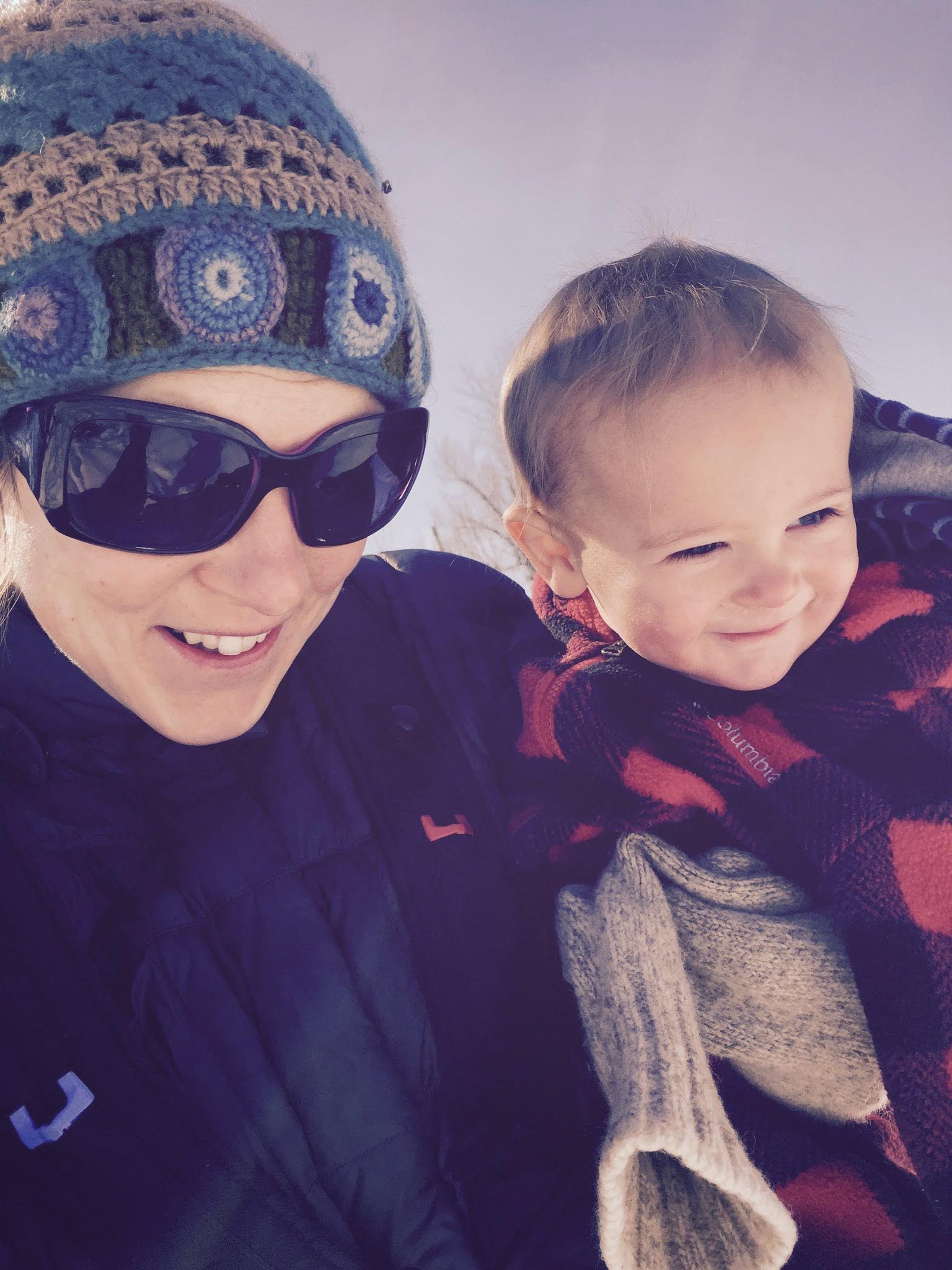
    FullSizeRender (17)Kathryn lives in Lexington, Kentucky with her three sons and husband. On good days she writes about religion, mothering, and the natural world. You can find more of her work in Brain, Child and Literary Mama. Visit her blog at http://thisisenough.weebly.com/

    Keep reading

  • HerStories Project Voices: Dancing At the Edge of the Spotlight

    We at HerStories love personal essays. We love reading them. We love writing them. We love teaching them.

    The idea for HerStories Voices came from teaching our personal essay writing class. We were blown away by the quality of the writing from our students, and we wanted a way to recognize in our own small way that kind of writing: stories by women about the moments — big and small — that shape our lives.

    We can’t wait to share this first story with you by writer and teacher Rachel Furey. This essay spoke to me (Jessica) as an introvert, as a sibling, and as a romantic. It’s about the discoveries that we can make when we don’t put ourselves in the spotlight. We love Rachel’s clear, self-aware voice.

    Don’t forget to check back in two weeks for our next Voices essay and for an announcement about our next HerStories Voices call for submissions… We think — and hope — you’ll like it!

    herstoriesproject.com

    I’ve always been quiet. Not just in the sense of being soft-spoken. I also avoid the spotlight at all costs. Or, if we’re sticking to the light metaphor, I even do my best to stay out from under porch lights.

    I’m the sort of person who refrains from taking a ticket for door prizes. If someone insists, I squeeze the ticket in my sweaty palm and pray my number isn’t called. Once, when our birthdays became the numbers through which door prizes were earned, I lied about my birthday to avoid having to standup in front of twenty people and pick a book as a prize. And I’m a writing instructor. I dig books. I know how crazy this all sounds, but instinct kicks in and this is the sort of thing that happens.

    In second grade, I threw-up during our morning assembly. Right in the middle of “America the Beautiful.” Vomit was running all down my hand and arm, dripping to the floor. And I still couldn’t say anything. I just stood there like a vomit fountain while everyone around me continued to sing and the kid standing next to me shot me a crooked smile that either meant he was really into the song or he thought I was the most messed up person he had ever seen. I stood there until a teacher finally discovered me and led me off to the nurse.

    My life is full of moments like this. I once played three plays of an intramural basketball game with a cut above my eye, blood easing its way down my cheek because I didn’t want to be that person who stopped the game—didn’t want that college kid with the first aid kit taking a good long look at me while everyone on the court watched on. When I came down with shingles in my late twenties, I hopped onto my bike and rode to the doctor because it was easier than calling up a friend and saying, “Hey, I have this weird rash that the internet says may or may not be shingles, so do you think you could give me a ride?”

    The biggest fight I ever got into with my sister was over a school assignment that required interviewing a dozen people. Neither of us wanted to do it. We cranked out papers like machines—we went on to graduate first and second in our class—but interviewing people, now that threw us for a loop.

    During my freshman year of college, when I felt like I had a dozen older sisters—what I’d dreamt of for so many years—I wrote my own version of “’Twas the Night Before Christmas,” put the names of my dorm-mates in it and taped it to their doors at four in the morning when no one would be awake. I didn’t sign my name. I wanted them to know they were loved, but I didn’t want them to know that it was me who adored them so much.

    In ninth grade, when I read To Kill a Mockingbird, my favorite scene wasn’t one of the courtroom ones or even a moment with Scout. It was that scene toward the end of the book when Mr. Tate tells Atticus he can’t go “draggin’ [Boo Radley] with his shy ways into the limelight.” I had to close the book for a minute. I’d never felt so understood. I couldn’t believe that someone actually got it.

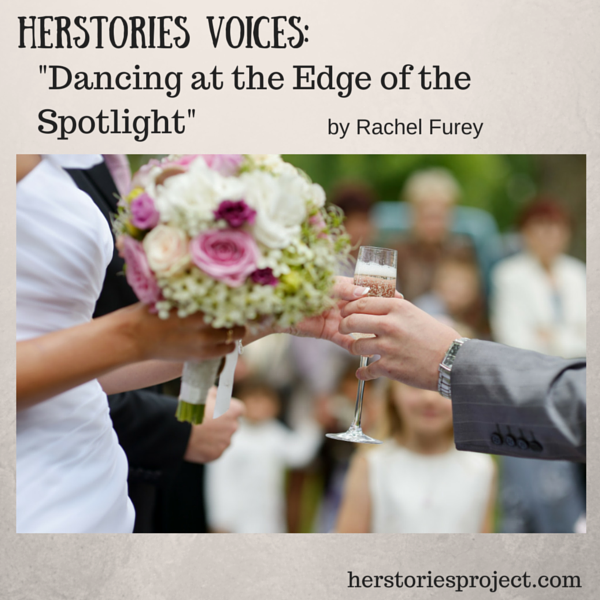
    But don’t mistake this to mean that I altogether abhor the spotlight. I’m human. I want to be a part of the big moments. I crave adventure. I even like being noticed on occasion. So when my brother and fiancé asked if I’d get ordained and be the one to perform the ceremony at their wedding, I said ‘yes’ even though it meant a spotlight moment.

    Sure, I was nervous as all hell. It was my brother’s big day. It was a bigger life changer than the high school graduation ceremony at which I had to make a speech. If I blew it, I was tarnishing the start of something special. I’d have families on both sides to answer to. I wore a black shrug for a reason: to hide the sweat.

    I stood on the edge of a golf course under a wedding arch. The flowers woven into the arch’s frame bobbed in the breeze. My brother stood beside me. We were in front of the audience—on the stage, so to speak—and the beginning was perfect because not a soul looked at us. They were all staring at the bride. My brother threw a shy smile my way and then watched his soon-to-be wife come down the aisle. When the bride arrived and my brother took her hand, the two of them—both taller than me—hid me. In a good way. In the pictures, you can see my head below and behind their chins. I was like the set for the climax of a Tony award-winning play.

    My voice cracked at first, and I could tell I wasn’t loud enough. No surprise there. I squeezed the binder that held my script. I kept reading. My tongue started moving more smoothly. As my words found an even pace and cameras flashed, it occurred to me that I was in the spotlight in the very best way. I was dancing at the edge of it. My words were coming out, but they didn’t matter half as much as the people in front of me. So it was easy to keep talking.

    At the edge of that spotlight, I got to see things no one else did. I saw tears slip down the bride’s face, saw my brother’s eyes track those tears, heard the bride’s sniffles, my brother’s shoes shifting in the grass beneath us. I handed over the rings, caught the fine tremors in their fingers. I was close enough to smell the flowers above us. I was close enough to hear both of them breathing. At one point, I swore we all locked eyes. All three of us. I know that’s pretty much impossible to do, but that’s what I felt dancing at the edge of the spotlight.

    Rachel FureyRachel Furey is a Writing Instructor at Lincoln University of Missouri. She earned her PhD from Texas Tech and her MFA from Southern Illinois University. Her work has appeared in One Teen Story, Hunger Mountain, Crab Orchard Review, Fifth Wednesday Journal, Chautauqua, Women’s Basketball Magazine, and elsewhere. She is a winner of Yemassee’s William Richey Short Fiction Award and Sycamore Review’s Wabash Prize. Her story “Birth Act” was listed as a Distinguished Story of 2009 in Best American Short Stories.

    Want to submit to HerStories Voices? Click here!

    Keep up with us and our community of women writers: follow us on Facebook!

    Keep reading