Guest Post

  • You’ve Got a Friend in Me

    We are excited to share a guest post today from My Other Ex contributor Leah Vidal. I got the pleasure of meeting Leah in person at the BlogHer conference in July, and she is just as warm, dynamic, and inspiring in person as she is on the page. I think you’ll love this powerful post from Leah about teaching her twelve-year-old daughter about friendship, social circles, and self-worth. ~Stephanie

    I hope I find friends who like the same things I like. What if no one likes Dr. Who or Sherlock Holmes, the BBC version of course, or art or reading the same books I read? What if no one knows who Loki is or Tom Hiddleston or that Benedict Cumberbatch plays the role of Sherlock better than anyone in Sherlock Holmes history?”

    The questions tumbled from her lips like drops from the sky, raining down on me, covering me in a film of indecision.

    I looked at my twelve-year-old daughter who took her last school by storm in her knee-high rainbow socks and high top Converse, who wore her hair naturally curly no matter how many people offered to straighten it for her and was struck by the fact that all she hoped for was finding people whom she could connect to on a deeper level. She wasn’t worried about what others would be wearing, even though this will be her first time in a public school with no uniforms. She wasn’t worried about her hair or her weight or wearing the “right outfit” the first day of school.


     I allowed myself to just sit and be proud of her for a moment and collected my thoughts before responding to her, knowing she would hang on my every word as she so often does when she’s troubled, as though each piece of wisdom I share is wrapped in gold, shiny and promising, and worth its weight in…well, gold.

    I tried to remember what it was like at her age, when kids grouped together based on athletics, academics, arts, etc. I tried to remember what it felt like to stand amidst one group, while longingly looking at another knowing in my heart of hearts that I would only ever experience them from afar. I tried to remember why we felt it was so important to remain within our separate, little circles instead of letting them merge and overlap, allowing each individual to share their unique personality and interests with others all the while making us each better just by interacting. Why was it imminent that we only allow ourselves to be ourselves within the safety of one group when we had so much to offer each other – not to mention so much to learn from others?

    I’ve always told my children with every one of our moves that they only need one good friend to make it feel like home. And, I still believe that with all my heart. However, I also believe that we become so much more when we put ourselves out there and interact with people whom we can’t imagine having anything in common with and grow tremendously from the simple act of reaching out, or letting someone new into our circle of one.

    So, I shared these exact thoughts with my daughter, but there was still more I wanted to say. I’m not sure she’s old enough to really get this yet, but maybe she’ll find herself remembering some of it at some point this year or next and suddenly she’ll get it, really get it. So, while I had her undivided attention I said:

    “Know that these groups, these circles, these labels that are the end all be all at your age won’t matter at all as you get older. As time passes and you live, truly live, you will be surprised by the friends that surround you. You will understand that you don’t need to share the same interests to be friends because friendship is so much more than watching the same TV show or enjoying the same book. You will have those friends and share a laugh over a movie quote from time to time, but you will also find yourself learning more about you, the real you, from those that you have nothing in common with because they are the ones who will bring new things to light, who will spark your interest in something new, who will help you grow in ways you never thought possible.

    So, as you go about your first weeks in a new school embrace those who reach out to you even if they may not be familiar with your interests and more importantly be that person for others. Do not feel like you have to give up a part of you to be accepted or make friends. You are enough. Your differences may just be what helps someone else grow. More importantly, as you navigate your way through the ups and downs of friendship that will undoubtedly come at your age, know that you have a friend in me.

    Always.

    I also covered her mirror with these motivating stickers so she’s reminded on a daily basis that she’s amazing just the way she is and that she’s enough.


    im-enough2-2

    28dff04a-21c7-4d3d-aed4-6f76a66cfaf9

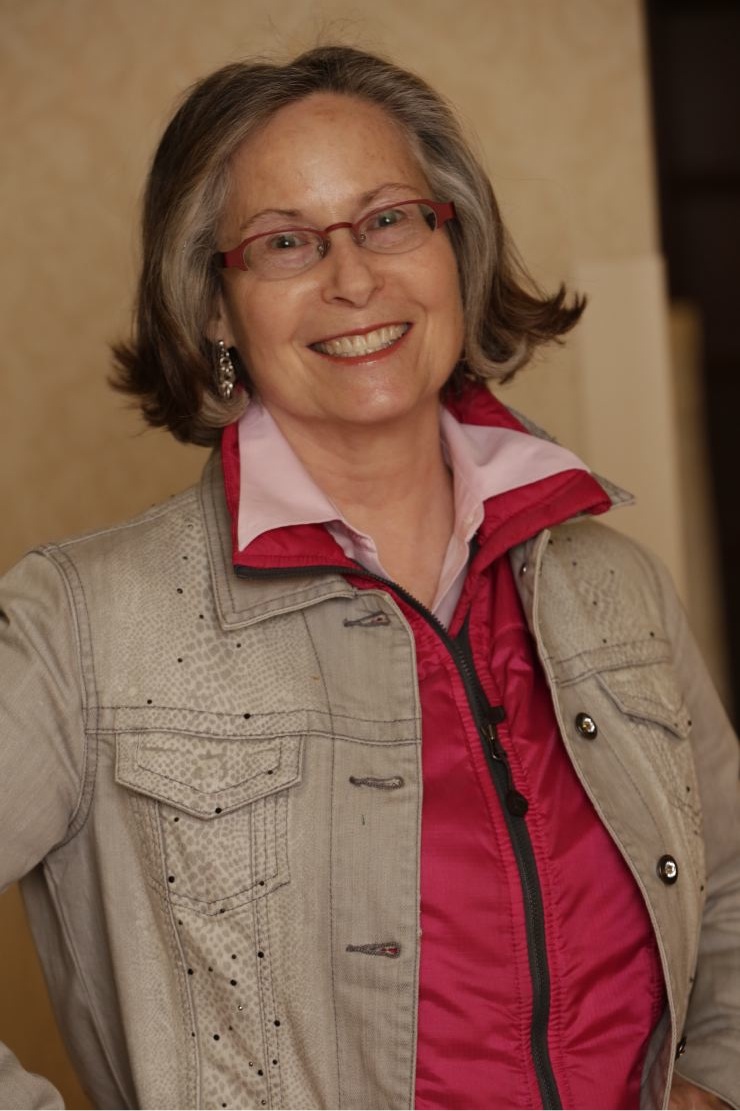
    Leah Vidal, author of Red Circle Days and writer at Little Miss Wordy explores BIG lessons from life’s little moments —those that plant the thought provoking seed of self discovery. She believes it is these moments that are life’s biggest lessons. Leah is a 2014 BlogHer Voice Of The Year and her writing has been syndicated on BlogHer, featured on the Erma Bombeck site, Freshly Pressed on WordPress and highlighted on Fitness and Parenting sites. She has been featured on PubSlush Women Of Wednesday and is currently working on her second book.
    Keep reading

  • How to Save a Friendship With Confrontation

    cherylsuchorsguestToday we have a guest post from one of the contributors to My Other Ex: Women’s True Stories of Losing and Leaving Friends. Cheryl Suchors‘ essay for My Other Ex is called “Going Without Sugar.”  It’s about the painful and confusing end to a long friendship. Her guest post today is about what happens when we put the spotlight on a friendship and confront the issues in this relationship. 

    Linda had disappeared. From my life, I mean. She didn’t call or email anymore. She had no time to get together when I asked. She and her husband were going through a rough patch and I knew work kept her busy. But I wasn’t happy. Tired of waiting for things to improve, I found myself in that place where the hurt of missing her had morphed into being angry enough that I began to back away from the relationship myself. Perhaps you’ve been there, too?

    But good friendships take years to develop, and I didn’t want to lose this one. Rather than slink away, I decided to step up. Which meant saying something to Linda despite the fact that I’d rather get a pap smear than confront a friend.

    It took a couple of weeks, but I called her, my opening lines in hand. First, I listened—quietly but not patiently—to her grumble through the latest marriage grievances. When she finally paused for breath, I jumped in. “So what’s happening with our relationship anyway?”

    My heart skittered. “From my point of view,”—I carefully acknowledged mine wasn’t the only point of view—“it feels like you’ve dropped out of our friendship because of work and things with Donald. You’ve become unavailable.” I made myself say this matter-of-factly, with no heat, despite my leaping pulse.

    She surprised me. “That’s true! It’s true. And it makes no sense. Right now I need more connections because he’s my best girlfriend and all my eggs are in one basket.” She went on, giving me time to breathe, and to figure out what to say next.

    I said we should each figure out what we wanted from our relationship. “Let’s think about it and then we can have another conversation.” This is going well, I told myself. We’ll meet a few weeks from now so I can hang up soon and go inhale some ice cream.

    She surprised me again. “Let’s do it tomorrow.”

    We met for lunch. As soon as we’d ordered our grilled fish, she began. “I don’t like walks where you’re time-bound because you have to pick up your kid. And walks with your little doggie, despite how cute she is, are not my idea of walks. Your attention is too diverted. It’s like having a little kid along and then all the dog people stop and talk.”

    Well, how was I supposed to get the dog walked if I didn’t bring her with me? Who could not love Juniper? And Linda chatted more with the dog people than I did. Besides, this wasn’t what we agreed to talk about anyway. Was it?

    Not that it was easy, but I reined in my defensiveness. “Okay. It saves time for me to walk with Juniper and you together, but I can see what you mean.”

    Linda nodded, pleased.

    My turn. If she could raise annoying habits, so could I. “Often when we talk, it’s as if everything is of equal importance to you—the seed in your birdfeeder, my surgery, the conversation you had standing in line at the Post Office, your mother. I don’t like spending so much time focusing on trivia. And I feel like I have to work to squeeze my topics into the conversation.”

    She looked straight at me. “Oh, you’re very good at taking care of yourself.”

    “What’s that supposed to mean?” I refolded my napkin. Thought about throwing it at her. Took a few breaths. “Let me ask you something. When you tell me things, do you feel heard?”

    She considered. “Not always. Sometimes I feel like you’re not . . . attending.”

    I had to laugh. “You feel like I squeeze my stuff in all right but don’t really pay attention to you and your stuff?” She nodded. I leaned back in my chair, grinning, and threw up my hands. “I feel exactly the same!”

    Linda found this pretty funny, too. Friendships, we decided, must follow a universal formula. We each want to be, as Linda had put it, attended to. And we want it in the exact proportion to which we feel we are giving it to our friend who doesn’t, not nearly enough anyway, return our generosity.

    I wasn’t finished. “Listening to you I often feel myself being sucked down this giant rat hole. I have no idea why we’re going there, I just know it’s not where I want to go and I can’t see how it’s meaningful to either of us.”

    “You’re so busy all the time whirring around, so tight on time with so many balls in the air, you never have enough time. I have an associative thinking style and you have a more curt—”

    “Linear!”

    “Okay. Where’s the waitress anyway? I never got my cranberry juice.”

    We paused to regain our equilibrium. I suggested we create a code word, something each of us could use to signal the other was doing the thing that drove her crazy.

    “’Rat hole’,” I offered.

    “No way. Too pejorative. Plus it only describes my end of the issue.” She thought some more. “How about ‘time/object’?”

    “What on earth does that mean?”

    We ping-ponged suggestions back and forth until dessert arrived. “I’ve got it!” Linda cried. Her eyebrows lifted and her eyes opened wide. “Rat-whirr!”

    I tried it out. “’Rat-whirr. ‘Rat’ for you and ‘whirr’ for me. Rat-whirrrr. I love it!

    But is it a verb? You’re rat-whirring again?”

    Linda guffawed. I howled. “Or, no, a noun. ‘Help! I’m the victim of a ratwhirr!” We doubled over, pounding the tablecloth. “Then there’s the adjectival form. ‘This has degenerated into a most ratwhirrish conversation!”

    From then on, our negotiations flowed. I agreed to leave Juniper at home on our walks. Linda agreed to keep our phone conversations shorter and more to the point. She would call more often. I would attend better when she did.

    Working hard at being clear but not angry or defensive, restating the other’s position and using humor had brought us back together. “I think we’ve done a damn fine job on this friendship business,” I said. “To us!” I clinked my water glass against her juice.

    “Compared to what I’m going through with el husbando, this was cake,” Linda said.

    I smiled. I didn’t mention her tap-dancing right foot.

    CherylsuchorCheryl Suchors came to writing after a career in business, and her work has mostly appeared in literary journals. At age forty-eight, she decided to climb forty-eight mountains. Her nearly finished memoir (surprisingly titled 48 Mountains) describes how hiking sustained her through cancer and the death of her hiking buddy. She lives with her husband and plants near Boston and visits her daughter, out on her own in Washington, DC, as often as possible. Cheryl posts about hiking, writing, nature and life on her blog, Go For It: One Approach to Living.


    Keep reading

  • Nature Vs. Nurture: Friendship Styles and Our Kids

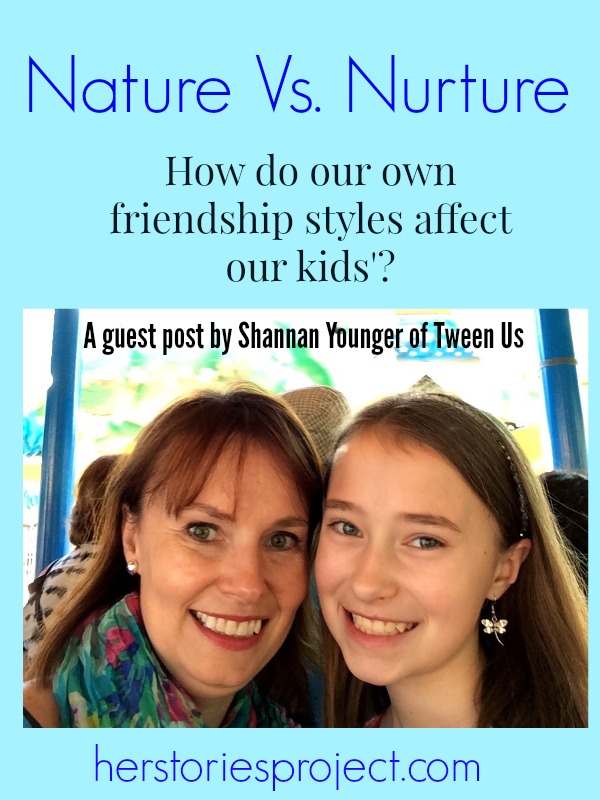
    Our guest post today comes from contributor Shannan Younger of the blog Tween Us. In her post, Shannan wonders how her own friendship style may be influencing her daughter. What are your hopes for your child’s friendships?

    naturevsnurture.jpg

    Freud believed that personality was fully formed by age 5. As the mom of an 11 year-old girl, I’ve been pondering that statement lately and specifically thinking about how personality impacts friendships.

    I think the vast array of personalities gives everyone a different, unique approach to friendships.

    Just a few close friends work really well for a lot of women I know, but there are also those who prefer or even need to be surrounded by large groups.

    Some ladies form close bonds immediately, if not sooner, whereas others take a while to really warm up.

    Ending a friendship is never easy, but there are women who are more comfortable with the idea of friendship for a season, however brief that may be, and who are the opposite of those who are always hoping for a life-long bond.

    Watching my child’s approach to friendships has been fascinating, especially as her social world continues to evolve. Even if the ideal was never fully realized, the “we’re friends with everyone in the class” approach made kindergarten seem so welcoming, but was emphasized less and less each year. And now my daughter is in junior high.

    The transition has meant learning to navigate both a new school and a new friendship landscape. The addition of both a large number of new classmates and raging hormones have been thrown into the mix. There’s a lot of drama. Not that there wasn’t any friendship drama in elementary school, but this is a whole new level.

    It’s not unfamiliar territory.

    I remember my middle school days as challenging in large part due to friend drama. While at the time it seemed that everything was happening to just me, tween female friendship troubles were and still are fairly universal.

    As my daughter’s friend drama amps up, I wonder to what extent I am responsible for her preferences. How does the nature vs. nurture debate factor into female friendships?

    We have similar but not identical approaches to friendships, from I can tell so far (and goodness knows there’s a lot that goes in the mind of an 11 year-old to which her mother is not privy). My daughter’s friendships are like a bullseye, different circles that expand and are less central to her as you move out.  In that way, she’s similar to me. I wonder if I had larger friend groups and handled crowds better if she would cast a wider net herself.  I doubt it, though. She’s more reserved with new friends than I am, she’s a little more likely to take things slow and a little less outgoing.

    I used to spend time worrying about how she would manage friendships. I’ll be honest and say that I still do, a bit.  She has to handle friends who are more deft at social engineering, the friends who are not always honest, and the friends who far more worldly than she is. Then it occurred to me that those are friendship issues to be managed at any age.

    I want to give her the space to do that, even if it means biting my lip really hard sometimes or cringing when things are rough. They are her friendships, hers to learn how to handle, to choose to cultivate, to learn from and to nurture, or not. My wish for her is that she finds friends. The number is not overly important, who love her for who she is, who give her understanding at this age when it feels like parents cannot begin to do so and who bring out the best in my special girl.

    Keep reading

  • My Reader, My Friend

    One of the joys of blogging for me has been finding online communities and friends who grow to understand my writing. Online friends — as Stephanie and I know particularly well! — can become your best and most valuable critics, supporters, listeners, and collaborators. When you find that special writing friend, as our HerStories Project contributor Lauren Apfel of Omnimom has, that relationship can help your writing grow.

    FInd a reader new.jpg

    Find a reader, who is also a friend. This is the best advice about writing I have. Every book on the craft makes it plain. Without somebody to wade through the murky waters of your first drafts, somebody who understands your compulsive overuse of the conjunction but loves you anyway, the process of writing is a less fertile affair. It is a lonelier one too.

    My friendship with Denitza is filtered almost exclusively through the written word. Emails, texts, comments, corrections, a seemingly endless cycle. If we lived at a another time, we would be called pen-pals. I can see us there, in a bygone age. I can see us in stiff petticoats, quills poised, spilling our innermost thoughts onto paper the color of fresh cream. I can see how the beauty of waiting for the post to be delivered would suit us more than the instant gratification of the internet. And yet, ours is a digital story through and through.

    I hear Dentiza’s voice in my head sometimes, but only as a sound byte from the past. I know her emoticons and her preferences for the comma better than I do her inflections. We’ve seen each other a few times in the fourteen years since graduating college together, thanks to the strange coincidence that she married a man who grew up very near to where I did. The face-to-face is incidental: modern technology has built us a stronger bridge.

    Denitza works full-time as a doctor and I am a stay-at-home mom. We both write non-fiction around the edges of our main commitments. I am trying to shift the balance of my commitments, though, to become a writer and not merely someone who writes. This isn’t straightforward. Writing, like any art, is as soul-crushing as it is soul-enhancing. Especially when you want to transform it, abracadabra, into more than a hobby. My writing has begun to bloom recently, but only through the cracks of my existence as a mother. And it was motherhood that led me back to Denitza in the first place.

    We met again on Facebook, a re-kindling cliche for two people in their thirties. I found out she was pregnant from a mutual acquaintance and I emailed her because I was in the throes of new motherhood myself. It started slowly, our friendship, tentatively. There was something kindred between us, so much was obvious, not that we are similar people. What explains us best, rather, is what we share: an obsession with both parenting and writing. Even more binding is that we share a style of communicating about those obsessions: frequently, intensively, with no excuses.

    No matter how hectic the week gets, we can always locate each other, physically as well as emotionally. Even when there is no time, there is time for this. In-between diapers, in-between patients, we tip-tap back and forth on our devices. We live our lives seven hours apart, but the time difference is a quiet advantage. I write in the mornings and then I wait for Denitza to wake up. My day starts again when the sun rises in Salt Lake City, though it is fast approaching tea time in Glasgow. My day starts again when she has read my latest draft and I can take the next steps to making it right.

    Together we stepped into the blogosphere. I started a blog about parenting and Denitza started one about medicine. Self-publication, we learned all too quickly, is the easy part. It’s the attempt to break into the wider world that tests you. It’s the waiting for an answer and the wondering if you are good enough and the peeling yourself off of the floor when this magazine or that editor says you aren’t.

    Some days we have “races to rejection.” We’ve both put the finishing touches on a piece and, hand in virtual hand, we fire them off into the ether. Then we wait to see who gets the first “best of luck placing it elsewhere.” What better way to scream into the wind of the New York Times submission process than to stand with somebody screaming next to you? What better way to take the sting from the “I’ll pass” email than to forward it on to your friend, who replies almost instantly with a “their loss”? And on the occasion of a hit, when the pickaxe strikes gold amidst the bedrock, the prize is parcelled out between us. We celebrate with each other the small victories. The rejection that came with a compliment. The one that came with an encouragement to submit again.

    “Write without pay until somebody offers to pay you,” Mark Twain once said. “If nobody offers within three years, sawing wood is what you were intended for.” Two years down and I am not going back to the woodpile. Denitza wouldn’t let me. She has become a true partner in my effort to avoid this fate. She is more than a cheerleader and more than a second set of eyes. There is a joint ownership over our essays; we are like co-parents. One of us is the primary caregiver, but the other nurtures it just as much, feels just as invested in the topic, the theme, the construction, even if it means only getting home in time for the evening bath.

    We are different kinds of parents, as many couples are. Denitza writes in a style she describes delicately as “vomiting on the page.” She is seized by an idea and the sentences erupt from her like lava, hot and messy and overly-long in their stream-of-consciousness. After the night she spends on-call at the hospital, I will wake to three or four essays stacked in my inbox. Or there will be none at all, she doesn’t do half measures. And then I will put on my heat-resistant gloves and begin the task of making them tidier.

    My process is almost the reverse of hers. My essays start as a chunk of clay, thick and shapeless, which I whittle away at over time, as if I am sculpting a face. Different features are clear to me at different sittings: the curve of the jaw, for instance, or the set of the eyes; the punch of the last sentence or the perfectly illustrative anecdote. I write in short bursts and then I come back to tinker. Add a comma here, choose a better expression there. Denitza indulges my micro-management of the words, but she also challenges me on the big ideas. She saves me from indiscretions. Her praise is what I aim for. Her criticisms don’t make me feel less talented.

    We parent the essays together and Friday is our well-deserved “date” night, because we both have the same chunk of free time. For me, it is after the kids are in bed. For her, it is after she has been on-call. I sit perched on the couch with my phone on my lap, waiting for it to buzz to attention. She texts me as soon as she gets to the French cafe downtown, a double espresso in one hand and my steady stream of messages in the other. We try not to talk about our “children,” the literary ones that is, but inevitably we do.

    The funny thing is we weren’t good friends in college. We were thrown together in the first year, not in the same room but in the same suite, and we had people in common more than a relationship ourselves. Recently she reminded me of the summer after our sophomore year, of the hand-written letters that winged their way between Japan, where she had an internship, and New York, where I was killing time. Our first correspondence, the seeds were planted, but I don’t remember it. I am freezed by this fact. I was a different person back then, more selfish, more closed-off, a person who could write words that meant something to someone else and forget they had been written at all.

    What did I ask, I wonder, what did she answer? There is no hope of re-discovery. As with so much else from those days, the paper trail has long since been lost.

    Now there is a folder in my inbox with Denitza’s name on it, which holds the weight of all of the precious words from this incarnation of our friendship, those that have gone on to be published and those that will remain written, and read, simply for us. Every writer has what Stephen King calls an “Ideal Reader.” Someone who lives in your head. Someone who is the litmus test of what is clever or funny or interesting. Someone whose opinion matters more than anybody else’s. Denitza is my perfect reader. But she is also my midwife. Writing is like giving birth, Anne Lamott says. Theoretically you could do it alone, but it sure makes it easier to have a friend helping.

    Lauren ApfelLauren Apfel is originally from New York, but now lives in Glasgow, Scotland. A classicist turned stay-at-home mom of four (including twins), she writes regularly at omnimom.net. She is the debate editor and a contributing blogger for Brain, Child Magazine. Connect with her on Twitter and Facebook.

    Keep reading

  • Lifting the Heart

    We have a beautiful and heartbreaking guest post today from Kerry of Winding Road. Kerry shares her story of friendship and the power of forgiveness.

    The first friend I met in college has taught me the true meaning of forgiveness. She taught me this from a time and space far away though she lives in my heart and mind. She died eight years ago this coming May.

    Forgiveness is one of the most liberating acts of love. I learn this regularly from small indiscretions made upon me or someone I love. However, it is the deep-rooted anger that can weigh us down in ways that we don’t always realize. Letting go of that anger and learning to forgive frees the soul to love in a greater capacity including a more encompassing love for ourselves.

    I walked into yoga class and a woman walked in behind me. I know of her but am not friends with her. In fact, she conjures up strong feelings of anger, remorse, regret and sadness yet I don’t think we have ever held a conversation.

    During my first week in college, I met a girl who lived across the hallway from me in my dormitory. She had an infectious laugh and smile that immediately drew me to her. We met and chatted while standing outside on the stairway of our dorm smoking cigarettes. We instantly became friends sharing similar music tastes and ideas about the world that we knew as of eighteen years old. Shortly after our freshman year began, we formed a small but tight group of friends and we all spent most of our waking moments together. She and I took psychology and philosophy classes together, ate lunch together, smoked cigarettes and studied together. She quickly became my best friend. She had the most beautiful singing voice that could bring tears to your eyes and a laugh that would make you smile from ear to ear not even knowing the joke.

    The summer of our junior year of college, we rented an apartment together. We were different in many ways…she was extremely social and an exceedingly successful procrastinator while I was more reserved and one to study far in advance and then party later. Either way, we complimented each other nicely living together and our friendship remained strong. We had our ups and downs over the years but remained close. After college, I moved to South Carolina just “to get away” after a college boyfriend breakup. I then met my husband, moved to Washington, D.C., then to Atlanta, Chicago and finally back to Florida. She and I remained friends through phone calls, emails and visits when I came home for holidays because she had remained in our college town. It was shortly after college that the Patchouli wore off for me but intensified for her. I loved who she was even though we were growing apart and no matter what, each time we spoke we picked up where we left off.

    One week before moving from Chicago back home to Florida where my husband and I would be living a five-minute drive from my friend, I received a phone call from another friend, J. She said, “Kerry, has anyone told you? K is dead.” My mind reeled; I heard the words yet they sounded foreign, I couldn’t comprehend what she was saying. In fact, I think I laughed because I thought she must be joking, it simply wasn’t possible. After silence for what felt an eternity, I said, “No, what are you talking about, I just spoke to her, I am about to move back near her again, you must be mistaken” She slowly told me the story of how K had driven a couple of hours away to take her dog to get surgery and on the way was going to a concert before picking the dog back up and driving home. While tailgating before the concert, she and another friend were partying when K said, “my head feels scrambly” then she fell and was gone…. in an instant.

    The next day I continued trying to process the information I had heard. I cried non-stop and lived in a haze. I felt her presence with me during this time as if she were comforting me. I believe the spirits of loved ones visit us and I know she visited me. I walked my dogs around the block in a delirium. It was May and spring leaves were in bloom. There was a cool breeze that rushed past me and I looked up to see some of the new blossoms fall gently in slow motion. I felt her presence then and on the walk home. I remember smiling walking back because I felt her arm around me, letting me know everything would be okay.

    Three days before my scheduled move, I flew to her home town for the funeral. I met a dear friend at the airport and we drove to the viewing before the funeral the following day. I felt nothing from that point until two weeks later. I did not cry at the funeral, I felt completely emotionally constipated. I felt anger at her hippie friends that I did not know at all. They were “new” friends, not part of our solid group from college. I resented them. I overheard one or two say shameful words about her family who I doubt they ever spent time with. One started an argument over K’s items left behind; it was a ridiculous battle during a penetratingly painful time. Her family had been hospitable and loving to me during our college years when we would visit them. They became family to me over the years and I felt connected to them. I felt a small bit of the oceans of pain they held for their daughter and sister. Weeks later back home, a memorial was held for K. It was at this time that I allowed the grief to flow again from my heart and tears to spill since the first moments I heard the news.

    About six months later, I became pregnant with my daughter. We had tried to get pregnant for a couple of months and while it was exciting and joyful, I fell into a depression during the first trimester. I cried a lot and slept. I decided to see a therapist because I knew there was more to my depression than pregnancy hormones. The theme of my time in therapy was how to properly handle my grief and anger; anger at the girl who had been with K when she died, anger that she allowed such a tragedy to occur, anger at her for not protecting K, and anger for disparaging K’s family during a traumatic time. My anger burned at this girl that I did not know. But it also burned at K for dying.

    ForgivenessYears have passed and I no longer am angry at K. As selfish as I was for that feeling, I learned to accept that tragedy happens. I miss her daily. I regret that I hadn’t moved back one week earlier so that I could have seen her living one last time. I wish she had met my children. Yet, through these years, I had not let go of the anger I felt for the girl who was with her, until last week.

    I was angry when I saw her and the emotions of seven years ago came rushing back. I decided at the beginning of class to declare forgiveness as my intention. Declaring an intention at the beginning of class is new to me but a powerful tool to make the most of the experience. During class, I took deep healing breaths and at first ignored her being there with me until I began taking deeper breaths and embraced that we were sharing a space. I lifted and opened my heart. I closed my eyes visualizing forgiveness. I acknowledged that it was not her fault that K was dead, that she made mistakes, had said hurtful words, and had also suffered. Standing on a block in tree pose, I slowly raised my arms, opening my branches and with eyes closed visualized my heart literally opening and anger pouring out as if it were a pressure cooker that had burst. Tears filled my eyes and a vast amount of love filled its space.

    heart lifitng

    I miss my friend and always will. I see her often in people’s facial expressions, smells, songs, voices and laughter. I see her in my friends now; in the beautiful friendships I have. She lives in the days of my youth; a time of freedom and exploration. She resides in my memory, my dreams and in my heart and she reminds me to forgive, to be open, and to be free. True friendships really do last forever.


    Enhanced by Zemanta

    Keep reading

  • Online Friends

    We are happy to share a guest post today from one of our contributors, Jennifer Swartzvagher, who blogs at Beyond the Crib. Have your online friendships ever become real life friendships?


    Before the dawn of Facebook, Twitter, and texting, I longed for adult conversation during the afternoon. After wrangling a toddler and infant all morning, naptime became “me time.” Alone in the house, I looked to the computer to keep me company.

    Luckily enough, there were countless other moms just like me wandering around cyberspace. We were bleary eyed after countless episodes of “The Big Comfy Couch” and “Blues Clues.”

    We connected on bulletin boards tied together by a common thread. After typing in my interests, a bunch of matches were thrust at me. The options were endless. All I needed to do was find a board of like minded women and jump in. I could share as much or as little as I wanted. A lot of times, I started out slowly lurking and getting a feel for the atmosphere. Baring your soul to complete strangers can be intimidating.

    Some people we meet online fabricate stories and are looking for someone to prey on. Both in life and online, we have to be careful with whom we interact. I learned the hard way how to figure out who the trolls were.

    As the months went by, I found a safe place to ask questions, vent, and form friendships. Granted, I didn’t know these women “in real life,” but that didn’t make our relationships any less valid. Looking back, now that face to face interaction seems to be few and far between, these online relationships parallel the ones I maintain through Facebook.

    Still, I yearned for face to face interactions. We all need friends in real life, even if our online relationships are filling that need. I had come to find that chatting online could not replace time spent with friends. Mommies need playdates too.

    Online friends can’t fill all the needs that real life friends can. Online friends can’t bring you a meal during a time of need, carpool to dance class, or spend the day with you at a moments notice. I would have looked pretty silly dragging my desktop to the mall for a day of girl talk and shopping.

    I searched the internet and started to hook up with a few local mommy groups. Some groups which required more face to face over virtual didn’t work into my busy life as I juggled 4, 5, or 6 kids. Finally, I found a local mommy bulletin board. We may live 45 minutes or even an hour away from each other, but we were local enough to share a common bond. The relationships could stay strictly online or develop in the real world.

    A little guarded at first, I dipped my toes in gradually. While being local was a plus, I wanted to make sure that I protected my privacy and my emotions to ensure I wouldn’t get hurt.

    It didn’t take long for me to jump in, feet first. Girls Night Out and breakfast dates followed. With our busy schedules, most of us rarely get to see each other, yet when we get together, we a chat as if we just saw each other yesterday. It is like no time has gone by.

    Our local board doesn’t exist anymore, mostly due to the dawn of social media. We picked up and relocated to Facebook. Come to think of it, my original national mommy board is there too. Thanks to social media, we are all connected to each other on so many levels.

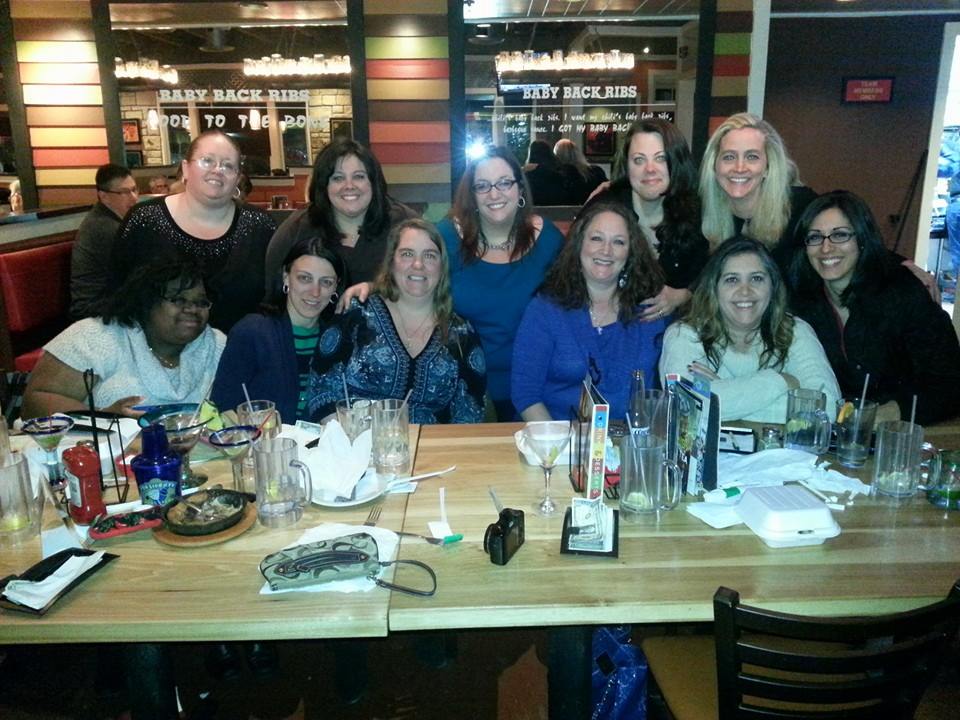
    Over the years, these women have become my family. It just goes to prove that real life happens online too.

    HVMommies

    Keep reading