Month: March 2015

  • HerTake Advice Column: Too Close, Too Quickly

    Today’s question comes from a woman who regrets letting a friendship get too close too quickly and now must find a way to establish better boundaries. Do you have a question for Nina? Use our anonymous form . You can read Nina’s answers to past questions here.
    HerTakenoavatar

    Dear Nina,

    Last June a woman named “Vivian” moved into my building. She’s a teacher with lots of credentials (her statement), my age, and we have some similar interests. I nose-dived right into a friendship with her assuming we had a lot in common. I invited her to events, introduced her to my friends and no doubt gave the impression that I wanted to be friends.

    Several months passed  before I realized that we weren’t at all a good match and I started to dislike being around her. She had quite a few difficult situations (not getting the job she wanted, having her car die), but persevered despite these setbacks. The problem is that she blames everyone else for her difficulties and never takes responsibility. Since she has no one else to talk to, she uses me to vent. I mostly feel awful after these talks. Yet I realize she is alone in a new city and has no other support.

    For those and other reasons, I do not want to be friends, but also don’t want to hurt her feelings. She knocks on my door or phones almost every day. I feel harrassed and have spoken to her about my need for better boundaries, but she does not get it. I find myself turning off all my lights so she will not know I am home and I don’t answer my phone or go to the door. This feels cowardly.

    What can I do to find peace and not make her life any more difficult in the process?

    Thanks,

    Suffering From Friendship Regret


    Dear Suffering From Friendship Regret,

    First, I want you to know that clicking with Vivian in those early weeks makes perfect sense. In fact, research explains why diving into a friendship with her felt natural. I think it’s helpful to know about that research so that in the future you can be aware of the factors that can make us feel an instant connection with others while still staying aware of the need to take things slowly. I have definitely taken friendships too quickly, and it is much easier to let a friendship grow over time than to reset it once certain expectations are in place.

    According to Ori and Rom Brafman, authors of the book Click: The Forces Behind How We Fully Engage with People, Work, and Everything We Do, there are five accelerators that make us feel connected to someone, at least at the outset.

    The first way we click is through some similarity, or at least a perceived similarity. Even the most surface commonalities like the same name can make us like the next person more. The second accelerator is vulnerability. While Vivian’s ability to open up to you eventually became a burden, it probably made you feel closer to her at first.

    The third accelerator came to mind immediately when I read your question, and that is proximity. You can’t get more convenient than the same building. The Brafmans found in their research that just living in the same city was not enough of an accelerator. When they measured proximity, they reported in feet–as in cubicles, dorm rooms, and neighborhoods. When a friend is right there, we tend to excuse other less than stellar qualities, and I believe that happened in this case.

    The fourth accelerator is resonance, which the Brafmans describe as being in tune with others and demonstrating empathy. I could see why Vivian felt this from you since you were sensitive to her status as a newcomer. And the fifth one is called safe place. That one refers to experiencing an adversity at the same time or a positive shared experience like a group vacation. Even living in the same building and dealing with the winter together when it’s easier to stay inside would create a certain closeness in a new friendship.

    I brought up the Brafmans’ work to help explain why you and Vivian had many good reasons to be instant friends. Hopefully knowing about these accelerators also serves as a warning to take things slowly the next time. We don’t need all five accelerators in place to feel that chemistry, and chemistry is a tricky element in a relationship that can cloud our better judgement. Same goes for romantic partners!

    You said that Vivian has no other support, but if she’s new to town that will change in time. You’ve been very generous by including her in events and introducing her to your friends, but there’s no reason that you have to be the sole confidant for her. Isn’t it also possible that Vivian has started making other friends during these months that you’ve been avoiding her? Either way, since you want her to stop knocking on your door every day, it’s time to take some action. You can’t be hiding out in your apartment!

    Taking action will have to strike a balance between getting the job done (resetting the relationship to one that is more neighbor/acquaintance than close friend) and not hurting Vivian’s feelings. In past answers for this column I have discussed fading back from a friendship, which is usually less painful to the next person. But in cases like this where your attempts to fade back have not worked, I’m afraid that you’ll have to extract yourself from the relationship. However, I would liken this “extraction” to the use of smoke grenades, not live fire.

    Look for an opportunity to take a true time commitment from your life and make it slightly bigger than it is. Perhaps you’re swamped with work? Perhaps you’re spending extra time with an older relative in need?

    I’m not suggesting that you create some kind of elaborate lie, rather, I use something “true enough” as your excuse to spare Vivian’s feelings. Do not turn off your lights. Do not sneak around. You can still be friendly and enjoy having a neighbor you appreciate for more than a passing hello, but be consistent in your new boundaries.

    The reason I do not suggest being extremely direct in this case is because you’re trying to reset the relationship, not teach Vivian how to have more reasonable expectations from her friends. Maybe Vivian will meet some friends who like her just as she is, and just because the instant chemistry with you did not pan out as the friendship progressed, that does not mean that her style will not work for the next person. In most cases it’s not appropriate to “teach” another adult how to act. And the truth is, you do bear some of the responsibility for giving Vivian the signal that you were as interested in this new friendship as she was.

    Please know I say all of this without judgment as I have succumbed to that seductive chemistry several times in my life only to regret the “instant closeness” I helped foster with my over-enthusiasm. The sooner you get comfortable answering your door and having a quick, friendly conversation before explaining that you have to get back to whatever project you’re working on (or whatever excuse you decide to use), the sooner you will feel a sense of calm again.

    Good luck!

    Nina

    Readers: Do you have other ideas for “Suffering From Friendship Regret?” Please let her know in the comments.

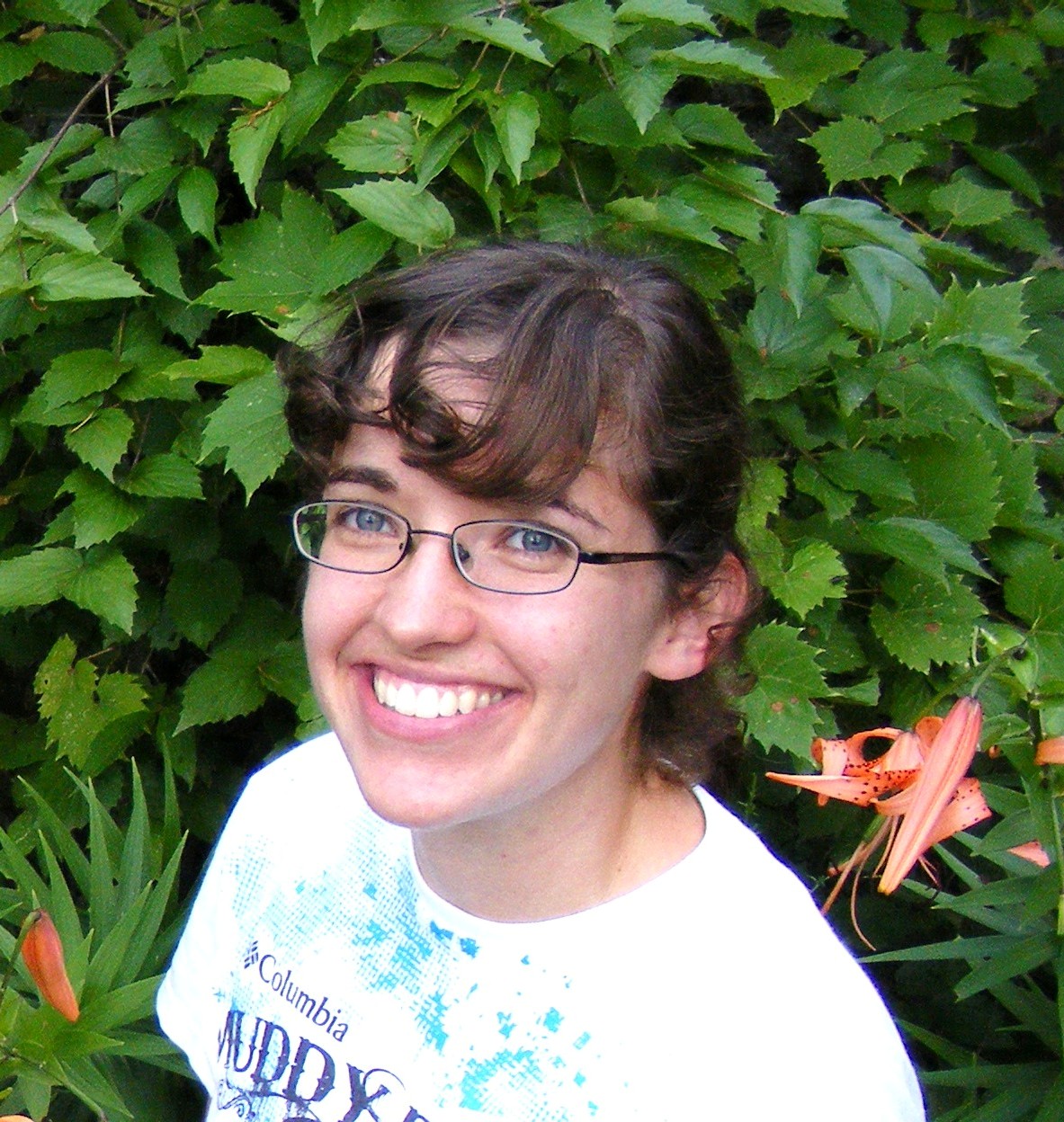
    FULL RES - Badzin-03 copy-1Nina is a contributing writer for Tcjewfolk.com, Kveller.com, and Great New Books. Her essays have appeared regularly at Brain, Child Magazine, The Huffington Post, The Jewish Daily Forward, and have been syndicated in The Times of Israel as well as Jewish newspapers across the country. She lives in Minneapolis with her husband and four children. Contact her on Twitter @ninabadzin and on her blog.
    Keep reading

  • HerStories Voices: The Mommy Inside the Rocks

     We’re so happy to present to you the second HerStories Voices column. This week’s essay is from Kathryn Wallingford. In Kathryn’s own words, her essay is about “rocks, remembering why I love Toni Morrison, and teaching my son to put apples in his pocket. How do we allow the continued growth of an imagination when we send our children to a system of order, structure, and real time? This is a mother clinging onto her son.”
    For May, in recognition of Mother’s Day, we’re looking for essays about a moment or an experience during early motherhood that changed you. Our upcoming anthologies Mothering Through the Darkness: Women on the Postpartum Experience and So Glad They Told Me: Women on Getting Real About Motherhood both are about these early days, months, and years of new motherhood. Tell us your stories of about a “moment of change” as a new (or new-ish) mother! For more information about submitting to HerStories Voices, read here. Submit your motherhood-themed essays to us by May 1st!
    HerStories Voices--The Mommy Inside the

    In the beginning, my beginning, I marked time with a rock in my pocket. The smooth glass of the eastern shores. The Bright Angel shale reminded me of the hot Arizona sun. I stole the granite of Wyoming and lined my freshman dorm with pieces of Appalachian quartz.

    Eventually the rocks were thrown into one box. Sand, dirt, silt, and clays sifted together. They were the hot desert air, those cool Montana nights, and the Himalayan sunset, bounded and carried from home to home.

    Until finally my four-year old found them.  One cold, winter day they made their way into his hands.

    “Can I paint on them? Can I give them to my friends at school?” he asked.

    With no hesitation, I replied, “Of course.”

    What else was I saving my memories for? To be thrown on another window sill?

    So he pulled the rocks out one by one.

    It was his Mommy Before.

    Mommy in-love on Roan Mountain.

    Mommy scared, almost ready to jump into Crater Lake.

    I tried to tell him the life behind each rock so he could be there too. In the 5 years that he has been on this earth I have had two additional children. As a result, I have been pregnant for approximately 550 days, a nursing mother for almost 720. He deserves to know this Mommy.

    The Mommy inside the rocks.

    As he paints I also remember how much I love these places. But it is hard to describe what he can not see. His Mommy before. I do not have many pictures to correspond to the collection.

    He picks up the rocks one by one and his questions multiply.

    “How cold was the lake? What did the lake look like? Were you scared? Did you want to jump? What did it feel like? How big was the mountain? You climbed into a canyon? Where was Daddy?”

    The questions seem to exhaust him too. Moving away from my stories and the rocks and my geology 101 lesson, he begins to create a picture of his own. He goes into his own world and I migrate to the laundry pile that needs to be folded. But he soon comes to me with his creation.  His work is red paper smothered in glue and white dots.  I make out my name. I make out his name.

    “It is beautiful. What is it?” I ask.

    “It is a rocket ship taking us to the moon and people are throwing snowballs at us,” he answers.

    “I love it.” And I do.

    I am not sure how my rock collection gave away to the artistic expression or how to explain if snow could or could not land on a spaceship.

    This was his understanding of our conversation. A new world has came alive.

    He has started kindergarten and real time replaces the abstract. School supply list- a plastic, red folder. 24 twistable Crayola crayons. Room- # 223. Rules- three warnings and then time out. “Zero-voice” in halls. 10:45 am- lunch. Curriculum- Science and Math in Spanish. Reading and Writing in English. Estoy contento. There is a correct way to say contento. He will be corrected.

    Before his first day he asks me how to open a 3-ring binder. There is a correct way to do this too. By the end of the day he is tired. There seems to be less time to chat and rummage through a box of rocks.

    In her poetry collection, Life on Mars, Tracy K. Smith writes, “We move in an out of our rooms, leaving our dust, our voices pooled on sills. We hurry from door to door in a downpour.”

    I read this and think about how badly I am getting drenched. My forgotten voice, my racing legs. Where am I going? In and out. Drop off kids at school. Change dirty diaper. Nurse the baby. Time to cook, for who else is going to cook?  Cook dinner. Stop, snap a picture.

    And now he has homework. He knows the bad kids and the good kids. He joins the race. The downpour continues. We both get drenched.

    We race for explanations and for the finite moments, to explain and to store memories. When are we left to imagine, believing in what you can not see?

    As a teenager I read Toni Morrison’s Song of Solomon when I heard about Heaven’s Gate cult mass suicide.  Thirty-nine individuals from Heaven’s Gate took their lives with the belief they could reach an alien spacecraft following the comet Hale-Bopp.  I watched the news coverage from a condo in Steamboat Springs, Colorado. It was my spring break. I obsessed over the news reports when I was supposed to be snow skiing. I tried to imagine the world was really going to end.  It seemed crazy. It seemed unimaginable.

    But as I dismissed the cult members as lunatics I read Song of Solomon engrossed with the character of Pilate, the woman born without a navel. “She was a like a large black tree,” Morrison writes.

    I tried to imagine such a woman. I remember feeling small and that the world was large. I did not know how 39 people could kill themselves. I did not know if a woman could really be born with a smooth stomach.

    I was 18 and and my world was being deconstructed.

    And now here I am again. I have a five year-old to remind me to raise my eyes a bit. To look a little farther. He needs to see outside the present moment. He wants to see a dinosaur. He wants to know how you get to heaven. On an airplane? I need to get him there. Life past our five senses.

    I pick him up for school and he tells me about the fire drill and sings, “Down by the banks where the watermelon grows…” It is his favorite from preschool. He tells me about the school rules and what he had for lunch. I watch him fasten his seatbelt and we drive in silence.

    When we get home I put away the book bag and the homework and we walk outside.We dig at ants, we suck on popsicles. We smell cut grass. The sound of rockets in sky become catalyst for the microcosm of the unknown. He asks if the rocket ship can see us. He asks if I would rather be a bird or a rocket.

    What a damn good question! I tell him a bird.

    He begins to climb our crab- apple tree.

    In two years, he will probably not want me to watch him climb the tree.

    In five years, he will have soccer or band or art practice after school.

    In ten years, he will have his driving license. He will not want to climb the tree.

    In fifteen years, he will will likely be living elsewhere.

    He sticks an apple in his pocket. I do not tell him that the apple will not fare well in this pocket. He finds another apple to store away and climbs closer to the sky.

    FullSizeRender (17)Kathryn lives in Lexington, Kentucky with her three sons and husband. On good days she writes about religion, mothering, and the natural world. You can find more of her work in Brain, Child and Literary Mama. Visit her blog at http://thisisenough.weebly.com/

    Keep reading

  • Announcing the HerStories Project Writing Contest Winners… and a Book Cover Reveal!

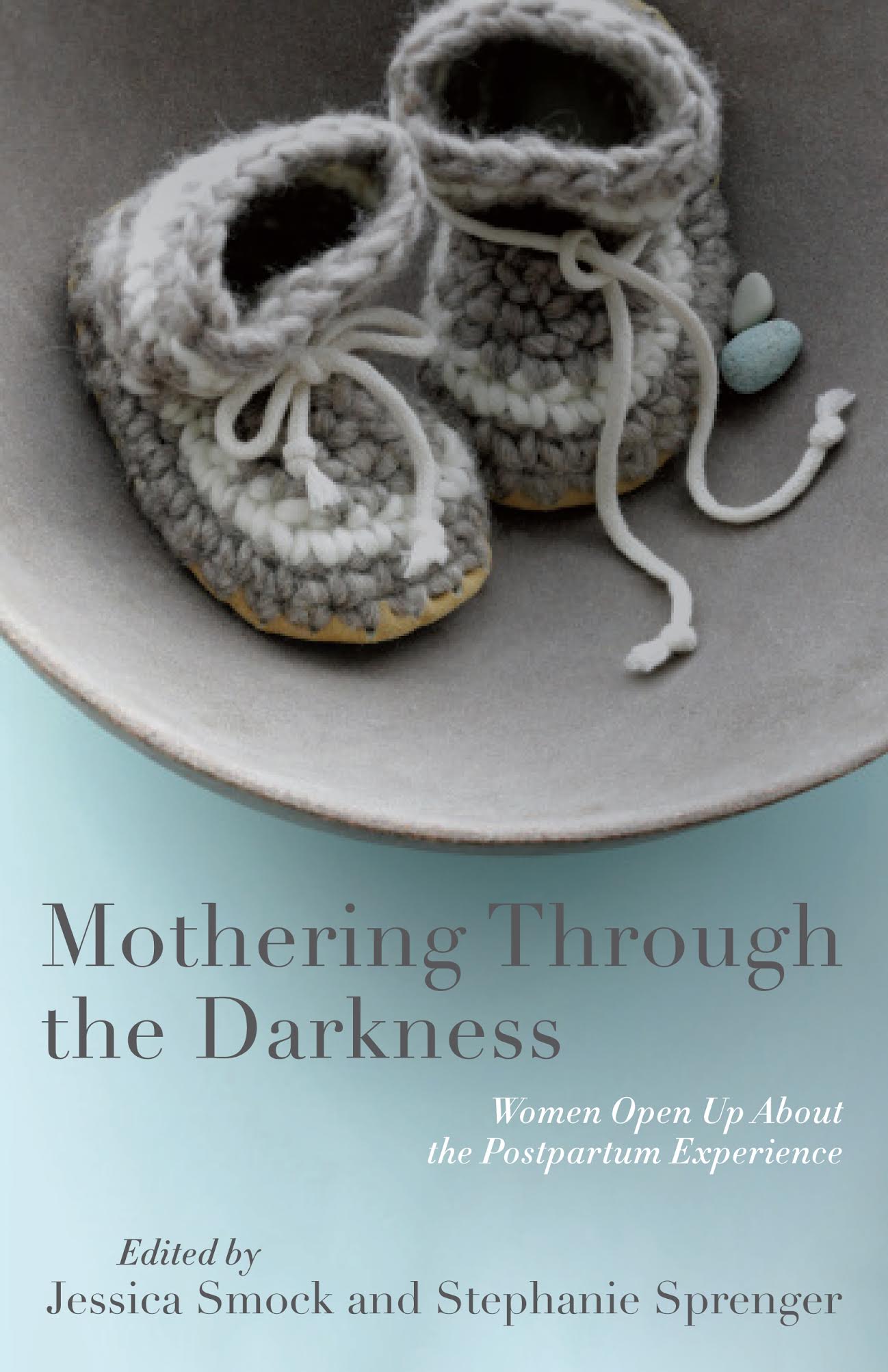
    MOTHERINGTHRUDARK
    Presenting our book cover!


    More than six months ago, we put out a call for submissions for our next book, Mothering Through the Darkness: Women Open Up About the Postpartum Experience, to be published by She Writes Press in November 2015. We also announced that we would be sponsoring a writing contest, associated with the book, to be judged by a panel of several of our favorite writers, women who also experienced postpartum struggles of their own: novelist Julia Fierro (author of one of the most anticipated novels of last year, Cutting Teeth), journalist and author Lisa Belkin, author Kate Hopper, author Katrina Alcorn (author of Maxed Out: American Moms on the Brink), writer and clinical psychologist Dr. Jessica Zucker, and blogger and writer Lindsey Mead.
    We knew we would receive powerful stories of women’s experiences with postpartum depression and other mental health struggles. But we were completely unprepared for how many beautiful essays we would receive (more than 200) and by the inspiration and pain in these stories. We were, in a word, overwhelmed.

    And we knew our judges had their work cut out for them. We assembled a selection of finalist essays. We heard right away from the judges about how difficult it was to choose just a few essays because they were all so brave, so important, and so powerful.

    We are so thrilled to announce our first-prize winner, Maggie Smith, for her essay “Here Comes the Sun.” Here’s what our judge Julia Fierro had to say about Maggie’s essay:

    I love the simplicity of the language here, which, along with the matter-of-fact tone and episodic structure, inspires trust in the reader. I believed the honesty here. But the details are anything but simple–they are unique to the narrator and her experience (the figurative language- the apples!) and that made me feel as if I was allowed access into the intimate world of her love and pain and loss and joy.

    Here is an excerpt from Maggie’s beautiful essay:

    I can’t find the notebook.

    My husband threw it away, or I threw it away, or it threw itself away.

    With my son I wrote everything down: every feeding, what time he started, what time he finished, when he burped, when he spit up, what the spit up looked like, when he peed, when he pooped, what the poop looked like, when he cried, what his cry sounded like, when he slept, what position he slept in, when he woke.

    If I wrote everything down, I would see The Pattern. The Pattern That Would Make Him Happy. The Pattern That Would Make Him Sleep.

    The Pattern That Would Fix Him.

    The Pattern That Would Fix Me.

    Maggie is an accomplished poet, but, amazingly, this is her first personal essay. Maggie Smith’s second book of poems, The Well Speaks of Its Own Poison (Tupelo Press, April 2015) was selected by Kimiko Hahn as the winner of the Dorset Prize. She is also the author of Lamp of the Body (Red Hen Press, 2005), winner of the Benjamin Saltman Poetry Award, and three prizewinning chapbooks, the latest of which is Disasterology (Dream Horse Press, forthcoming 2015). A 2011 National Endowment for the Arts Fellow in poetry, Maggie has also received four Individual Excellence Awards from the Ohio Arts Council and fellowships from the Sustainable Arts Foundation and the Virginia Center for the Creative Arts. She lives with her husband and two children in Bexley, Ohio, where she works as a freelance writer and editor. You can find her at her website, on Twitter @maggiesmithpoet, and on Facebook.

    Maggie Smith_photo by Studio127 Photography


    Our second place essay is “Life With No Room” by Celeste McLean.

    Celeste Noelani McLean is the woman behind RunningNekkid, where she explores the intersection of grief, mental health, and her Pacific Islander ancestry. Her writing has been featured on Blog Her and has appeared in SisterWives Speak and Stigma Fighters. She left her island paradise home over twenty years ago and has been trying to figure out how to get back ever since. She currently lives in Seattle with her husband Ian, where they raise two children, grieve one, and make each other very, very happy. You can find her at her blog http://www.RunningNekkid.com or on Twitter @runningnekkid.

    celeste

    Dr. Jessica Zucker said this about Celeste’s essay:

    This essay left me speechless from the very beginning. Poignant, poetic, earnest, soft. She does an exemplary job of taking us through her journey wrapping around and all the while gleaning cogent and complicated insights. Truly remarkable.

    Here is a passage from “Life with No Room”:

    I nurse the baby in front of my therapist and we talk about my second son, the one who died. About how much my new baby looks like him, and how much I want him back. I want both of my babies. But I also want none of my babies. I am tired of babies. Bone tired. I want to be dead.I want to be dead, and I admit to this in a way, and it is so embarrassing to admit this. But also, it is a relief. I have spoken these words and I have not died. I do not want to die any more than I wanted to die in that moment before I said it. And, miraculously, nobody came to take away my children. I want to be dead, but I also do not want to be dead. I want all of my babies and I want none of them.

    I am afraid of the baby waking. I am afraid of the baby not waking.

    Our third-place winner is Jen Simon, for her essay, “It Got Better, But It Took a Long Time To Get Good.” Julia Fierro describes her piece:

    I think the “arc” of the story shows the infinite varieties in even just a few years of a mother’s life. How things can go from “terrible” to “okay” to good” to “bad” to “great.” And how a mother can feel both love and regret simultaneously. I love that the essay allows the narrator to have some perspective, which gives the reader a hint of the light at the end of the tunnel, so to speak.

    Jen Simon is a Huffington Post blogger and a Babble contributor. A freelance writer, her work has appeared on Scary Mommy, Elephant Journal, Your Tango, The Frisky, Kveller, Nerve, Women’s Health Online, and more. Mothering Through The Darkness is her fourth anthology, her second with the HerStories Project. Jen stays home with her sons – a toddler and a sleep-challenged 5 year old.

    You can see more of her work at JenSimonWriter.com. Follow her on Facebook at http://www.facebook.com/jensimonwriter and on Twitter @NoSleepInBklyn.

    jensimon

    Here is an excerpt from Jen’s powerful essay:

    I’m not sure what to do with him, so I do all the things I think I’m supposed to do. I dress him as a miniature version of my friends in jeans and hoodies and socks that look like Vans. We go to playgrounds where I push him on swings. We go to baby music classes and sing silly songs. We go to baby gym classes where I grab him, kiss him all over until his laugh, his unmistakable all-consuming belly laugh, fills the room and the other moms and nannies give us approving smiles. Do you see me? I think, Am I doing this right? I tell myself I’ll just fake it until it feels right, but it never does.

    I recently stopped nursing, my broken body no  longer producing milk, so I buy organic formula and feed it to my son in BPA, Phalate-free bottles. All of his food and my cleaning supplies boast that they are “organic” or “natural”or “green.” Maybe if I can do all the “right” things for him, I can start feeling the right way about him. But the truth is I don’t know how I’m supposed to feel about him because I don’t have feelings for anything. And no belly laughs or Plum Organic pouch or tambourine sing-a-long can fix that.

    Every day, I kiss his smiling face while actively regretting having him. It is horrifying. I am simultaneously empty and brimming over with hate and anger. Every day is filled with these disparities.

    Thank you so much to every woman who submitted her story and to the judges who offered up their valuable time and insights. Stay tuned for the announcement of the rest of the contributors to the book later in the month….

     Did you hear the news that My Other Ex: Women’s True Stories of Leaving and Losing Friends has been chosen as a Finalist for INDIEFAB Book of the Year?

    Have you joined our community of women writers on Facebook?

    Keep reading

  • MY OTHER EX Chosen as a Finalist for INDIEFAB Book of the Year

    Stephanie and I received some exciting news last week! MY OTHER EX: Women’s True Stories of Leaving and Losing Friends was named a finalist in the Anthology Category for Foreword Reviews’ 17th Annual INDIEFAB Book of the Year Awards.


    From Foreword Reviews:

    Each year, Foreword Reviews shines a light on a select group of indie publishers, university presses, and self-published authors whose work stands out from the crowd.

    In the next three months, a panel of more than 100 volunteer librarians and booksellers will determine the winners in 63 categories based on their experience with readers and patrons.

    Foreword Reviews will celebrate the winners during a program at the American Library Association Annual Conference in San Francisco on Friday, June 26 at 6 p.m. at the Pop Top Stage in the exhibit hall. Everyone is welcome. The Editor’s Choice Prize for Fiction, Nonfiction, and Foreword Reviews’ 2014 INDIEFAB Publisher of the Year Award will also be announced during the presentation.

    About Foreword: Foreword Magazine, Inc is media company featuring a FOLIO: award winning quarterly print magazine Foreword Reviews and a website devoted to independently published books. In the magazine, they feature reviews of the best 160 new titles from independent publishers, university presses, and noteworthy self-published authors. Their website features daily updates: reviews along with in-depth coverage and analysis of independent publishing from a team of more than 100 reviewers, journalists, and bloggers. The print magazine is available at most Barnes & Noble and Books-A-Million newsstands or by subscription.


    Keep reading

  • Bucking a Trend: Birthday Parties and More

    HerTakenoavatar

    This week’s HerTake question is seemingly about birthday parties, but it’s really about so much more.

    Nina is always accepting anonymous questions so keep them coming!


    Dear Nina,

    I’m planning a birthday party for my almost 3-year-old son. I started to make a list and if we invite entire families (which others in my community have done), we are looking at around 100 people.

    What is the etiquette for who to include? My son is in preschool, however, my husband and I are closer with some parents. Is it okay to invite only some of the kids in the class? Do we need to invite entire families? If we invite one child is it assumed that siblings are included? Do we need to invite friends of ours if they do not have kids our child’s age? We don’t want to offend anyone, and while we realize not everyone will come, the list seems excessive for a child’s birthday party.

    Thanks!

    Carly


    Dear Carly,

    I chose your question because while on the surface it’s about the details of a birthday party, it’s really about so much more. It’s about creating your own path, a more reasonable, and yes, less excessive path, even in a situation where others in your community and in your kid’s class (the majority even?) have made a different choice. Your question is about knowing that you might offend some people and making that choice anyway, not because you are wrong, but because people are too easily offended to be quite honest. Your question is about bucking a trend and about serving as an example for others in your community who would like to do the same, but are not brave enough to even ask questions such as “What are we doing here?” And “Why do we go to such lengths to make sure nobody will be upset with us?”

    I speak from experience. As a mom with kids ages 10, 8, 5, and 3, I have hosted every kind of party imaginable from the big ones at Pump it Up and Build-a-Bear (talk about excess) to the medium-sized ones with just the girls or just the boys, to the type with only a few kids invited.

    Full disclosure: I have regretted the big parties both for the expense, for the message it gives to my kids that everyone should expect to be invited to everything, and because of the reality that my kids have usually been miserable at their own large parties. I can’t tell you how many times I’ve seen the same thing happen to other people’s kids. I once heard a child say of her American Girl Doll party (at the store’s fabulous restaurant), “This was the worst party ever.” After my daughter’s party at Pump it Up a few years ago she said, “It didn’t feel like my birthday.” More often than not the child in the center of all that chaos, the one for whom this excess is happening, is having some kind of meltdown. With that many people, the birthday kid does not know who to play with!

    Now it’s time to address the specific questions for your son’s birthday. No, you do not need to invite the whole class. Take advantage of this moment when the kids in the class, including your son, do not know the difference. Keep the list to the kids your son talks about, maybe 5 kids at most. Explicitly say on the invite (or email or evite) that you are hoping one parent stays. My 3-year-old had 3 kids at his “party” this year. He loved it and so did I.

    Also, siblings are not included. If this means a particular child cannot attend because the parent does not have arrangements for the other children, then that is totally okay. You as the party planner will graciously understand that not everyone can come. And I insist on assuming (because I like to assume the best) that the invitees will also understand that nobody should be expected to throw a 3-year-old (or any child) a party with 30-60 guests or even 20 guests. You can let siblings come, and I would make that decision on a case by case basis. I’m just saying not to include them on the invitation.

    Keeping the party small also means you will probably need to keep your own friends off the list, too. They will not be offended when you explain that you are having a very small party with just a few friends from your son’s class. If they are offended by that, you’re in store for a world of drama in the coming years with these particular friends. I’m serious. The older I get I have found that the least desirable trait in a friend is one who is too easily offended. The ability to give others the benefit of the doubt (and therefore be less offended) is skill that most of us (I include myself) need to work on often.

    I want to make an important point: It is not wrong to have a big party for your son. It is certainly not wrong to invite the whole class. Plenty of people do it and will continue to do so. It is simply not necessary, is all. I’m trying to establish that there is another way even if big parties are the norm in your community.

    Personally, I am always relieved, not offended, when I hear that a family has moved from inviting the whole class to hosting a small party with a few friends. My older two kids have been aware of not getting invited to some of these very small parties. Were they a little sad? Yes. But listen, they were only upset at first. And it’s okay for a kid to experience feelings, to not be protected from sadness at all times. I talked through the situation in each case, and it was a great opportunity to remind my kids that it is simply not possible to be included in every single thing their friends do. We talked about financial realities as well. And I pointed out that when they have small parties it certainly does not mean they dislike the other kids and how it’s no different when someone else plans a small event.

    I want to end with some tips for planning small parties. You have a few more years to worry about some of these details, but maybe this will help readers with slightly older kids.

    5 TIPS FOR PLANNING SMALL BIRTHDAY PARTIES

    1. Invite just the girls or just the boys.
    1. Do not under any circumstances give out invitations or thank you notes at school.
    1. Small means small. If you’re not going to invite all of the boys or all of the girls in a class, then keep it to 3-4 kids.
    1. Tell the parents of the kids who are coming that you only invited a few children and to please encourage their kids not to talk about it at school.
    1. Although I want my and all kids to learn that not everyone can be invited to everything, they still need to learn to be sensitive to others’ feelings. Remind your child that if you hear there’s been talk about the party at school that you will cancel the party. But you have to follow through!

    Good luck, Carly! Bucking a trend is not easy. Please report back (you can use the anonymous form) and let me know what happens.

    All the best,

    Nina

    Ask (1)  If you have an anonymous question for Nina, use this form!


    We still have a few spots available in our upcoming session of the Publish Your Personal Essay online writing course, beginning March 30th! Space is limited, so reserve your spot now! Find out more about our writing classes here. If you missed the first essay in our new HerStories Voices column, you can read “Dancing at the Edge of the Spotlight” here!

    Have you signed up to receive our email newsletter? You can do so in the sidebar; we’d love to connect with you on Facebook and Twitter, too!

    Keep reading

  • HerStories Project Voices: Dancing At the Edge of the Spotlight

    We at HerStories love personal essays. We love reading them. We love writing them. We love teaching them.

    The idea for HerStories Voices came from teaching our personal essay writing class. We were blown away by the quality of the writing from our students, and we wanted a way to recognize in our own small way that kind of writing: stories by women about the moments — big and small — that shape our lives.

    We can’t wait to share this first story with you by writer and teacher Rachel Furey. This essay spoke to me (Jessica) as an introvert, as a sibling, and as a romantic. It’s about the discoveries that we can make when we don’t put ourselves in the spotlight. We love Rachel’s clear, self-aware voice.

    Don’t forget to check back in two weeks for our next Voices essay and for an announcement about our next HerStories Voices call for submissions… We think — and hope — you’ll like it!

    herstoriesproject.com

    I’ve always been quiet. Not just in the sense of being soft-spoken. I also avoid the spotlight at all costs. Or, if we’re sticking to the light metaphor, I even do my best to stay out from under porch lights.

    I’m the sort of person who refrains from taking a ticket for door prizes. If someone insists, I squeeze the ticket in my sweaty palm and pray my number isn’t called. Once, when our birthdays became the numbers through which door prizes were earned, I lied about my birthday to avoid having to standup in front of twenty people and pick a book as a prize. And I’m a writing instructor. I dig books. I know how crazy this all sounds, but instinct kicks in and this is the sort of thing that happens.

    In second grade, I threw-up during our morning assembly. Right in the middle of “America the Beautiful.” Vomit was running all down my hand and arm, dripping to the floor. And I still couldn’t say anything. I just stood there like a vomit fountain while everyone around me continued to sing and the kid standing next to me shot me a crooked smile that either meant he was really into the song or he thought I was the most messed up person he had ever seen. I stood there until a teacher finally discovered me and led me off to the nurse.

    My life is full of moments like this. I once played three plays of an intramural basketball game with a cut above my eye, blood easing its way down my cheek because I didn’t want to be that person who stopped the game—didn’t want that college kid with the first aid kit taking a good long look at me while everyone on the court watched on. When I came down with shingles in my late twenties, I hopped onto my bike and rode to the doctor because it was easier than calling up a friend and saying, “Hey, I have this weird rash that the internet says may or may not be shingles, so do you think you could give me a ride?”

    The biggest fight I ever got into with my sister was over a school assignment that required interviewing a dozen people. Neither of us wanted to do it. We cranked out papers like machines—we went on to graduate first and second in our class—but interviewing people, now that threw us for a loop.

    During my freshman year of college, when I felt like I had a dozen older sisters—what I’d dreamt of for so many years—I wrote my own version of “’Twas the Night Before Christmas,” put the names of my dorm-mates in it and taped it to their doors at four in the morning when no one would be awake. I didn’t sign my name. I wanted them to know they were loved, but I didn’t want them to know that it was me who adored them so much.

    In ninth grade, when I read To Kill a Mockingbird, my favorite scene wasn’t one of the courtroom ones or even a moment with Scout. It was that scene toward the end of the book when Mr. Tate tells Atticus he can’t go “draggin’ [Boo Radley] with his shy ways into the limelight.” I had to close the book for a minute. I’d never felt so understood. I couldn’t believe that someone actually got it.

    But don’t mistake this to mean that I altogether abhor the spotlight. I’m human. I want to be a part of the big moments. I crave adventure. I even like being noticed on occasion. So when my brother and fiancé asked if I’d get ordained and be the one to perform the ceremony at their wedding, I said ‘yes’ even though it meant a spotlight moment.

    Sure, I was nervous as all hell. It was my brother’s big day. It was a bigger life changer than the high school graduation ceremony at which I had to make a speech. If I blew it, I was tarnishing the start of something special. I’d have families on both sides to answer to. I wore a black shrug for a reason: to hide the sweat.

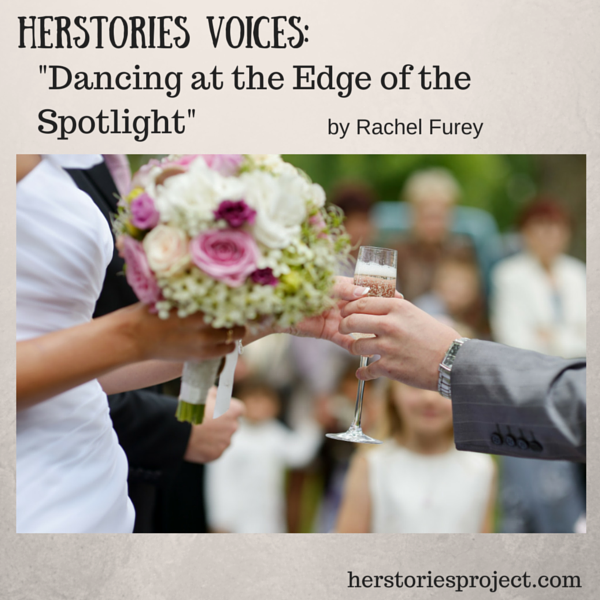
    I stood on the edge of a golf course under a wedding arch. The flowers woven into the arch’s frame bobbed in the breeze. My brother stood beside me. We were in front of the audience—on the stage, so to speak—and the beginning was perfect because not a soul looked at us. They were all staring at the bride. My brother threw a shy smile my way and then watched his soon-to-be wife come down the aisle. When the bride arrived and my brother took her hand, the two of them—both taller than me—hid me. In a good way. In the pictures, you can see my head below and behind their chins. I was like the set for the climax of a Tony award-winning play.

    My voice cracked at first, and I could tell I wasn’t loud enough. No surprise there. I squeezed the binder that held my script. I kept reading. My tongue started moving more smoothly. As my words found an even pace and cameras flashed, it occurred to me that I was in the spotlight in the very best way. I was dancing at the edge of it. My words were coming out, but they didn’t matter half as much as the people in front of me. So it was easy to keep talking.

    At the edge of that spotlight, I got to see things no one else did. I saw tears slip down the bride’s face, saw my brother’s eyes track those tears, heard the bride’s sniffles, my brother’s shoes shifting in the grass beneath us. I handed over the rings, caught the fine tremors in their fingers. I was close enough to smell the flowers above us. I was close enough to hear both of them breathing. At one point, I swore we all locked eyes. All three of us. I know that’s pretty much impossible to do, but that’s what I felt dancing at the edge of the spotlight.

    Rachel FureyRachel Furey is a Writing Instructor at Lincoln University of Missouri. She earned her PhD from Texas Tech and her MFA from Southern Illinois University. Her work has appeared in One Teen Story, Hunger Mountain, Crab Orchard Review, Fifth Wednesday Journal, Chautauqua, Women’s Basketball Magazine, and elsewhere. She is a winner of Yemassee’s William Richey Short Fiction Award and Sycamore Review’s Wabash Prize. Her story “Birth Act” was listed as a Distinguished Story of 2009 in Best American Short Stories.

    Want to submit to HerStories Voices? Click here!

    Keep up with us and our community of women writers: follow us on Facebook!

    Keep reading