Voices

  • HerStories Voices: Housekeeping

    This week’s essay struck a chord with me, because it’s about the author’s experience working as housekeeper at resort hotel when she was sixteen. When I was in college, I also worked at a five star resort in a variety of positions – waitress, retail clerk, concierge, front desk. Although I didn’t have the same experience as this writer, I identified with her feelings about the way she was treated. I met many nice guests over the years, but there were more than few who felt entitled to treat me as less than, simply because they were paying extraordinary room rates. I go out of my way to remember the names of hotel employees. And I always tip the housekeepers! —Allie
    HerStories Voices

    Housekeeping

    By Elizabeth Mosier

    In high school, I worked as a maid at a Phoenix hotel. The right word is “housekeeping”—that’s what I called out as I knocked on doors and turned keys in locks, hoping not to find people sleeping or having sex or stepping naked from the shower—but the real job was more blunt. I remade beds with sheets that exhaled smells, dusted DNA from furniture, plucked matted hair from bathtub traps, disinfected things people touched while trying not to notice their unpacked, intimate details. I was trained to say housekeeping not maid, linens not sheets, guests not customers—code switching that elevated the hotel to a resort and me to a member of the hospitality team. My uniform, a mustard-colored polyester pantsuit that matched my yellow-tan skin, seemed to make me invisible as I pushed my cart across the sun-blasted courtyard, parked it at the end of a long corridor of closed doors, knocked and entered each dim room, blinking, blinded.

    I was good; I was fast; I got paid by the room. I’d look down a line of doors and see dollar signs—the way, years later as a waitress, I’d mentally pre-count my tips by two-tops, four-tops, parties of eight. In/out. Dirty/clean. Strike/stage. Cleaning was therapeutic for me, reassuring in its routines. The room numbers I ticked off my list measured the distance between clocking in and clocking out, where I was and where I wanted to be, getting to work and going home to shed the ugly uniform that was only a temporary insult to my pride.

    At first, my parents were against it. Farmers’ kids from Indiana, their careers selling houses (Mom) and machinery (Dad) had landed us safely in the upper-middle class. We lived within walking distance of the resort, in a pretty, mostly white, neighborhood of sprawling ranchers and water-wasting green lawns cut and irrigated by Chicanos who, like many of the hotel maids, drove trucks or took the bus from south Phoenix to north. It wasn’t actually that hard to talk my parents into letting me take the job. They respected people who did physical work—work they called real—praising them with the eagerness of those who get to choose. And Phoenix is, after all, a service economy, trading on warm weather and the desert’s beauty. That’s where the jobs were, so that’s where I worked. For college money—or so the story always goes.

    One sweltering morning, I knocked as usual and pressed my ear to a door, listening for a sleepy protest or sex sounds or running water inside. When I didn’t hear anything, I pushed open the door, grateful for the blast of icy air conditioning.

    Then “Hey, foxy,” said the man standing by the bed wearing only a towel. He didn’t flinch or apologize or lunge for a robe. He held his ground, like God’s gift to women my mom would have said, aware that he’d embarrassed me. Enjoying that power.

    “I’ll come back later,” I stammered.

    “When your shift’s over,” he said.

    I backed up, let the door close behind me, and rolled my cart to the next room without looking back. Though we were supposed to leave our carts outside, I hauled mine in behind me like a fugitive, flipped the lock, and fell onto some stranger’s unmade bed.

    I wasn’t scared, exactly, or even surprised. At 16, I’d been whistled at, felt up, flashed, sweet-talked, hustled by a “modeling agent,” and secretly kissed on the lips by my parents’ old friend. From these experiences, I had an impression of men as highly suggestible—like loyal, hungry dogs. And so, while my friends were just starting to feel the power of their prettiness, I was already weary of it and wary, too, feeling imperiled and responsible.

    But that day, hiding out in an empty hotel room, I was mad enough to smash something—maybe the mirror or the TV—thinking about what the near-naked man had said to me while he’d held his wallet in his hand.

    Eventually, I got up and cleaned the room like I was paid to do, and then moved on with my cart to the next mess. Because I knew who I was beneath the uniform: a girl with a future, making her way out of there, door by door. I didn’t see the man again.

    Of course I didn’t tell my parents. Instead, I laughed about it with my friends. For years, I told the funny, feminist-y story about being taken for a hooker in that hideous maid’s uniform, my whiteness and social class the unspoken (internalized) punch line.

    It wasn’t until I grew up and had daughters of my own that I realized my own blind spot and understood the luxury of my fury. My parents had only wanted to protect me from learning how the economy really works. But I’d seen how chicken wire covered in stucco could be made into a Spanish Colonial Revival resort; I know how much labor goes into maintaining that artifice of privilege.
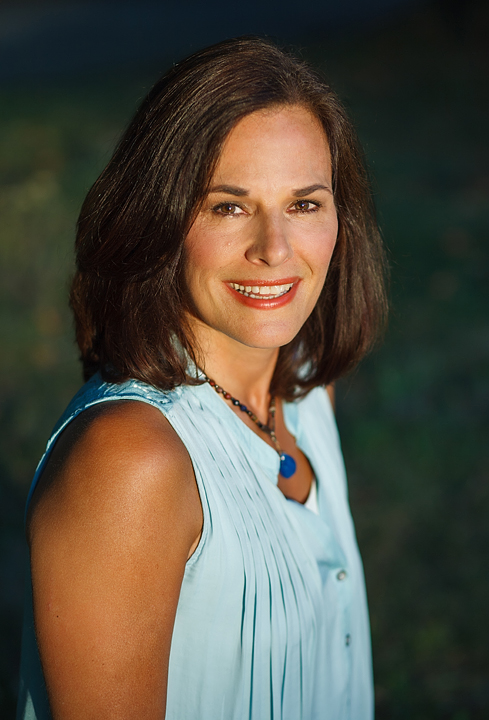
     

    Elizabeth Mosier Head ShotElizabeth Mosier is the author The Playgroup and My Life as a Girl. Her essays are forthcoming in 1966: A Journal of Creative Nonfiction, The Journal of Compressed Creative Arts, and in two anthologies: Fifty Over 50, and Chasing the Muse, Carrying the Bones: Spiritual Pilgrims Stumbling Upon Grace. Her column on midlife, “The U-Curve,” appears regularly in the Bryn Mawr Alumnae Magazine. Follow her at http://www.ElizabethMosier.com and on Twitter @emosier.


    **The HerStories Voices column will be taking a break until after the holidays. Any essays accepted at this time will run in winter/spring 2016. We are still accepting submissions, but please note there will be a longer than usual delay with running time, due to our holiday break and the fact that we are scheduling so far out. For more information on submission requirements, check out our Voices page. Submissions can be emailed to Allie, our assistant editor, at herstoriesvoices @ gmail.com
    MOTHERINGTHRUDARK

    **Mothering Through the Darkness released last Tuesday! You can order a copy of this anthology, written by 35 talented writers, in paperback or e-book here.

    Keep reading

  • Parting Words: Reading My Mother’s Eulogy

    This week’s essay — “Reading My Mother’s Eulogy” — really resonated with me. Dana Schwartz has written an achingly beautiful essay.

    Unfortunately, as a veteran of writing eulogies for my own family I understand the complicated mix of emotions and pressure one feels when trying to honor a person you love, without falling to pieces in front of a crowd. This essay is so descriptive and well written that I wish I could read the eulogy Dana wrote for her mom. I am certain she succeeded in honoring her mother’s legacy with love, humor, and respect. I suggest you grab some tissues before you read this lovely piece.
    —Allie

    HerStories Voices

    Parting Words: Reading My Mother’s Eulogy

    By Dana Schwartz

    My mother died before dawn on summer solstice, the longest day of the year. I like to think of it as her parting gift, allowing us extra time to plan her funeral, which according to Jewish tradition, should occur the following day.

    There were calls to make, photographs to select, food to order, and a eulogy to write.

    Plus, I needed to buy a dress.
    That’s the thing about death. It does not stop for anything, especially the mundane.

    It’s surreal going shopping hours after your mom dies, because it’s almost exactly like going shopping any other time – you struggle to squeeze into unflattering silhouettes, you almost flash customers when you fall into the curtain, but all the while there is this track looping in your mind, my mom is dead, my mom is dead.

    After trying on a few dresses the saleswoman picked out for me, including one I’m pretty sure was cocktail attire, I settled on a gauzy black dress with tiny white polka dots, three quarter sleeves, and buttons up the front. The perfect summer funeral dress, if there is such a thing.

    We waited while the tailor took it in since I had shrunk a size. During the week leading up to my mother’s death, my husband downed donuts and grazed on cookie trays, but my stomach closed up like a fist.

    By dusk I had a dress, shoes, and a pair of oversized sunglasses to hide my red-rimmed eyes. While the rest of my family went out to eat (again, the mundane) I stayed behind to write the eulogy.

    It was always a given that it would be me. After all, I am the writer in the family.

    Writing a eulogy is big pressure. There’s an unforgiving deadline and a powerful need to get it “right.” Before my family left for dinner, my cousin Ari came to check on me. I thought that was brave of him, or stupid, since I had just sent my father and husband away with glowering looks.

    I was struggling, having written and deleted hundreds of words. It wasn’t writer’s block, more like writer’s tsunami. I had too much to say. How could I possibly pin down my vibrant and loving mother in a few pages? How could I explain that while she may have died from multiple sclerosis, her illness did not define her?

    Undeterred by my stormy mood, my cousin sat down on the couch and told me stories about my mom, his aunt. He reminded me about her spark.

    Her spark. That was it. We had seen it just that week, looking through old photographs, the same twinkle in her eye when she was five and fifty-five. The impish look that came over her when she was about to say something inappropriate.

    The spark that lit up her smile and bubbled out in her laughter. A laugh so robust it could, on occasion, take her breath away. I used to call it her wheeze – she’d laugh so hard she’d gasp and that would make her laugh harder. Sitting in her reclining chair, propped up with pillows, covered with a blanket, unable to move. She moved us all.

    It was exactly what I needed, the centerpiece of my eulogy. Light to balance the dark. I finished it by nightfall.

    The next day was the funeral. I cried in the shower early that morning, wondering how I would read it without breaking down.

    If you cry, you cry, my husband said, practical as ever, but I didn’t want to cry. I wanted people to pay attention to my words, not my tears.

    The rest of the morning went by in a blur and before I knew it, I was up there smoothing down the front of my dress with shaking fingers. The room was filled with family and friends all waiting for me. I took off my glasses, glad for once to be near-sighted, and began to read.

    My voice creaked through the first few sentences, my throat thick, but the words came out unhindered. Though their faces were blurry, I knew every single person in the room was staring at me.

    I froze, struck by the weight of this moment. My mother was dead and I was reading her eulogy, words pulled straight from my heart, never to be spoken aloud again.

    Taking a deep breath, I continued. I’m not a born performer, but something came over me. Instinctively I knew not to rush. I paused to find familiar faces in the crowd. I wanted each person to feel the weight of every, single, word.

    My fear melted away as I read her eulogy with equal parts ferocity and love. I gave a shout out to the hospice nurses in the back row, as if I were on a much bigger stage accepting an award or giving one. I felt like I owned the room in a way I never felt before, or since, until I birthed my children.

    Then all of a sudden, maybe two thirds of the way through, I realized it was going to end – and I didn’t want it to.

    But I couldn’t stop the momentum. When it was over there was no applause. It wasn’t that kind of performance. I slipped on my glasses, grabbed my papers, and found my seat.

    People approached me afterward, complimenting my eulogy, hugging me, and crying. We talked logistics about who would be going to the mausoleum and what time everyone should arrive at my father’s house for lunch.

    My eyes were dry. The tears were there, waves of them, and soon they would come for me, but in that moment I let myself coast on the fumes of my recent triumph.

    Then it was time to go. The words I had practiced and almost memorized were beginning to fade as I stepped out into the glaring sunlight, into a world without my mother.


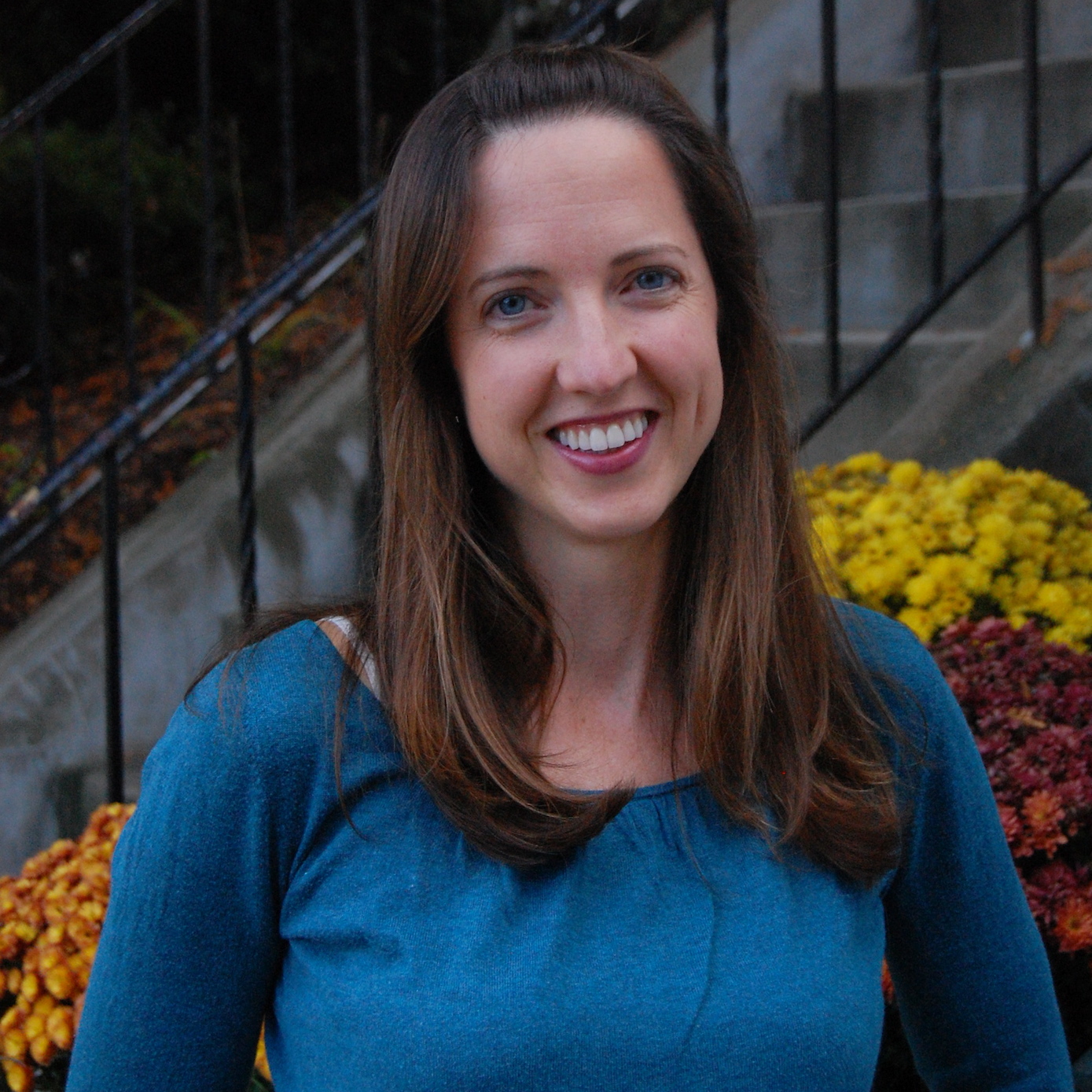
    Dana Schwartz head shot glasses (2)Dana Schwartz lives in New Hope, Pennsylvania with her husband and two children. Her short stories have been published in literary journals and she was a member of the Lehigh Valley 2015 Listen To Your Mother show. Her essays have appeared in The HerStories Project on female friendship and Mothering Through the Darkness (November 2015). She is a regular contributor to The Gift of Writing and blogs about the creative process and motherhood on Writing at the Table. She is currently working on a novel.

    Blog: http://www.writingatthetable.com
    Follow Dana on Facebook and Twitter


    Keep reading

  • HerStories Voices: Gifts From Grandma

    Today, I’m excited to share a beautiful essay from Justine Uhlenbrock. I’d like to thank everyone for their patience as I’ve gotten my “sea legs” here at The HerStories Project. I’ve read so many beautiful essays in the last few weeks, and I’m in awe of the talents of my fellow writers. The good news is that I’m almost (although not quite) caught up. We have some wonderful essays to share with you over the next couple months. Today’s essay is about Justine’s grandmother, and the many gifts she’s received from her. It’s a story that will resonate with many, as it’s about the difficulty of letting go of those we love.  —Allie

    HerStories (4)

    Gifts From Grandma

    When I was a little girl, my grandmother frequently gave me gifts. These trinkets usually had at least one previous owner, but I didn’t care. On Sundays after Mass, my cousins and I would squeeze in the backseat of her hot Oldsmobile as she drove slowly around the neighborhood, hunting for garage sale bargains. Sometimes the gift was brand new, a souvenir from one of the many trips she and my grandfather took abroad: nesting dolls from the Ukraine, perhaps, or an oversized beaded t-shirt scrawled in cursive script reading, “Welcome to Bali!”

    Even though I am grown, she is still giving me things. Today’s gift is a real treasure, she says. I am to choose my favorite teapot from her collection in the china cabinet, a massive ornate antique that is as ill suited to her sunny Florida bungalow as the large Persian rug under my bare feet. In a way, the mismatch suits my grandparents. They’ve never been the type to value fitting in over going their own way. A prime example of her bucking the system was her decision, after attending Mass for more than half a century, to leave the Catholic Church in favor of my grandfather’s synagogue.

    I open the hutch door and a pleasant odor wafts out, a faint mix of cedar and silk napkins. I recall that she used to keep apricots—my favorite childhood snack—in its drawers for me, and I am struck with the sudden urge to climb inside the cabinet and breathe in its sturdy scent. Instead, I look over the variety of teapots, picking them up to feel their heft and imagine the stories they contain.

    I select a delicate white porcelain pot with an intricate blue pattern and five matching teacups, which seem more like small bowls, as they have no handles. I have a hunch the set is from China. Turning the small lid over, I notice the telltale calligraphic lettering. I return to my seat at the dining table with my prize. The sliding glass patio doors are wide open in front of us, letting in a warm ocean breeze. A large grandfather clock chimes away the quarter-hours. Its familiar sound carries yin, the tranquil nostalgia of youth; and yang, the persistent march of time forward. But just for a moment, time slows to a stop while we talk.

    Grandma smiles in approval of my selection and tells me its story. As I suspected, a former Chinese student gave her the set. She pauses as she tries to remember whether the sixth cup went missing or was broken, then she turns to me with a question.

    Did I know she was born in the Chinese Year of the Rabbit?

    “Did I ever tell you” is how she starts most of her stories lately. Memories that gripped her like a comfortable scarf are coming unraveled. Each bears some familiarity of feel and weight, but without the instructions on how they knitted together, her thoughts are a pool of colorful yarn, attractive but unconstructed.

    “I learned from the Chinese calendar that I’m a Rabbit, born in 1927,” she begins. “And what is the Rabbit? It’s the happy, lucky sign, and I couldn’t agree more. It might sound corny, but that’s how I feel about my life.”

    I know this story, but my smile beckons her to continue. Grandma’s stories are like nursery rhymes I can recite by heart, yet they are full of meaning to process with my adult mind. She knows about the Chinese calendar from her years in Beijing in the early 1990’s, the great adventure of her life. The student who gave her the teapot—in gratitude for teaching her English and as a token of respect—was one of many hotel employees to whom Grandma taught on her volunteer assignment.

    A diminutive four-feet-eleven, what my grandmother lacks in stature she makes up for in a vibrant personality. She’s her own yin and yang blend of pride and self-deprecation, grace and humor. By the time she departed China after two years, no fewer than twenty students knew her as “Mom,” and she referred to them as her Chinese sons and daughters, the most cherished of whom she gave the meaningful Christian name of “Grace.” Over two decades later, she still speaks with Grace on the phone almost daily.

    “I’m giving you this teapot because I’m not getting any younger,” she tells me, “and I want to experience the joy of seeing my treasures find new homes!”

    It’s a bittersweet gift, and I struggle to put words to my sorrow. As she advances into her last years, osteoporosis causes Grandma’s fragile bones to snap all too easily. I hear of her pain and am mired in suffering on her behalf. The danger of our close relationship is it leads me to suspect I know her troubles without asking. Blinded by grief, I grope for solutions, clinging to advice that lets me decide what she needs to do to keep safe—that she must sell the home she loves and submit to my fearful rule.

    I try starting the conversation again about her moving closer to her family so we can care for her. She leans over to retrieve a book, The Prophet by Khalil Gibran, from her shelf. Because of her glaucoma, she can no longer read, so she asks me to turn to the chapter about joy and sorrow, and I read:

    When you are sorrowful look again in your heart, and you shall see that in truth you are weeping for that which has been your delight.

    “You can keep the book too,” she says with a smile.

    *******

    We go for a stroll on the beach. I offer her my arm to steady her gait. Since her diagnosis of Parkinson’s disease, she walks in a disorderly zigzag. To have Parkinson’s is to be trapped inside a body that no long follows the brain’s orders. But in the midst of challenging symptoms, she manages to find the comedy. In her Parkinson’s exercise class, she says everyone sways in their chairs as if to the beat of music no one else can hear. She describes it as a self-directed Hokey Pokey, chuckling, “You put your right arm up, and you shake it all about…”

    From a distance, I watch pelicans swarm a fisherman as he guts the day’s catch. One of the birds has a wounded wing. Probably from a speedboat, I frown. Marco Island is full of many permanent residents—at the post office a sign in the parking lot reads, “Look Before Backing”—but younger snowbirds land here on vacation now too. They zip by on skidoos and bring with them stores overflowing with mawkish souvenirs and flavored rums. I might be the only person on this beach—apart from my grandparents—who longs for the time before you could buy a hermit crab for a buck or a coconut that’s been carved in the shape of a monkey. I’ve never been fond of change.

    When we arrive home from our walk, my mind is still on her dwindling physical ability. I ask how her latest doctor’s appointment went. “Great!” she says. “I told a joke he wants to use. What’s the difference between a doctor and God?” She pauses, a grin creeping onto her face. “God doesn’t think he’s a doctor.”

    “Yeah, but what’d he say?” I ask, probing for more useful information.

    She shrugs, “That I have Parkinson’s.” Then she smiles. “Did you hear what George Burns’ doctor told him? He said, ‘George, you’ve got to stop it with the booze and the women. It could lead to all kinds of problems, even death.’ And you know what George said?”

    This time I get to tell the punch line. “‘If she dies, she dies!’”

    Her smile fades as she confides, “My doctor knew I had Parkinson’s because I didn’t swing my arms when I walked.” She perks up, shoulders proud. “But I do swing them now. I want to look normal.” I am grateful for this glimpse at her basic human desire to belong.
    ******

    The next morning, I finish The Prophet by the pool, peering over the text to watch my grandfather tend his tomatoes in the sandy soil, the unyielding sun and the burrowing tortoise undermining his hard work. He pauses to tell me of a conversation Grandma had with me in her living room a few months ago. Only I wasn’t actually there. Even her glaucoma can’t explain away this mistake.

    Picturing her in animated discussion with an empty armchair, I laugh at his anecdote. Is inappropriate laughter one of the Kübler-Ross stages of grief? I laugh not just because I’m amused, but because I accept that humor is how they frame their life narrative. I laugh because if I ever start talking to imaginary people, I hope the ones I love will pretend it is funny. “Well, I certainly hope I said something interesting” is all I can think to say.

    Grandma calls to me from inside the house. “Jeanne?” I hope calling me by my aunt’s name is slurred speech and not dementia talking, but I recognize it could be a generous distinction. I find her in her bedroom searching her jewelry box for another trinket to give me—something to be remembered by, she says. I place my hand on hers, squeezing it to steady the tremble as she fumbles with a silver clasp. “I got this necklace in Mexico the year you were born. A beauty for a beauty,” she squeezes back.

    She motions for me to sit with her. “My doctor says I’m dying,” she says, “but I have lived a good life. I can’t say I’m not afraid of what’s going to happen, though even if I don’t have much time left, I know I am right where I want to be.” Her candor is, I realize, a final gift to me, and her words bring me back to the truth: I suffer because I lack control.

    But control was an illusion. To confront the illusion, I begin the difficult task of letting her face the end of life in her own exquisite manner. I choose to see a glimmer of beauty in their delicate balance, the joy within their sorrow. I decide I will offer Grandma love and dignity—and maybe a little soup—but not control, not fear. Sitting with her on her bed, I begin to acknowledge and express my anticipatory grief to her without shame and judgment, as she teaches me is the Chinese way. She says I must let go not of her but of my emotions.

    Like after a dream, the subtle outline of meaning diminishes as I return to the rush of everyday life. My grandmother’s wisdom eludes me, easier praised than done. I am tortured by the thought of losing her. I am even more tortured by the thought that Parkinson’s might steal her dignity before the end comes. But I am determined to let her go. As a mother, I am well acquainted with the task of letting go. I surrender authority of my kids on a daily basis to let them make their own decisions. I quiet my fear so they—and I—can learn from their life experiences.

    I am transcribing my recordings of Grandma’s memories into an anthology, a gift for future generations. In retelling stories of the past to my daughters, I hope we will understand better the path we travel now. Perhaps someday my girls will recount these stories to their children in admiration of the mothers who came before them.


    Profile pic 2013Justine Uhlenbrock is a writer, doula, and self-care evangelist. Her essays about motherhood and heritage have appeared on Mamalode and Literary Mama, where she is an editorial assistant. She lives with her family in Decatur, Georgia and can be found on Twitter (@lonehomeranger) and her website, justineuhlenbrock.com.


    **We will be sharing two more fantastic essays in the next month, and then we will take a break for the holidays. Voices will resume in January 2016 after this break. We are currently accepting submissions for original essays, but do know that if your piece is accepted, it will not run until January or later. Submissions guidelines can be found here, and emailed to our assistant editor Allie at herstoriesvoices@gmail.com

    Keep reading

  • HerStories Voices: Solidify

    Like our HerStories Voices contributor Jackie Cangro, I am not one to initiate or encourage conversation in public places with strangers — on public transportation, at the library, in line at the grocery store. I’d rather be left alone in my (quiet) thoughts. It sounds, you know, unfriendly, to admit something like that. And sometimes I wonder if I’m missing out. So that’s why I love this essay about an unanticipated — and not necessary wanted — conversation. – Jessica

    It isn’t often that I get a seat on the subway ride home from work. As luck would have it, today I am standing in front of someone who gets off at the Park Place stop in lower Manhattan. You can’t hesitate for a moment if you want to sit on a crowded train. Polite people stand a lot.

    This gives me the opportunity to get engrossed in my book without being jostled. I’m nearly transported from the gritty bowels of New York City to antebellum Virginia when the woman to my left asks me a question.

    “Do you know what this word means?” She points to solidify in her book.

    “It means ‘to make stronger.’”

    “I’m going to write that down in my book so I don’t forget it.” She flips the pages to the back cover to show me a long list of words on which she needed clarification.

    We smile at each other and return to our books. I could tell you that I had warm, fuzzy feelings about this exchange, but that would be a lie. I could also tell you that my guarded nature developed only after moving to New York City fifteen years ago, but that too would be a lie. The truth is that even when I lived in the suburbs with grassy spaces between houses and expansive views of the sky, I was not one for idle chitchat with strangers. I’m not the person who will talk your ear off on the flight from Albuquerque to Atlanta or the one holding up the supermarket checkout line while telling the cashier my life story. I wish it came naturally for me to be one of those people who love people. Many New Year’s resolutions of my youth involved being more loquacious, but by January 5, I was exhausted.

    That’s not to say I don’t try to be helpful. Need to know how to get to Harlem from Brooklyn Heights? I’m here for you. Want a hint on which hipster coffee shop has the most reliable Wi-Fi? No problem. But I’m not going to divulge personal shortcomings to a stranger on a train—the way this woman will in just a few minutes.

    I nod at her, unsure what else to say, and give her my polite this-conversation-has-run-its-course look, but she hits me with another question out of left field. “How do you know if you’re a visual or auditory learner?”

    The train rocks and sways under the East River heading into Brooklyn. As a captive audience in a subway car, I’ve learned that the worst thing you can do in this situation is to make eye contact. Even a hardened glare only serves to encourage some people. Yet something about her earnest question makes me look. She has a pleasingly round face and a shaved head with a five o’clock shadow. The lack of hair makes her pink lipstick stand out against her chocolate skin.

    “I guess whichever comes easier for you,” I say.

    “Which one are you?”

    Now, this seems a bit personal. I glance out the window to see that we are only at Clark Street—a full six stops from home. There’s no way to end this conversation, so I know I have to let it run its course. “I suppose I’m a visual learner.”

    “How do you know?”

    “I’d rather read directions than hear them, for example.”

    She writes this down on a separate piece of paper, under the heading ‘Visual Versus Auditory.’ It seems that she is also a visual learner; she just doesn’t realize it. Her smile is wide, and she gives off a kind vibe, not a creepy one. “Do you have any tips for taking tests? I’m always looking for tips.”

    It’s been many years since I’ve taken a test. The last one, to complete my Master’s Degree, was the most intimidating of my life. We were given one essay question from each of seven courses completed and allotted one hour per question to write our answers in exam books. The proctor looked at us coolly as we entered the room, trying desperately to retain all of the information we’d memorized until we could regurgitate it on the page. She sighed. “Most of you will fail today and have to retake the exam next semester.” A fellow student leaned over and looked at me with a fierceness that comes from a combination of being sleep deprived and over-caffeinated. She whispered that we were going to make it through. I’d only had one class with her and couldn’t even remember her last name, but I believed her.

    On the other hand, it wasn’t too long ago that I gave tests as an adjunct instructor at a local college. So I tell the woman next to me what I would have told my students. “Be confident and don’t second-guess your answers. Your first instinct is nearly always right.”

    She smiles again—a big, broad smile that takes up her whole face. “Yes, I usually have good intuition. All my friends tell me that.”

    She goes on to tell me how inspired she is by the book she’s reading and since she’s read all three books by the author, she doesn’t know what she’ll read when she’s done. Now she’s trying to read very slowly. She also thanks me for talking to her. “You know, every time I get on the train I ask God to put me next to someone smarter than me. I’m trying to learn all of the things I didn’t learn when I was younger. I know I’m kind of old for this. It’s not easy starting from scratch.”

    “No, it’s not, but please don’t give up. It’s never too late.” I suddenly and deeply care that she not quit. I want her to dream big. I am prepared to dream bigger for her than she is allowing herself to dream. I know sometimes it’s the only thing that keeps you going—to feel that someone else, even a stranger, believes in you.

    The train pulls into Grand Army Plaza, and I take my leave of her. In a fifteen-minute conversation with a woman I’d never laid eyes on before, and probably never will again, I’ve been reminded to trust my instincts, let my guard down, and remember the power of tenacity. All things on which my soul needed a bit of a refresher.


    Jackie CangroJackie Cangro’s short story “Secrets of a Seamstress” was selected as a finalist in the Saturday Evening Post’s 2013 Great American Fiction Contest. Her fiction has also been published in The MacGuffin and Pangolin Papers, and her nonfiction has appeared in Narrative.ly, Prick of the Spindle, and History Magazine, among others. She can be found on her blog, on Twitter, and Goodreads. When she’s not riding the subway, she works as a freelance editor and creative writing instructor. 

    Keep reading

  • HerStories Voices: One Child

    This week’s HerStories Voices column is about learning good news that brings back tough memories.


    HerStories (3)


    I clutch my cell phone. It reveals what looks like a black and white peanut, or a shrimp, or a tiny alien – if I didn’t know better.  My daughter just texted me a picture of her sonogram, and it’s a girl.  On the train while riding to work, I cup my granddaughter in the palm of my hand.  And I start sniffling.  The woman behind me taps me on the shoulder, offers me a tissue and asks if I’m all right.  I assure her my tears are happy, that I just found out I’m going to be the grandmother of a baby girl.  “Oh, how exciting for you,” she says.  Then comes the inevitable question as our train lunges forward: “How many children do you have?”

    For more than a quarter of a century, this question has clawed at my mind like a rake against a dusty, leafless ground. I haven’t been able to answer without squirming. I shift in my seat. I can’t tell this well-meaning stranger how hard it is for me to answer her.

    To begin with, I never saw my own daughter at this stage of creation. I never knew the sex of my baby because I never went for tests. No, I can’t let the woman behind me on the train know that when I was pregnant, my marriage was its own Third World country – unstable, violent, abusive, toppling.  I froze in the middle of that turmoil.  I never made a doctor’s appointment until I was almost due to deliver.  I ripped out the Yellow Page listings for adoption agencies and hid them under my bed, just in case I didn’t keep the baby.  I didn’t talk about it.  I bought bigger clothes while my friends and co-workers, aware of my history of yo-yo dieting, assumed I was in a fat phase.  It was easy to hide from my parents and close friends because I had moved several states away after college, and I didn’t schedule a visit home after my fifth month.

    My daughter was born healthy by an emergency Caesarean two weeks past her due date, after my toxemia caused my blood pressure to spike at 150 over 100.  Lifted calmly from her womb-spa, my baby was smooth and silent.  She looked Yoda-old and wise, as if she sensed that she belonged even though I had kept her existence hidden.  We looked at each other, alone at night in a bare white hospital room smelling of baby wipes.  I placed her between my knees, and in the valley of the bed sheets, I knew I could not give up this eight-pound-four-ounce bundled mummy in a pink knit hat.  I didn’t know how I would raise her, but I had spent enough nights at Al-Anon meetings to have memorized the “one day at a time” mantra. I couldn’t imagine the next 24 years, but I could manage the next 24 hours.  My baby spent her first night home in my underwear drawer while I dialed my parents and close friends to tell them the news and ask them to forgive me for not telling them sooner.

    Three years later, I was divorced. I was broke. My car was repossessed.  I filed for bankruptcy.  But my little girl and I were a team by then, and nothing would separate us.   Friends brought bags of groceries and called with employment leads, and my daughter’s grandparents paid for day care so I could work at a better job.  At the same time, my daughter started to talk about another little girl with her in a place where she lived before she was born. I had heard and read about other young children talking about life-before-birth. My daughter’s recollection of “the other girl” stuck in my mind.  Was I supposed to have had another child?  Was there another baby in that place before birth, calling my name?   My daughter stopped talking about the other girl by the time she was five, and settled on being an only child in a household of two.

    Fifteen years later, remarried, when life had the harmony of a Barbershop Quartet, I wanted to find that other girl my daughter had referred to long ago.  I tried to get pregnant but couldn’t.  Publicly, I joked about it and said, “I guess you can’t teach old egg new tricks.”  Privately, I felt guilty about having considered giving up my daughter for adoption, and I thought my inability to get pregnant meant that I didn’t deserve another child. I envisioned babies coming and going, to and from the land of life-before-birth, and telling each other, “Skip this mother and move on. She was too screwed up the last time.”

    My second husband and I tried to adopt a child.  We designed a glossy brochure about our lives so that birth mothers would choose us from among all the waiting couples. With a little photo-shopping to color our hair and wipe away wrinkles, we hoped we would show well to the young women making decisions about choosing parents to raise their children. Our case worker had encouraged us to market ourselves, so we were sure to include pictures of our daughter’s birthday parties and trips to Disney.  One morning, while waiting on the adoption list, I shot out of bed with the conviction of a cattle prod.  I sensed that a birth mother was about to choose us.  I hauled the crib, changing table, dresser and rocker into the would-be nursery, picked a carousel horse wallpaper print from a catalog, and asked my friend to sew neutral-green curtains and pillows.  My intuition was right.  The next day, the adoption agency called to say that a birth mother had indeed chosen us from the parents’ list for her baby who was due in three months.

    Room ready, day care chosen and notice given to my boss, we waited.  We chose a name for this baby – a boy would be Jesse and a girl would be Jennifer – both with a strong initial J that looked as sturdy as a soccer player or as graceful as a ballerina.   We got the call when the baby was born. “I’m afraid I have some bad news for you,” our case worker said in her scripted way.  After giving birth, the biological mother had decided to keep her child. I flashed back to my own despair and hopelessness a decade and a half earlier – remembering how I needed to know during my pregnancy that there was an escape hatch if I couldn’t take care of my baby – then knowing when the baby was born that this child was mine. I grieved for the loss of Jesse and Jennifer.  But I understood.

    Our agency case worked had warned us that adoption would be a roller coaster. I had buckled up my Type A personality and braced my peri-menopausal emotions for the uncontrollable ride. But after six years, we couldn’t stomach the ups and downs. I never said this aloud to anyone, but I sometimes wondered if this was my punishment for almost giving up my daughter and denying my family and friends the joy of my pregnancy and birth.

    The woman in the seat behind me is distracted for a moment by the announcement that our train will be delayed, but she quickly turns back to hear my answer to how many children I have.  I could explain that my fears during pregnancy made me wonder if I needed to give up my child for adoption. Or that I wanted more children and waited on an adoption list for six years, but that the birthmothers who chose us decided to keep their babies.

    Instead, I simply smile back at this curious stranger, because none of that history matters now.  Today, a new baby is on her way into my life. I see her outline floating in the shadows of my phone. In my mind, I trace the letters of a text message back to her:  “I love you already.  I can’t wait to meet you.”  My guilt is gone, erased by a text message telling me that I am worthy of a granddaughter.  A text message telling me that my daughter loves me and wants to share this baby with me.  A text message telling me that there is no punishment for whatever I may have considered doing years ago.  A text message letting me know that the other girls in the land-before-birth took a vote and decided that I would make a perfect grandmother.

    In a flash, I answer the woman behind me on the train.  “One child,” I say, without flinching. “I have one child, my daughter.”


    FullSizeRender (1)Gloria Barone Rosanio is a writer, wife, mother and grandmother living in New Jersey. She wrote a children’s book about her daughter and reads it to her granddaughter. She can be followed on Twitter @gloriabarone. 


    Looking for a way to improve your blogging this summer? Learn about our Write Your Way to a Better Blog Course… back by popular demand. Learn about blog writing from some of your favorite bloggers! Learn more here


    Keep reading

  • HerStories Voices: I Am Here

    Today’s HerStories Voices column is by Suzanne Perryman, who blogs at Special Needs Mom. It’s a lovely meditation on the relationship between Suzanne and her oldest daughter, as well as the triumphs and struggles of her entire family.

    Sometimes our most precious moments with our children take place with them asleep, beside us.

    My daughter Olivia is breathing gently in a rhythm I know well. For almost 14 years I have studied her stages of sleep.  With her hand tucked in mine, I stay stretched out beside her. In the shadows I study the new curves on her body and the way she fills her childhood bed. The way her long curly hair falls in thick bundles off the ends of her pillow, the dark hiding its rich reddish brown. She called me here me tonight, overflowing with excitement and anxiety, unable to sleep.

    “ Lie with me, Mama,” she used to say. When her curls were just a cap of copper penny red and still shooting in all directions.  And I would resist then, empty and exhausted by the end of my day. Wanting the touch of my husband’s skin next to mine, wanting my own turn.

    Her curls grew into a mop of deep red during the years she favored Strawberry Shortcake. The feather-light weight of her five year old body made her steps small and almost silent in her Strawberry Shortcake slippers, and I could barely hear her coming each early morning when she slowly shuffled down the hall .

    She would find me at my desk most quiet mornings and climb into my lap, whispering in a sleepy sing song, “Whatya doing?

    Looking at pictures,”  I replied one morning, as the softness of her body settled and snuggled into mine, she reached for the photo I held in my hand. “My favorite,” she sighed.

    She studied that image of her four year old self, dressed in pink and red, raincoat and boots, standing in our backyard holding her umbrella. 

    I woke up from my nap ..” she began, “and Zoe was still sleeping and we snuck outside to the play in the rain. We ran all around my playhouse and splashed on the patio until we were wet! You remember, right, Mommy?” She questioned with her eyes wide. “I can’t see you in the picture but you were there.”

    You were there.

    She didn’t say it, but with her subtle reference, I know that she remembered those times when she woke up and I was gone. Beginning when her sister Zoe was born and I disappeared into the night, returning home a week later. My first night home, when I had finished singing and rocking her to sleep and after quietly tucking her in her crib, she awoke screaming and crying for me, and then finally flung her body out of her crib and across the room.

    And times after that, when Zoe fell sick during the night and I had no choice but to take her to the hospital, and Olivia would wake up with her Mommy missing. Her mommy wasn’t there. 

    In Pre-k, the psychologist called it a slow-to-warm temperament, the way she would wrap her arms around my legs, and refuse to say goodbye. The way she would clutch and climb my nearly six foot length, from bottom to top, the way a child can scurry up a tree. While I stood solid with the weight of Zoe in my arms, the weight of the guilt in my heart made me weak.

    Slow to warm, like the careful way I would warm her maple syrup for our pancake lunches. She would stand then, hugging the back of my legs as I poured the pancake batter and then start to giggle as I carried her plate to the table, over the silliness of our eating pancakes for lunch. Pancake lunches were special, for the days we missed our pancake breakfasts. For the days she woke up and I wasn’t there. 

    Kindergarten at an early age was a better choice for my smart and spirited happy child.  A smarter alternative to spending her day visiting Zoe’s specialists and therapists or playing quietly while her sister napped.

    And like a fragile flower, well-nurtured, she flourished within our simple family life.  She grew strong until fall came along every year, and with new transitions and new teachers, she would falter and wilt a bit, until slowly opening wide again strongly rooted again by spring, and warmed by the season’s sun.

    Until one spring, when she didn’t. And I grieved for her. I missed her smile, her charm, her affection, the way she shimmied across her bedroom floor as she sang her favorite songs. And that way she always started her day by sleepily climbing into my lap where I too found comfort in her body still warm from sleep. I missed her then and I tried everything. I went back to my mothering basics: more attention, more love, more sunshine, more backyard time.

    And when nothing worked, I sat down at my computer and Googled “how +to+make+my+daughter+happy+again.” And knew then I had reached my rock bottom, and her anxiety had outgrown me. It was a psychiatrist who helped her to find the right words,  to identify the panic attacks she was experiencing, and it was the medicine that eventually brought my happy girl back to me.

    Olivia just kept growing, taller and smarter. The color of her hair began to turn an auburn brown. She took to reading big books, piling them in her room, and carrying three or four in her arms to school with her each day, admitting quietly the comfort they gave her, how they helped to ease her anxiety.

    With growth came more truth. One day Olivia asked if her sister Zoe would ever get better, when Zoe might begin to walk, without using her walker and if she would ever someday not need her pink power wheelchair.

    I looked at my oldest then, knowing she had outgrown her little girl eyes. I took our routine each day for granted and never realiized that Olivia believed the medicines, the therapies, and the doctors would someday make Zoe better, help her learn to walk and speak clearly.

    I watched Olivia’s eyes fill with tears as I explained that although Zoe’s body would grow taller and maybe stronger, her condition would never change. I waited for her words of grief.

    “Does Zoe know, Mom?” was all she said. Protective  of her little sister, she was trying to imagine if Zoe knew this truth too, if Zoe, who was full of life and laughter, always smiling knew this to be her truth or if there was more hurt to come.

    Through her middle school years there were times when Olivia hurt, feeling the pain of her anxiety and in those moments, I felt even worse. There were other times too, with friends and pool parties and school, her first concert. Through these years she found comfort in our family, and at her school.

    My “fix-it” years of motherhood filled with research, identifying problems and then applying my best mothering skills, were soon coming to an end. We gave up the medicine and I worked on developing a specialized set of coping skills. I started thinking about the tools Olivia would need to take with her one day. What she would need to know about herself, how she would need to be the one to “fix” things in her future.

    I never imagined lying beside my teenage daughter like this, thinking that someone else will lay next to her one day, someone else will love her this fiercely. Thinking about how her world will grow beyond this home, beyond her father and me, beyond her sister who will always stay here with us. That I will still be here, but the someday is coming when she will be gone.

    She is in high school now and everything is new. The scratchy uniforms, her friends, the community, the higher expecations, the honor classes and study load. I am here for you, I tell her. I try to comfort, try to help her to pack and prepare the toolbox she will take with her when she someday goes. I watch her struggling for social approval when even her most familiar becomes uncomfortable, like when she straightens her hair, as if denying her true self, and can erase the memory of her corkscrew curls like they were never there.

    She raises her voice in anger when she is worried, anxious. I raise my own voice in fear and frustration.Then I pull her into me saying, “I am here.”

    She cries many different tears, raindrop tears that trickle, as she slowly tells me her story. Tears of a thunderstorm that come fast and furious lashing out that it is my fault she feels this way, and finally with no warning, the torrential downpour that falls hard and steady and seems to have no end. “ I am here,”  I tell her as I try to be her shelter from the storm.

    These moments of darkness, like weather, sometimes come with no warning, are unpredictable and follow no pattern. They interrupt the sunniest days of sweetness, and light and the calm of our family life.

    No storm clouds follow. The outburst comes and passes, and with frustration I accept that she has outgrown my own ability to fix it. I can hug and hold,  coax and plead. After, we talk about what worked, what helped to guide her through it and soothe her fears. And we pack that too into her toolbox, to take out and use again someday.

    It is late when she calls me to her bed tonight. At first I sit, listening to her talk about her day. I hear hesitation in her voice and then it grows stronger and then smoother. High school is hard but she is finding her way.

    Lie with me, Mom,” she says and I hear that little girl voice again, I can see her little girl curls.

    I don’t resist because I know my turn with her is coming to an end.

    Her hand reaches for mine, and our fingers find their familiar places wrapping around each other. We lay connected.

    I close my own eyes and now it is my little girl I see, the way her curls fly as she runs. The way she likes to hide behind me, her body aligned perfectly with mine.  I see my husband, waiting for me time after time, his eyes full  with care and understanding as he too chooses to put Olivia’s needs before his own.

    We do all we can to prepare our kids, to pack their tool box full for someday. We push them out into the world — when really we want, for just a little while longer, to pull them back in.

    Olivia’s fingers are still wound tightly through mine, and I know that years from now, she will be gone, finding her way in the world with her confidence in full bloom, and it will be this moment I will miss: the simple joy of being the one who holds her hand, late into the night.

    I am here, I whisper in the dark.

    suzanneperrymanSuzanne Perryman began blogging at specialneedsmom.com to celebrate the simple, inspiring every day, one story at a time. Her work has recently been featured on HuffPost Parents, Brain,Child, BlogHer, Mamalode, Project Underblog and QueenLatifah.com and was chosen as a BlogHer Voice Of The Year.


    -Mother.Writer-We still have a few spaces in our “Mother, Writer” class starting next week! Find out more here….

    Keep reading