Month: November 2015

  • HerStories Voices: Housekeeping

    This week’s essay struck a chord with me, because it’s about the author’s experience working as housekeeper at resort hotel when she was sixteen. When I was in college, I also worked at a five star resort in a variety of positions – waitress, retail clerk, concierge, front desk. Although I didn’t have the same experience as this writer, I identified with her feelings about the way she was treated. I met many nice guests over the years, but there were more than few who felt entitled to treat me as less than, simply because they were paying extraordinary room rates. I go out of my way to remember the names of hotel employees. And I always tip the housekeepers! —Allie
    HerStories Voices

    Housekeeping

    By Elizabeth Mosier

    In high school, I worked as a maid at a Phoenix hotel. The right word is “housekeeping”—that’s what I called out as I knocked on doors and turned keys in locks, hoping not to find people sleeping or having sex or stepping naked from the shower—but the real job was more blunt. I remade beds with sheets that exhaled smells, dusted DNA from furniture, plucked matted hair from bathtub traps, disinfected things people touched while trying not to notice their unpacked, intimate details. I was trained to say housekeeping not maid, linens not sheets, guests not customers—code switching that elevated the hotel to a resort and me to a member of the hospitality team. My uniform, a mustard-colored polyester pantsuit that matched my yellow-tan skin, seemed to make me invisible as I pushed my cart across the sun-blasted courtyard, parked it at the end of a long corridor of closed doors, knocked and entered each dim room, blinking, blinded.

    I was good; I was fast; I got paid by the room. I’d look down a line of doors and see dollar signs—the way, years later as a waitress, I’d mentally pre-count my tips by two-tops, four-tops, parties of eight. In/out. Dirty/clean. Strike/stage. Cleaning was therapeutic for me, reassuring in its routines. The room numbers I ticked off my list measured the distance between clocking in and clocking out, where I was and where I wanted to be, getting to work and going home to shed the ugly uniform that was only a temporary insult to my pride.

    At first, my parents were against it. Farmers’ kids from Indiana, their careers selling houses (Mom) and machinery (Dad) had landed us safely in the upper-middle class. We lived within walking distance of the resort, in a pretty, mostly white, neighborhood of sprawling ranchers and water-wasting green lawns cut and irrigated by Chicanos who, like many of the hotel maids, drove trucks or took the bus from south Phoenix to north. It wasn’t actually that hard to talk my parents into letting me take the job. They respected people who did physical work—work they called real—praising them with the eagerness of those who get to choose. And Phoenix is, after all, a service economy, trading on warm weather and the desert’s beauty. That’s where the jobs were, so that’s where I worked. For college money—or so the story always goes.

    One sweltering morning, I knocked as usual and pressed my ear to a door, listening for a sleepy protest or sex sounds or running water inside. When I didn’t hear anything, I pushed open the door, grateful for the blast of icy air conditioning.

    Then “Hey, foxy,” said the man standing by the bed wearing only a towel. He didn’t flinch or apologize or lunge for a robe. He held his ground, like God’s gift to women my mom would have said, aware that he’d embarrassed me. Enjoying that power.

    “I’ll come back later,” I stammered.

    “When your shift’s over,” he said.

    I backed up, let the door close behind me, and rolled my cart to the next room without looking back. Though we were supposed to leave our carts outside, I hauled mine in behind me like a fugitive, flipped the lock, and fell onto some stranger’s unmade bed.

    I wasn’t scared, exactly, or even surprised. At 16, I’d been whistled at, felt up, flashed, sweet-talked, hustled by a “modeling agent,” and secretly kissed on the lips by my parents’ old friend. From these experiences, I had an impression of men as highly suggestible—like loyal, hungry dogs. And so, while my friends were just starting to feel the power of their prettiness, I was already weary of it and wary, too, feeling imperiled and responsible.

    But that day, hiding out in an empty hotel room, I was mad enough to smash something—maybe the mirror or the TV—thinking about what the near-naked man had said to me while he’d held his wallet in his hand.

    Eventually, I got up and cleaned the room like I was paid to do, and then moved on with my cart to the next mess. Because I knew who I was beneath the uniform: a girl with a future, making her way out of there, door by door. I didn’t see the man again.

    Of course I didn’t tell my parents. Instead, I laughed about it with my friends. For years, I told the funny, feminist-y story about being taken for a hooker in that hideous maid’s uniform, my whiteness and social class the unspoken (internalized) punch line.

    It wasn’t until I grew up and had daughters of my own that I realized my own blind spot and understood the luxury of my fury. My parents had only wanted to protect me from learning how the economy really works. But I’d seen how chicken wire covered in stucco could be made into a Spanish Colonial Revival resort; I know how much labor goes into maintaining that artifice of privilege.

     

    Elizabeth Mosier Head ShotElizabeth Mosier is the author The Playgroup and My Life as a Girl. Her essays are forthcoming in 1966: A Journal of Creative Nonfiction, The Journal of Compressed Creative Arts, and in two anthologies: Fifty Over 50, and Chasing the Muse, Carrying the Bones: Spiritual Pilgrims Stumbling Upon Grace. Her column on midlife, “The U-Curve,” appears regularly in the Bryn Mawr Alumnae Magazine. Follow her at http://www.ElizabethMosier.com and on Twitter @emosier.


    **The HerStories Voices column will be taking a break until after the holidays. Any essays accepted at this time will run in winter/spring 2016. We are still accepting submissions, but please note there will be a longer than usual delay with running time, due to our holiday break and the fact that we are scheduling so far out. For more information on submission requirements, check out our Voices page. Submissions can be emailed to Allie, our assistant editor, at herstoriesvoices @ gmail.com
    MOTHERINGTHRUDARK

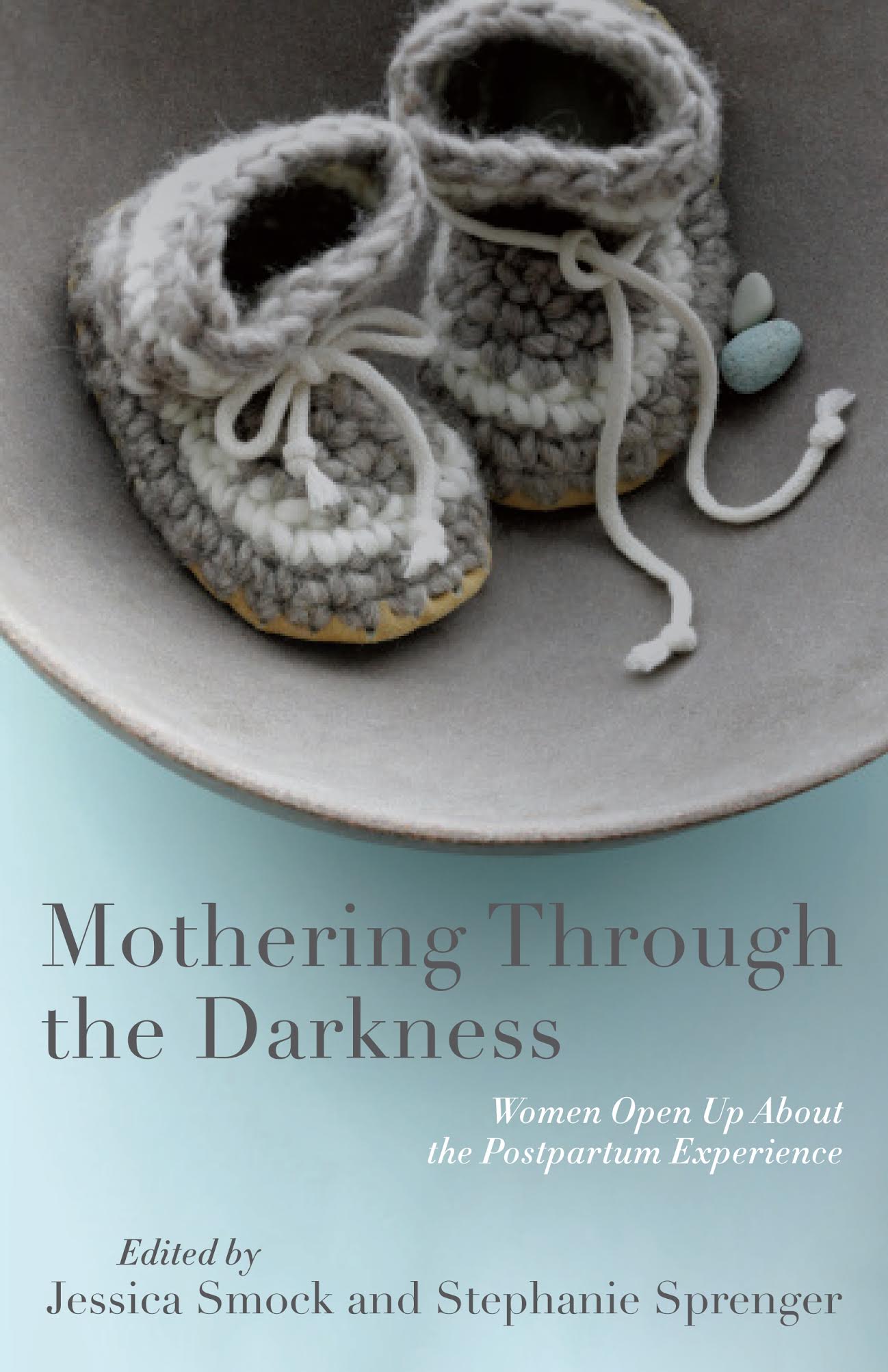
    **Mothering Through the Darkness released last Tuesday! You can order a copy of this anthology, written by 35 talented writers, in paperback or e-book here.

    Keep reading

  • When to Stop Saving the Friendship

    If a friend starts pulling away while claiming nothing is wrong, how far would you go to save the friendship? How far should you go to get an answer about why she is no longer interested in being friends?

    Do you have a question for Nina? Use our anonymous form. You can read Nina’s answers to past questions here.

    HerTakenoavatar

    Dear Nina,

    I became friends with another woman in my community two years ago. Our kids went to the same camp and we instantly hit it off. Over the past two years we’ve spent tons of time together individually, with our kids, and with our spouses. We even took a trip together with our kids (sans husbands). We used to email or text almost every day and saw each other at least once a week, often more because we’d walk together several days a week.

    Lately I’ve been getting the brush off from her. Over the last few weeks, she’s stopped initiating plans. We still see each other often because our kids do several of the same extracurricular activities and we have mutual friends who get together once or twice a month for dinner and other activities. When I do see her, she’s very polite, but completely disengaged. It’s a stark contrast to the connection we had before.

    I asked her in person if everything was okay and told her I was getting the feeling she was upset with me. She sidestepped the question then redirected our conversation to other surface topics. Later, I texted her reiterating the vibe I’m getting and admitted that maybe I was being oversensitive and needy. I asked if everything with okay with her, thinking maybe she’s going through something. Again, she talked around the question then said, “I wasn’t upset with you when I saw you today. I was actually upset about work.” She never directly answered to tell me if she’s been upset with me before that day though because honestly the cold vibe started way before the “work” explanation.

    I don’t know how much this plays into what’s going on right now, but we’re about as opposite as you can get. I’m more emotional; she’s more logical. I’m drawn to literature and arts; she’s drawn to science and math. I enjoyed this aspect of our friendship a lot, but now that something doesn’t feel right between us, I realize that we probably approach conflicts like this very differently. I feel the need to address issues when they arise, and she clearly doesn’t want to.

    Is there anything else I can do to address her coldness, or have I done what I can? Is she just politely brushing me off and clearly doesn’t see the value in discussing it with me? I guess I’m most scared of this. I’m starting to doubt the depth of our friendship, and I feel silly for thinking we were ever “close” friends. My husband says that I need to move forward and accept that this might not be the friendship I thought it was, but I’d still like to salvage it if possible. I don’t know if I can discuss it with her again. I’ve tried to bring it up twice and her responses (or non-responses) make me feel bad. It feels like I’m asking her for constant reassurance, and I don’t want to be that person. Do I stop trying on my end? I feel like I’m losing friend, and I’d like to at least know why.

    Thanks for your insight.

    Just call me Needy Nancy!


    Dear Needy Nancy,

     In last month’s question about whether to unfriend an ex-friend on Facebook, I heard from a woman who was equally frustrated about a close friend’s unilateral decision to end a friendship without an explanation. The two women had been best friends for thirteen years before the letter writer’s friend starting fading away in the same way you’re describing.

    But what happened next is something I would like to help you avoid. The letter writer spent the next five years attempting to communicate with her former best friend with the purpose of hearing what had gone wrong. She never quite got the answer she was looking for, and I’m not convinced that hearing a list of reasons would have made the end of that friendship any easier for the letter-writer. We (as in most people) generally do not like getting left behind and no explanation makes the abandonment more palatable.

    I have a feeling that there is nothing your friend can say to make you feel better about her decision to cut you out of her life. The reality is that you’ve invested time and emotional capital into the friendship and her sudden decision to fade away feels like a rejection. And I’m not making light of your feelings. I think many woman would agree (including me) that the rejection of a friend can feel significantly worse than a romantic breakup. In a monogamous relationship it’s understood that we can only have one special partner. But in friendships we can have many close relationships, even several “best” friends. It’s easy to obsessively ask yourself, “What’s wrong with me?,” when a friend, who can have many friends, decides to cut you out of her life.

    You’ve asked me and yourself an important question: Is there anything else I can do to address her coldness, or have I done what I can? It sounds to me like you’ve done what you can. It really does. We simply do not get to decide how another person behaves, nor do we get to decide the fate of our friendships. Your friend certainly has her reasons, and I bet only some of them fall on your shoulders. If she’s not returning calls or answering questions directly when you see her in person, then your only other choice is to write an email or a handwritten letter explaining your hurt and disappointment. But you should only do that knowing you may never get a response, or at least not a satisfying response. She may not tell you the truth. Or, more likely, she will tell you her truth, which could feel far from your experience of the friendship.

    I’m not saying you shouldn’t try one last time to talk things out with her, but I am urging you to keep your expectations low and to use it more as a chance to potentially learn something useful for your other friendships. I happened to read two personal essays in October about dealing with the end of friendships and both illustrated how we can learn from our part in the endings, even if we’re the ones left behind. Check out Laura Turner’s, “How Do You Grieve a Friendship When You Never Wanted to Let it Die” in Jezebel. I also liked Kaitlin Ugolik’s, “How I Realized I Was the Toxic Friend,” in Refinery29. I would read all the comments on both pieces, too, which are full of women (and some men) commiserating about being the friend left behind. Most of us have been there.

    There is one area where I hope to alleviate some of your worry. You said, “I’m starting to doubt the depth of our friendship, and I feel silly for thinking we were ever “close” friends. My husband says that I need to move forward and accept that this might not be the friendship I thought it was . . . ”

     I only agree with half of your husband’s statement. Yes, I think you have to accept that the friendship as you knew it (and by the way, it was a really intense one in my estimation) is over, but that doesn’t mean this friend was not a close and intimate person in your life. It doesn’t mean that the friendship was fake. I want you to decide that two truths can exist at once. Yes, you two were important to each other and the two years you had together mattered to both of you because of the depth of the friendship. But also, the friendship as you knew it is ending and it rightfully hurts.

    Finally, “Needy Nancy,” I’m sorry you’re going through this loss. It is most definitely a loss and it’s okay to wallow in the pain of it for a while. But then (soon!) you have to look up and notice your other friends and think about the potential of future friendships. Each relationship, even the ones we can’t save, offers us the chance to grow and change for the better. And remember that this one friend drifting away does not make you an unworthy person.

    Thank you for sharing your experience here. I have no doubt that many readers will relate.

    Warmly,

    Nina


    Readers: How have you successfully moved forward after the end of a close friendship?

    **Mothering Through the Darkness: Women Open Up About the Postpartum Experience released last week! You can buy a paperback or e-book here.

    FULL RES - Badzin-03 copy-1


    You can follow Nina on her blog, on Facebook and on Twitter.


    Keep reading

  • Release Day for Mothering Through the Darkness!

    It’s finally here! For the past year, we have been preparing for the publication of Mothering Through the Darkness: Women Open Up About the Postpartum Experience. We read over 200 powerful submissions, carefully selected and edited essays, ran our first ever writing contest (with help from some fantastic, talented judges), and along with our publisher, She Writes Press, created a powerful anthology that we are incredibly proud of.

    MOTHERINGTHRUDARK

    We’re proud of the 35 gifted, brave, honest, and inspiring contributors of this book. We’re proud to have Karen Kleiman as our foreword author. We are grateful for the women who shared their stories with us throughout this experience, and we’re grateful for all the support we’ve received from our HerStories Project community.

    Today we are honored to officially release Mothering Through the Darkness; it’s available for purchase in paperback and e-book, from Amazon, Barnes & Noble, and other indie retailers. We will be donating 10% of our profits to Postpartum Progress, a fantastic organization that provides valuable resources to mothers struggling with perinatal mood disorders.

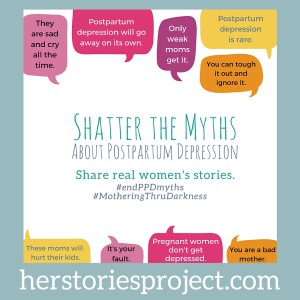
    In addition to the publication of our anthology, we are organizing a social media campaign during the first week of November called “Shatter The Myths.

    finalMTTDgraphic1 (1)

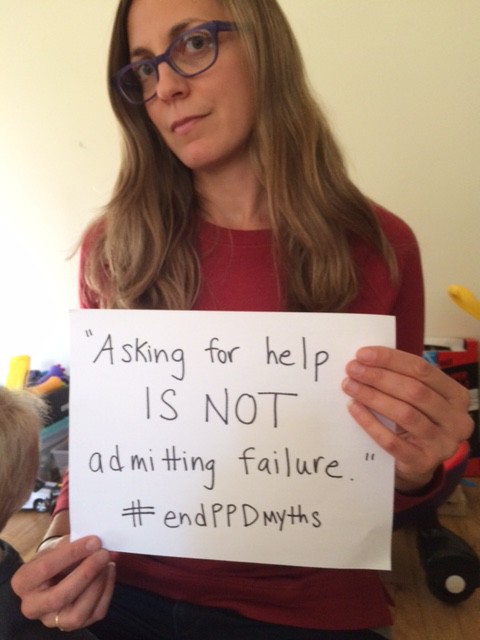
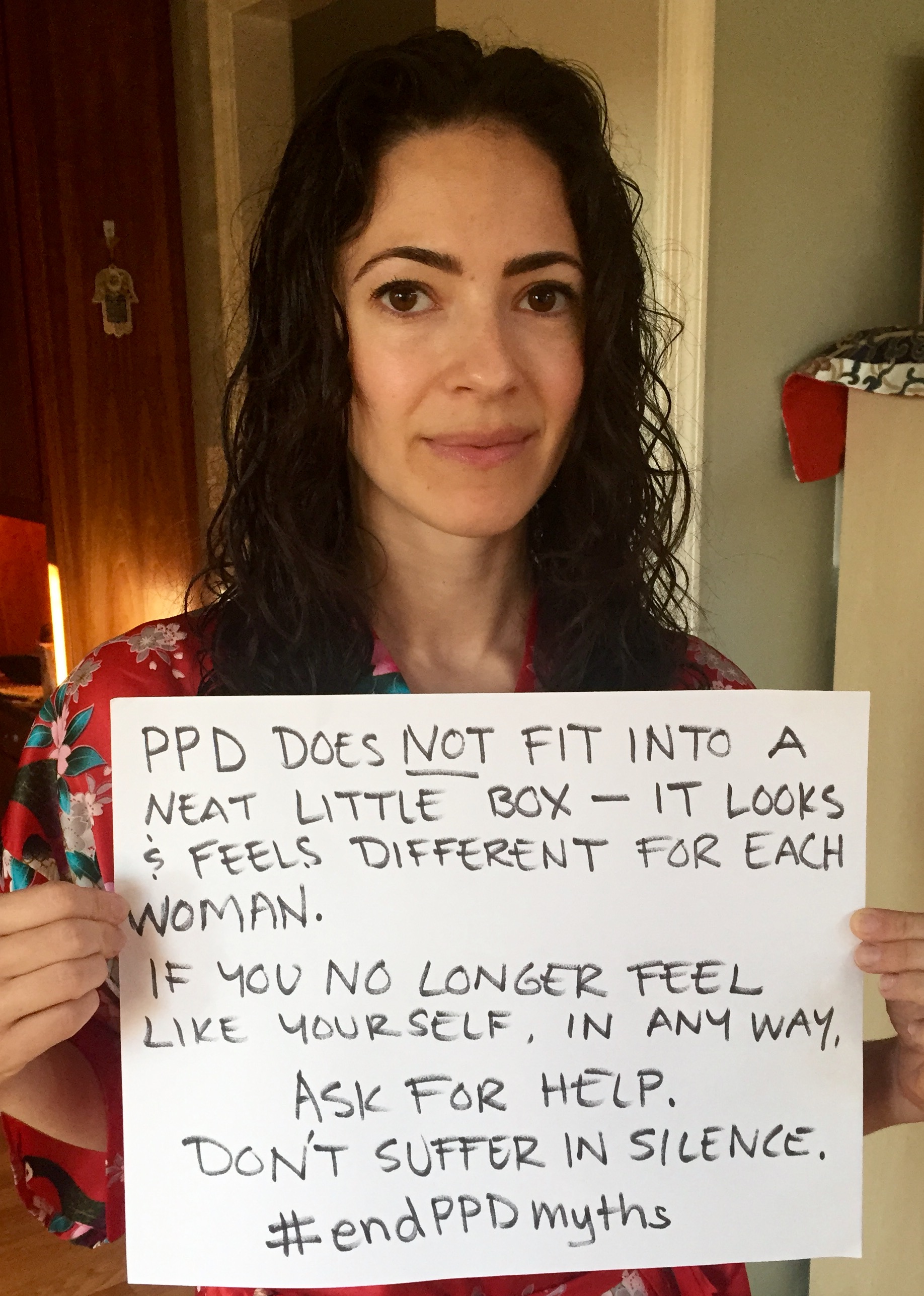
    The goal of the campaign is to end the widespread misconceptions about maternal mental health disorders that prevent mothers from speaking up about their struggles and getting help. This month, to shatter these myths and to help end the stigma surrounding these treatable disorders, the HerStories Project is asking survivors of PMD, other mothers, clinicians, family members, and mental health advocates to post messages, images, and signs for moms who may be struggling with these conditions, using the hashtags#endPPDMyths and #motheringthrudarkness.

    Maybe you never experienced perinatal mood disorders but you still want to help—please do! You don’t even have to make a sign or share a photo. Simply write a message like “Always trust your instincts. If something feels wrong, ask for help. #endPPDmyths #motheringthrudarkness” and share on social media.

    IMG_2587

    FullSizeRender (2)

    We want as many positive messages of hope, whether in photo or written form, to help shatter the myths associated with postpartum depression and to begin to eliminate the shame and stigma it carries.

    Please spread the word. Share your own photos and messages on social media with #endPPDmyths and #motheringthrudarkness, or email them to us at theherstoriesproject@gmail.com. Your voice matters. Whether or not you have experienced a perinatal mood disorder, we can work together to bring awareness and shatter the myths.

    You can order a copy of Mothering Through the Darkness here, and learn more about the “Shatter the Myths” social media movement here.

    Keep reading

  • Our Contributor Dr. Jessica Zucker Helps Us Find the Right Words After Pregnancy Loss

    Dr ZuckerDr. Jessica Zucker has been a big supporter and friend of The HerStories Project from the beginning. We were honored when she agreed to contribute to Mothering Through the Darkness with an afterword to the book.

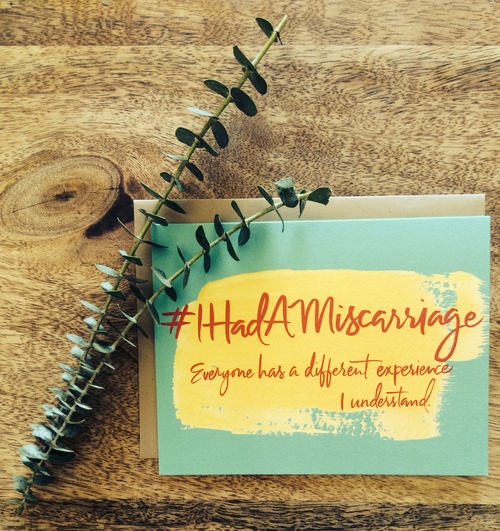
    She’s a clinical psychologist and writer who has made it her life’s mission to improve women’s reproductive and maternal mental health. She’s also been open about her own experiences, including her own tragic and traumatic miscarriage, which became the basis for the viral #ihadamiscarriage campaign.

    Now she’s created a line of pregnancy loss cards to bring comfort to women who have experienced miscarriage and stillbirth.

    Dr. Zucker told us, “After my 16-week miscarriage, I started writing about the politics and the pain of pregnancy loss. In 2014, I launched the #IHadAMiscarriage hashtag campaign with my first New York Times piece. In this essay, I revealed the details of my personal miscarriage story and investigated our culture’s hesitancy around talking about out of order losses and the subsequent grief.”

    IHadAMiscarriageShe kept writing about pregnancy loss and then partnered with a cartoonist to create illustrations.

    “The cards felt like a natural next step in working toward creating a culture that can more fluently discuss and navigate the complexity of the mourning process,” she said. “In my clinical practice, I too often hear women report feeling alienated, isolated, forgotten, and self-blaming after pregnancy loss.”

    Women told her that they felt that others wished they would disappear or get over the loss quickly. They felt that they were to blame or couldn’t grieve on their own terms.

    The response to the cards have been overwhelming. Dr Zucker said:

    “I’ve received countless emails from women around the world sharing their stories of heartbreak and hope. There was a gaping hole in the marketplace as well as in the cultural conversation that it seems these cards has begun to fill. More than anything, I wanted to provide a meaningful way for people to connect after loss, rather than recoil in silence. My hope is that the card sender as well as the griever experience a sense of connectivity, acknowledging that this important loss has occurred and that grief is different for everyone, knows no timeline, and is expectable. We can’t assume how people feel after pregnancy loss, but we can rest assured they don’t want to feel forgotten. These cards provide a way to demonstrate care.”

    Her cards are available online at her website and in select Los Angeles area stores.

    And thank you so much, Jessica. We are grateful for your honesty, compassion, and bravery.

    Please join all of us this week at The HerStories Project in breaking the silence and ending the stigma for mothers experiencing postpartum depression and other perinatal mood disorders. Learn more about our campaign to “Shatter the Myths” surrounding these conditions.

    finalMTTDgraphic1 (1)


    Keep reading