Ghosts Are Afraid of Mirrors: The Moment I Gave Up My Ghost For Good
Our October theme for HerStories Voices is fear. So many young woman today look to Hollywood and fashion runways for role models and develop unrealistic expectations of what it means to be beautiful. In the age of photo shop and flattering photo filters, I fear my daughter will measure herself against unrealistic portrayals, which can lead to dire consequences. This week’s essay, written by Gina Paulhus, paints a harrowing portrait of an eating disorder that shook me to my core. I’m so grateful that our author has recovered – and that she’s bravely shared her story for others.
—Allie
Ghosts Are Afraid of Mirrors: The Moment I Gave Up My Ghost For Good
It had been a lonely summer. I hadn’t seen any friends in a long time. In fact, I hadn’t made a friend in years. I was twenty-one, on break from university and suffering from chronic depression. I didn’t know what I wanted to do with my life. I didn’t even know if I wanted to be alive. I found myself engaging in bizarre behaviors that made little sense and were dangerous. And yet, I couldn’t stop these bizarre behaviors. I wasn’t sure that I even wanted to stop.
I was a gymnast, which was the one thing that tethered me to any sort of reality that summer. As much as I loved gymnastics, it was just one more place in my life that I was afraid I wouldn’t measure up. That I wouldn’t be accepted. That I wasn’t good enough. This fear drove me to create rules for myself that I would never imagine inflicting upon another person. This fear clouded my thinking and dictated my every waking move.
My coach closed our gymnastics club for three weeks each summer. This left me with an empty slate of time that was begging to be filled. For a depressed girl with too much time on her hands, it was destructive. I had an unreasonable goal to weigh less than 100 pounds, for no reason other than to see if it was possible. And maybe, just maybe, people would finally notice that something was wrong. I was terrified and excited about the prospect.
I decided to spend those precious weeks off by not eating any food for the entire twenty-one days. Seemed simple enough, except that I was bulimic. I’d left my days of the tidier eating disorder of anorexia behind. This was my sad reality and I was determined to make it work.
I rolled out of my bed on a steamy July morning. The sheets were tangled and sticky from the tossing and turning and nightmares that had transpired throughout the night. The breathtaking view of the river outside my window did little to alter my sullen mood. I was unsure as to what the day would entail, but like always, it would start with judgment time.
I kicked off my pajamas and went to the bathroom to pee to reduce any extraneous weight. Must. Reduce. Weight. I gingerly tapped my toe to the scale to trigger it on. The familiar grey letters jolted to life as I lightly stepped onto the heartless device that would dictate how I’d spend my entire day. I rationalized that the more carefully I stepped on the scale, the lesser the number it would register.
- 105.1.
This was no good. No good at all. I peered out the window to ensure I was alone. Mom’s car wasn’t there. Perfect. My weight always dropped after bingeing and purging, probably due to dehydration, but no matter. I was all about results. I proceeded to ransack the kitchen and binge on anything and everything I could find. The supplies were low on this particular day, which had a lot to do with my sinister habit. So I bolted to my car, with fistfuls of chewed up blueberry muffin in hand to keep me busy on the ride. I hit up a bunch of drive-thrus and binged for a couple more hours. I ate until my jaw throbbed and my stomach was stretched further than I’d ever stretched it before. I ate until I forgot everything else that hurt.
Now it was time to pay the price. I locked myself into the bathroom, even though I was home alone—you can never be too careful—and purged until I was sure I got everything out. This exhausting task was unpleasant to say the least, but the calm buzz and sense of completion I experienced afterward made it all worthwhile.
- 103.2.
This was simply not working for me. I was so sick of staying still. Nothing is worse than staying still. I was due back to gymnastics practice in less than a week. My goal was to be under 100 pounds, and I simply wasn’t going to accept this disappointing turn of events. Double digits or nothing. I was done playing games.
I threw on my sweatpants and a jacket, even though the temperature was 95 degrees. The hotter I could get, the lighter I’d be when I finished. I began jogging, with no particular destination in mind. Several hours later, my legs finally began to seize in protest and I hobbled back home.
- 101.0.
Ok, this had potential. I looked at myself in the bathroom mirror. From the front, I thought my stomach looked grotesque, in spite of the ribs poking through and the vacant space where my breasts used to be. I grabbed my handheld mirror to use it to check my appearance from the rear. When I saw myself from behind, however, I was shocked.
I observed bones protruding through areas that used to be smooth—more than I ever had before. I felt like I was looking at myself through an evil funhouse mirror at the carnival. Everything looked distorted and wrong. The most disturbing sight, however, was the back of my knee. My knee was now wider than my calf, and wider than my thigh.
My knee was the widest part of my leg.
At that moment, on that July day, I realized that I could not make my knee smaller, no matter what I did or didn’t eat. My bones were not going to get smaller. Something about the refusal of my body to transfer itself into what I wanted it to be served as a reality check. This reality check somehow managed to accomplish what so many loved ones and self-help books couldn’t. I realized I was striving to achieve an ideal appearance that wasn’t possible due to the God-given structure of my actual bones. If my bones were going to be steadfast, my options were limited.
The rear view vantage point provided me with another perspective that I was unable to see before. What I thought was my goal turned out to be a farce. I was chasing a house of cards—and for the first time I knew it. From that point on, I vowed to attempt to eat—to keep it down—and to exercise within reason and not with excess abandon. I vowed to become my best self—a self that might not be suited for the cover of a magazine, but a self that was my only option to fully live the life I had been given. I vowed to own my space in the world. For the first time, I accepted that some things in life just cannot be changed. This realization was both disappointing and freeing all at the same time.
My fear of gaining weight was briefly replaced with a fear of the unknown. How do I eat like a normal person? I ignored the worry and walked over to the toaster. I slid a slice of bread into it and pressed the lever. The second hand on the clock ticked incessantly. I had never felt this uncomfortable, this unnatural. I pulled the toast out and grabbed a knife and a stick of butter. I spread the butter on the toast, hands shaking, with steely resolve.
I sat down at the kitchen table and ate a piece of toast. I was twenty-one and hadn’t eaten toast since I was twelve. I savored the toast, and felt a sense of calm and peace wash over me. At the same time, I mourned the ending of a battle that existed only in my mind, with a prize that was nothing more than an illusion. I had been chasing something that was meaningless for so long, and I was tired. So very tired.
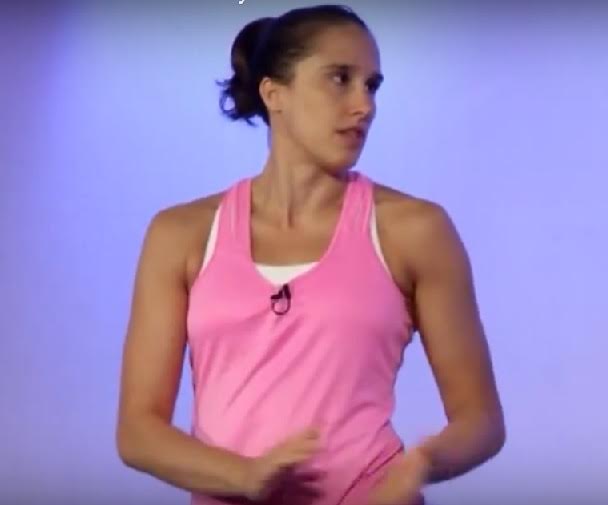 Gina Paulhus, CPT struggled with eating disorders for many years and has since recovered. She owns her own in home personal training company called ‘Home Bodies’ that services clients throughout New England. Gina holds a Bachelor’s degree from UMass Lowell in Psychology and Business. She volunteers with MentorConnect—When relationships replace eating disorders. She also writes for Recovery Warriors. She is passionate about helping people from all walks of life learn how to efficiently and holistically manage their health, both mental and physical. In her spare time she enjoys yoga and practicing and competing as an adult gymnast.
Find her on Twitter, Facebook, and Instagram.
**Allie is accepting submissions for our November Voices column– the theme is gratitude. See submission guidelines here, and email Allie at herstoriesvoices @ gmail.com.
**There are still a few more days to enter our book giveaway in honor of our two-year HerTake column anniversary! Read Nina’s post and enter here.
**Have you ordered your copy of So Glad They Told Me yet? Available in Kindle and paperback!
**Check out this amazing deal on blog course bundles! Limited time only– just through Tuesday!– so don’t miss out!