Month: May 2013

  • How Personality Type Affects Your Mothering Style
    Motherhood can be overwhelming and discouraging in many ways. We can be so consumed by our “mistakes” that we often lose sight of the things we are doing right with our children. As parents, I think it can be difficult to take a close look at our personal strengths and weaknesses; we are bombarded with choices from everything to our parenting philosophy (attachment, free-range, etc) to our schooling decisions (Montessori, public schools, homeschooling) to how we feed our baby (breastfeeding wars, anyone?). Sometimes we forget about the things we innately bring to the table as parents: our temperaments and our personalities.

    I have found it to be both fascinating and helpful to identify some of my most prominent traits, both positive and negative, and apply them to how I function as a parent. For example, I would describe myself in general as sensitive, passionate, affectionate, emotional,  communicative, and introspective.

    On the positive side of the spectrum, these qualities make me a nurturing, affectionate, joyful, self-aware parent who is quite effective at emotional processing and imparting knowledge.

    On the flip side, I am also moody, overreactive, overly sensitive, and selfish at times. This manifests by me losing my temper when I am frustrated, and becoming overstimulated by the chaos that occurs naturally with young children.

    I thrive when it comes to hugging, snuggling, and rocking my children. I am quick to kiss boo-boos, sing songs to my children, read with them, and share the wonder of experiencing life together. It is easy for me to connect emotionally with my daughters.
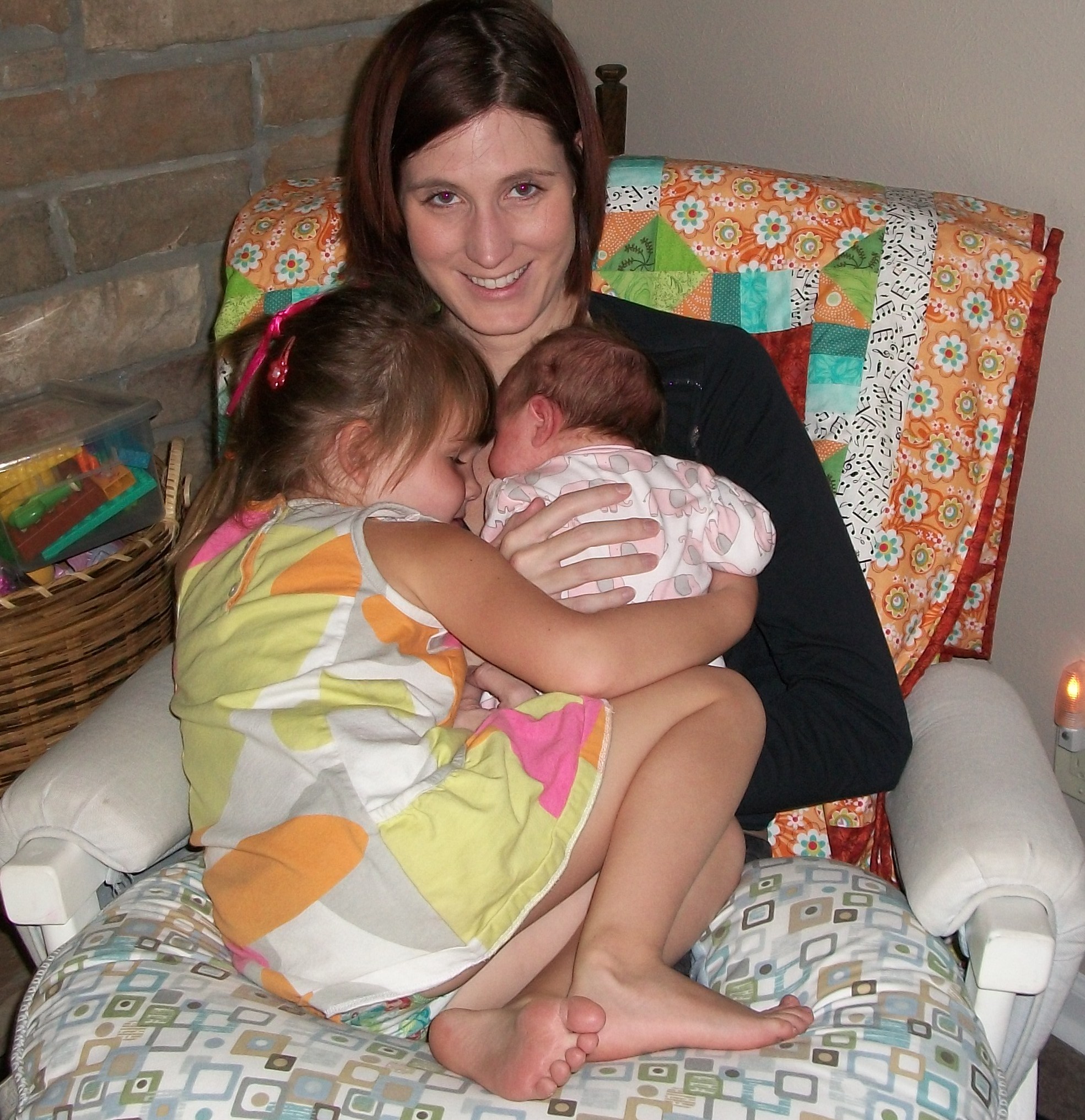
    100_1578However, I often struggle with the more physical aspects of parenting: wiping bottoms, learning over to put a squirming child in her carseat, chasing an uncooperative child: the constant bending, bending, bending overwhelms me. I am also uncomfortable with imaginative play.

    While reflecting on these observations is interesting, it didn’t really get me anywhere. Then I hit the jackpot. I found the book: MotherStyles: Using personality types to learn to parent from your strengths, by Janet P. Penley. This book employs a philosophy based on the Myers-Briggs Type Indicator personality inventory to help mothers understand how their personality type shapes their unique styles as parents. Penley writes,

    “According to many psychologists, we are happiest and feel most fulfilled when we are using our strengths. Understanding your personality type can help you identify your natural strengths as well as your personal path to success in mothering and in life.”

    Many of us are familiar with the Myers-Briggs assessment tool: There are 4 key areas that are determined, resulting in sixteen different categories:

    • Extraversion or Introversion (E/I)– where do you focus your attention and get your energy?
    • Sensing or Intuition (S/N)– what information do you attend to most?
    • Thinking or Feeling (T/F) – how do you make judgments/decisions?
    • Judging or Perceiving (J/P) ­– how do you like your outer world structured?

     If you haven’t ever taken the Myers-Briggs assessment, I highly recommend it. It is a fascinating process, and although there are many different factors that contribute to person’s overall nature, understanding our personality types can inspire a great deal of self-awareness. Visit the Myers-Briggs website for more information.  There are several quizzes online, including this one that describes how personality style affects your mothering style. The MotherStyles website has a very short quiz to assess your style, and provides some great insights.

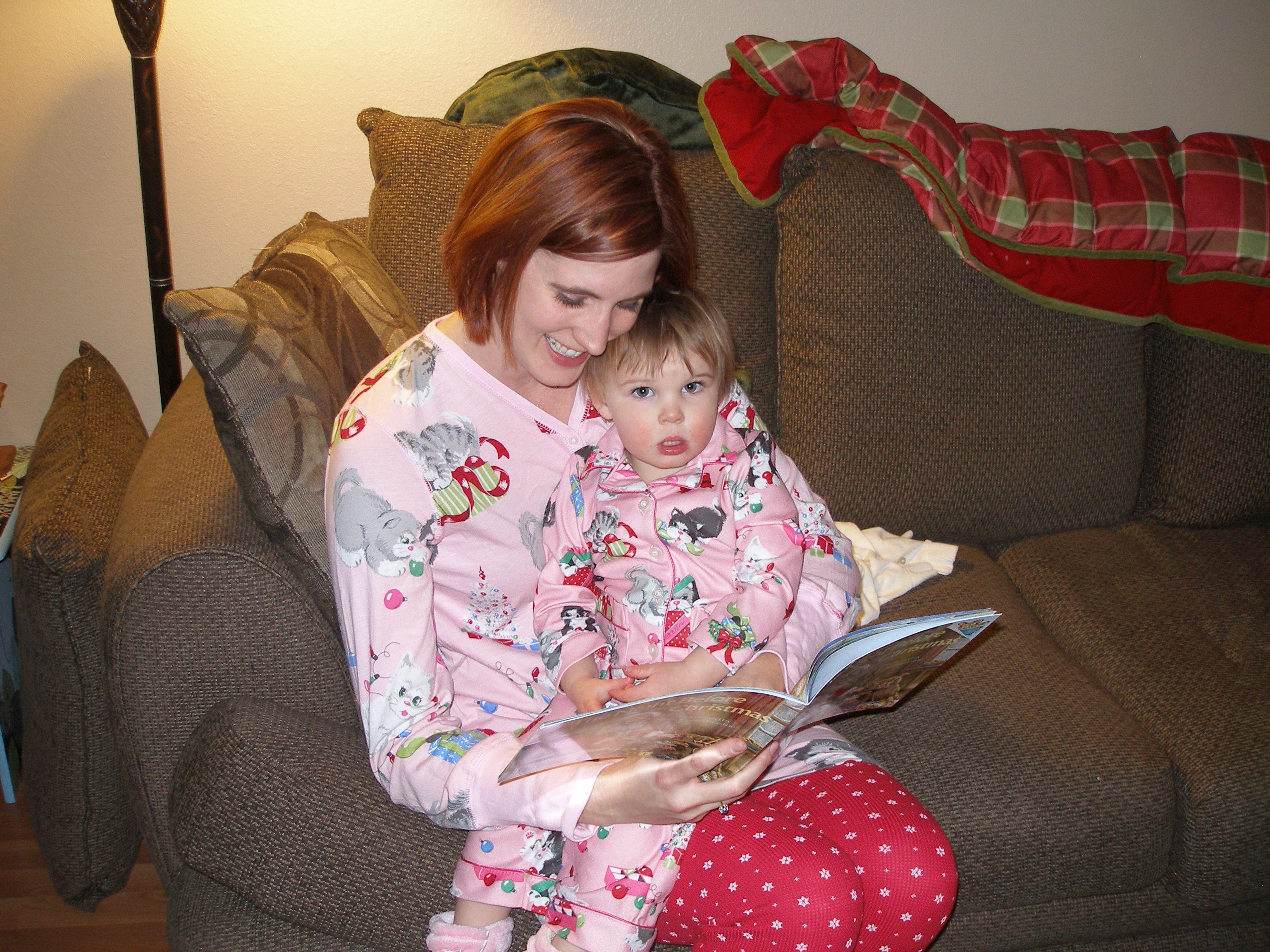
    I happen to be an ENFJ, which makes me extraverted, intuitive, feeling, and judging. Here is what MotherStyles has to say about my particular type as it pertains to mothering: ENFJ is the “Heart to Heart Mother.” Penley explains,” Expressive and warm, the ENFJ mother is adept at talking about personal concerns, both her children’s and her own.” Well, that pretty much hits the nail on the head!
    OLYMPUS DIGITAL CAMERA

    She goes on to specify that these mothers are skilled at initiating heart-to-heart conversations with their children, providing an open forum for articulating feelings, and nurturing through affirmation, praise and encouragement.  It was both comforting and validating to hear my positive qualities summarized so concisely, but is was equally helpful to read the struggles that mothers of this type encounter.

    ENFJ moms often feel guilt when choosing between people and getting things done. They have difficulty backing off, and sometimes worry about being overbearing. ENFJ mothers may struggle with objectivity due to their own sensitivities to their children’s pain. Because she is emotionally expressive, she may fly off the handle. Suffice it to say, this assessment definitely resonated with me!

    I found it extremely helpful that in addition to discussing the strengths and struggles of each type, Penley offers some tips in the chapter of each specific type. For example, she comments that humor can be helpful to balance the natural intensity of the ENFJ mom. She also noted that this personality type benefits from daily peace and quiet to re-energize. Take that, mommy guilt!

    I also found it interesting to read about the personality types that are in direct contrast to mine. For example the ISTP type is known as the “Give ‘em Their Space” Mother, excelling at respecting a child’s privacy but struggling with providing emotional support. Definitely not my style. The ESTP mom is described by Penley as “active and spontaneous, the ESTP mother can turn ordinary life into a fun-filled adventure.” Hmm. Not so much.

    Other types are summarized as “The Giving” Mother- ISFP– who is a people pleaser above all else; The “Totally There” Mother- ESFP– who likes to give her children an immediate response; The “Happy Together” Mother- ESFJ– who thrives on the whole family being happy together; The “Responsibility” Mother- ISFJ– who has a serious love affair with her to- do list.

    Do you recognize yourself in any of these types? Keep in mind, there are 16 unique types, and many of us may recognize ourselves in several of them. Taking the Myers-Briggs personality inventory, or even the short quiz provided in the book,  is a fantastic way to get a feel for where you may fall on the spectrum.

    So what is the value of learning more about our personality types and mothering styles? When Janet Penely experienced her “aha” moment that began her journey to creating this book, she describes,

    “I had to reclaim myself in my mothering. It was time to stop turning outward for answers and start tuning in to who I was as a person. Right or wrong, I had to muster the courage to raise my children in my own very personal and human way.”

    She also mentions the fact that mothers are bombarded with information from well-meaning experts, instructing us with the supposed “right” way to parent. She asserts that moms need less advice and more support to find their own way, incorporating their own strengths and values. The Myers-Briggs assessment refers to our type “preferences” and “nonpreferences”, and Penley explains,

    “Consistently overusing our nonpreferences makes mothering difficult and draining.”

    One of my favorite sections of this book is the discussion on family dynamics; Penley breaks down how your type may interact with your spouse’s type, as well has how your type combines with those of your children. She discusses that mothers may connect more easily with one child, and clash with another, due to personality type differences. She also breaks down differences in preference between parents, and focuses in depth on how specific personality types interact within a marriage. I especially enjoyed the “My Husband Is My Opposite Type!” section.

    I found this book to be engaging, (I couldn’t put it down!) intriguing, (being a person who enjoys analyzing myself and others) and practical (filled with helpful tips and insights to apply to family life). Penley shares that her hope for readers is that they will learn to trust their strengths, gain confidence, be more accepting of their struggles, understand differences and minimize conflict with a spouse or child who has a different type, and strengthen family relationships. You can buy the book on Amazon here or visit the MotherStyles website for more information.


    So….what type are you?

    Enhanced by Zemanta

    Keep reading

  • The Goats: A “Herd” Story of Friendship

    Our essay today comes from Kelly of My Soulful Home.  Have you ever belonged to a group of friends who encouraged you to try new things and take on new adventures that you would never do on your own?

    Freedom is the word I keep coming back to when thinking of my very special group of friends, the Goats.  The freedom to be adventurous; freedom to be exactly who we are; and freedom to laugh until it hurts.  We give each other those freedoms and so much more.

    DSC02430
    Mount Whitney

    The Goats are a group of moms, some of whom did not even know each other when we got together four years ago to climb Mount Whitney.  The climb was incidental to the experience, but by way of background Mt. Whitney is the tallest mountain in the contiguous United States.  None, except one, had ever climbed a mountain before September 17th 2009, but that is not the story.

    The story is the deep bond that was formed.  We started out as seven women and came down that steep mountain 17 hours later as a “herd”.  We have never looked back.

    The invitation to climb a mountain from a woman I knew only casually came out of nowhere.  As did the name “the Goats”.  It is not as if we were looking for a name.  While it all seemed random, the group, the climb, the name now I know it was destiny at work.

    DSC02454There is simply no way that this group just came together by happenstance.  This sounds kooky, but I believe we were destined to be brought together.  Nothing else in my mind can explain the indefinable, yet discernable dynamic that is evident even to other people.  Many have asked to join the group (ie herd), but you just can’t join.  It is not like that.

    In between mothering, marriage, car pools, volunteering and all the other domestic duties, the Goats have managed to not only climb Mt. Whitney, but also scale Half Dome, traverse the Grand Canyon (in one day because we had to be back for soccer), complete a triathlon and many lesser adventures in between.

    The in between is often the best part, as there is always a birthday to celebrate, white elephant gift exchange to laugh through, a show case house to tour and really any excuse to get together.

    With families, responsibilities, bills, laundry and all that, having the opportunity to leave our comfort zone by ourselves is rare.  As a ‘herd’ we do things we would never even think of doing.  The group energy is powerful, and we really feel we can do anything together.

    IMG_0507At a stage when life becomes predictable, friendships take a backseat and laughing so hard it hurts doesn’t happen all that often, I have found adventure, acceptance and side splitting silliness. The Goats have enhanced my life in so many ways.  I know they each have my back on the trail and off, and I have theirs.


    me-150x150Donning rose colored glasses while sipping from a glass 1/2 full of lemonade, Kelly navigates marriage, motherhood and the world at large.   Formerly an attorney, she is presently an Esty entrepreneur and new blogger always noodling on creative pursuits.  Kelly is a hunter & gatherer of all things vintage, rusty, charming & imperfectly divine.  Her home is her ‘castle’, and she relishes the time spent in it and working on it.  Never without a project in  mind, she seeks to create a home reflective of her heart, mind & soul & that of her family. Her website is My Soulful Home.

    Keep reading

  • Reassessing Happiness Research: Are New Parents Really That Miserable?

    Welcome to the Carnival of Evidence-Based Parenting!   Our second carnival topic is New Parenthood. 

    A couple weeks after my son was born, new parenthood became an overwhelming reality for my husband and me.  Both sets of our parents had returned to their homes.  We were alone with a screaming infant who demanded constant feeding, changing, and burping.  The effects of endless sleep deprivation were starting to hit us.  Neither of us showered, ate properly, cooked, or was able to keep our clothes clean for more than five minutes.  Laundry piled up.  We argued constantly, nearly delirious with fatigue, our arguments illogical and fierce.

    A dear friend of mine from my university came over to our apartment one Friday after work.  She took one look at us — the bags under our eyes, our dirty clothes — and our apartment and its explosion of baby paraphernalia.

    “Wow, this place really has that ‘new parent’ glow,” she said sarcastically.  She stayed just long enough to hear a few minutes of my son’s nightly scream fest that began around 7 p.m.  And then left in her cute, sporty car to watch movies, drink wine, read thick novels, and sleep in until 10 a.m. all weekend.

    As I watched my unmarried, childless friend drive away, I sat by the window, weepy, and pleaded for her to hear my unspoken thoughts, Take me with you.  Please.  I want my old life back.  I was once like you.

    But those thoughts disappeared within the same hour as I watched my beautiful, perfect baby sleep, swaddled and content in his bassinet.  I felt happier than I had been in my life.

    My newborn son and me
    My newborn son and me

    Was this time — and the early years of parenting — going to be the most joyous of my life?  Or would new parenthood — my son just turned two — made me miserable?  What is “happiness” in the first place for new parents?  And how in the world do you measure it — and the love, joy, frustration, and fear that goes along with the chubby baby cheeks, the sweet baby smell, and the cooing?

    Anyone with even a casual acquaintance with the research on parental happiness should not be blamed for being confused.  For years it’s been conventional wisdom in the media and in academia that parents are unhappier than non-parents.  The media establishment, such as the widely dissected New York magazine article “Why Parents Hate Parenting,” frequently reports on the disastrous accounts of parenting on marital satisfaction, mental health, and life satisfaction.

    By the time my son was born I had read enough of these doomsday articles to prepare myself mentally for the fact that parenthood would probably make me a bit anxious, depressed, stressed, exhausted, and, well, unhappy a lot of the time.  This would be the lowest point of my marriage.  I would weep a lot.  I got it.  Message received.  Parenthood sucks a lot of the time.

    But would I really be that unhappy?

    It turns out there have been some serious flaws in previous parenting research on satisfaction and happiness.  One of the most widely cited articles on parental misery is a 2004 article by economist Daniel Kahneman and his colleagues.  They surveyed more than 900 working women in Texas, asking them to reconstruct the previous day’s activities  and to describe their levels of happiness during each activity.  Not surprisingly to anyone who has taken care of small children for hours at a time, child-care associated tasks did not get described as the most fun.  (In fact, child care was rated lower than vacuuming.  Is anyone surprised that parents were having less fun changing diapers than watching TV?)

    What’s wrong with this study, and others like it that have been used to describe children as parasites of life satisfaction, gradually sucking the joy from our lives?

    First, most of these studies did not directly compare parents to non-parents; rather, these studies would control for many complex demographic factors, often using sample data that was many decades old.  For instance, many older studies did not account for how parenting satisfaction changes during each stage of parenting, from the newborn years to late adolescence and early adulthood.

    Recent articles actually report on combined series of studies that use complementary methodological approaches to “triangulate” the data to better capture how parenting affects different groups of parents, the individual experience of one parent or family, and variations in perceptions across the lifespan.

    Here are a few findings from that research that complicate the “parenthood is misery” picture:

    1.  The “happiness” of new parents actually spikes in the months before the birth of a child — as new parents wait, prepare and get excited — and then drops precipitously in the first year.  Thus, comparing the happiness levels of parents pre-baby and post-baby is not a valid measure.

    2.  Older parents — particularly in their 40s and beyond — are actually quite happy.  People who become parents at young ages have lower levels of satisfaction than older parents.  This finding is thought to be associated with greater levels of socioeconomic security and emotional support.

    3.  Parents may feel differently after the birth of additional children.  They report being happiest after the birth of the first child, slightly less happy after the second, and then describe no changes in happiness after the third child.

    4.  Parents overall are happier than their socioeconomically paired peers with no children.

    5.  Parenthood is best of all for dads Fathers are happier than mothers, expressing higher levels of positive emotions and happiness than mothers, whose happiness presumably could be tempered by the biological changes of new motherhood and the increased responsibility in caretaking that women generally take on, compared to men.

    For me, looking through this research, I’m more bewildered than ever.  I’m not actually sure if this is an area where research studies can ever adequately ever capture the full range of experience and complexity of factors that impact a parent’s feelings about parenthood — or how that experience of parenting interacts with other areas of one’s life.

    Parenting is hard, really hard.  It can give your life tremendous meaning and joy but also drain you like nothing else.  Let the researchers figure out the appropriate statistical modeling, but I want to say to new parents, you are not doomed to decades of toil, boredom, and misery.   Life — with children, without them — is just so much more complicated than that.  Maybe philosophers can provide us with better answers.

    Has parenthood made your happier?  Why or why not? 

    If you’re a new mom, we’d love to find out more about your experience.  We invite you to take our new motherhood survey and tell us about how parenthood changed you.

    atomblocks2b copy


    Here’s a quick list of our contributors for  this second edition of the Carnival of Evidence-Based Parenting:

    The Transition to New Motherhood (Momma, PhD)

    Bonding in Early Motherhood:  When Angels Don’t Sing and the Earth Doesn’t Stand Still (Red Wine and Applesauce)

    The Connection Between Poor Labour, Analgesia, and PTSD (The Adequate Mother)

    For Love or Money:  What Makes Men Ready for New Fatherhood (Matt Shipman)

    What the Science Says (and Doesn’t Say) About Breastfeeding Issues, Postpartum Adjustment, and Bonding (Fearless Formula Feeder)

    No, Swaddling  Will Not Kill Your Baby (Melinda Wenner Moyer,  Slate)

    Sleep Deprivation:  The Dark Side of Parenting (Science of Mom)

    The Parenting Media and You (Momma Data)

    Reassessing Happiness Research:  Are New Parents Really That Miserable? (Jessica Smock)

    40 Long Days and Nights (Six Forty Nine)


    You can also “like” the Carnival of Evidence-Based Parenting on Facebook.  Check out our Facebook page, and connect with all of us there!


    Enhanced by Zemanta

    Keep reading

  • Ping!: How Social Media Saved My Friendship

    We’re so delighted to include a friendship essay from Allison of Go Dansker Mom.  She writes about why friendships can actually flourish with the help of social media.  When new mothers have little time to sustain old and new friendships, social media can help us keep connections with those we care about.  Have you ever had a friendship thrive or reignite online?

    Here’s Allison:

    I don’t keep friends well. 

    I am a stubborn, loyal Scorpio who hates loss and distance but I’m also not the type of person who keeps a close-knit group of friends for life. (I never was in a sorority for a reason.). 

    I am not sure why I have this flaw.  Maybe it is because I was a military brat through elementary school; maybe it is because I went to three different high schools and three different colleges; maybe it is because I really, truly love meeting new people and get excited to hear new stories; maybe it is my sense of adventure that causes me to move on too fast; maybe it is because I hate feeling like a friend is clinging to me or too needy. (I’ll just let you down, I am sure.).  Whatever the reason (to be discovered only by means of a psychologist’s couch, I am sure), I never wore half of a BFF heart necklace.

    I get caught up in this fact sometimes, and it brings out the ugly in me: jealousy, a little depression, and a lot of self-doubt.  Why don’t I have a group of five friends I sit around a coffee shop with all the time, or a gang of four friends I always meet at a small bar in NYC?

    Yet inevitably when I start to get this way I immediately get a “PING” and a GChat message from the one person who can rescue me from the dark thoughts: Kathy.

    Kathy and I met in elementary school.  In middle school, my parents had me follow my brother and moved me to a local Catholic school to finish out 7th and 8th grade.  In 9th grade I moved back in to the public high school system and I remember reconnecting with Kathy.  We shared the same wild and crazy English teacher.

    When I moved to a different state in 10th grade, Kathy and I kept in touch.  We WROTE LETTERS.  Gasp.  We wrote long letters, sent pictures, sent cards… I have a terrible memory and honestly don’t remember much — that’s why I blog now, it helps me remember — so honestly couldn’t say if Kathy and I were soul sisters when we lived a few miles apart.  But I do know that over the course of a pen pal relationship I confided in her things I didn’t tell others.  Something about the distance of paper, knowing that the words could not provoke an immediate reaction I might not want to see, made me feel safe.  And Lord knows, in the teenage times everyone needs a place to feel safe.

    Over the years she grew to know more about me than any one.  When the digital age made it even easier to connect (remember AOL IM?) we realized that we had even more in common: celebrity snark, online shopping, and career aspirations.

    Then we both had kids.  We had babies relatively close in age to each other.  Before pregnancy both of us confided in each other our fears, hopes, concerns, and worries.  Would pregnancy change us?  What about losing control of our bodies?  The Fashion – Lord, the fashion!  Were our husbands ready for this? 

    But we both jumped, holding each other’s hands in a virtual way.

    Then at the next fork in the road we went in drastically different directions: I decided to stay at home, she decided to stay at work.  I have seen this be divisive in many friendships, creating considerable coolness between once close friends.  After all, working moms and stay at home moms have different concerns, issues, and problems facing them.  Not one is more difficult than the other, they are just so, well, different.

    kd photob&wYet Kathy and I have made it.  Sure, we tend to talk past each other a little at times – me frazzled and just wanting to take a shower, her frustrated that she doesn’t get more support trying to do it all – but we are there for each other all the way.

    I wish I could share our tips with all the mothers out there: how to keep a friendship alive through the very different choices of motherhood.  But I don’t know why we work.  I think it has to do with our deep history.  I think it has to do with our personalities. (We have an ongoing joke that I am like her husband and she is like mine so we clearly know how to handle each other).  I also think it has to do with the fact that we have never been the sort of friends that get together all the time, vacation together, or talk on the phone.  Our friendship grew out of written forms of communication and those forms keep it alive today.  Accordingly, the fact that neither of us has time to talk on the phone at night changes nothing at all.  It isn’t a missed ritual because it was never an expectation to begin with.

    Some day Kathy and I are going to girls’ trip; we always have fun when we are together.  Her humorous sarcasm, honesty, and ability to put down a good margarita make me love her company all the time.  But we know how to maintain our friendship until all the pregnancies, baby birthing, breast feeding, and toddler-demands are finished.  Then it’s Chicago Or Bust.  I do know that until then I will always be hooked in to my social media platforms, waiting for that daily “PING.”

    Allison Carter 11-2012edit

    Allison is a freelance writer who maintains numerous website but talks most freely at Go Dansker Mom (godanskermom.com).  She is a SAHM living the good life amongst all boys and loves to share the laughter, struggles, and love.


    If you haven’t taken our HerStories new motherhood survey, we’d appreciate it so much you’d take a few minutes to take it now. And share it with your friends!  Also, if you have your own story of friendship or new motherhood, we’d love to hear from you!  E-mail them to us at herstoriesfriendshiptales at gmail. 

    Keep reading

  • A Mother’s Day Tale: Get Mom a Blog

    Last year, on Mother’s Day, I temporarily lost mind mind but learned an important lesson about what I needed to be a good parent: connection and support.

    I have a guest post this weekend over at the Broad Side, one of my favorite sites.

    Mother’s Day should be about more than flowers and cards.  It can be a time when mothers are acknowledged by their families and always have a few minutes to reflect on their own lives.

    Was there ever a time when you realized that things needed to change for you?

    We’d love to hear about your most memorable Mother’s Days!

    Check out my piece: “Give the Flowers and Give Mommy a Blog


    Enhanced by Zemanta

    Keep reading

  • Introducing Our First HerStories Expert: Patience Bleskan, Child Development Specialist and Parenting Coach

    We are thrilled to begin introducing our panel of experts, starting with sleep expert and parenting coach Patience Bleskan.  Patience currently practices in the Denver metro area as a doula, parenting coach, educator, and group facilitator. Visit her website to learn more about her work.

    As the mother of 4, Patience Bleskan supports mothers with both the personal and professional perspective. She has had her own experiences with postpartum depression, loss of community, and balancing a career with raising a family. These experiences and her passion for helping others understand children is what drives her life.

    Stephanie has attended Patience’s sleep support group in the past, and was extremely impressed by her skills as both a sleep expert and a group facilitator. She had the opportunity to ask Patience some questions about her perspective on new motherhood, finding support, and the power of women gathering together in a group. Read her responses:

    The HerStories Project:  What do you perceive as the biggest challenges and most significant areas of need for new mothers?

    Patience Bleskan:  During pregnancy, women start to build and create an image of themselves as a mother. We create pictures in our head of what being a parent will look like, and feel like. We create birth plans, learn to change diapers and how to swaddle. No one ever pictures that motherhood will look like the entire family crying at 2 am exhausted and wondering if it is possible to just run away. The disconnect of the image we created before baby arrived and the reality of the daily grind with a newborn throws us for a major loop-de-loop.

    Expecting women need to be taught realistic expectation before baby arrives. The image they have of mother will happen, when baby is closer to a year old.

     The HerStories Project:  How does sleep deprivation affect new mothers?

    Patience Bleskan:  The simple answer is that sleep deprivation is one of the key factors leading to postpartum depression.

    The more complex answer is that sleep deprivation is an interesting phenomenon in America. We don’t value sleep as a culture, it is just something we squeeze in. There is almost a badge of honor that comes with being so busy you don’t have to get a good nights sleep. When baby arrives, getting things done is still a greater priority then sleep for ourselves. So in the first weeks we do, do, do and then crash.

    Taking naps in the middle of the day, leaving dishes and laundry undone does not fit in with the supermom image. Lack of sleep wears us down until we only feel like a shadow of who we were before.


    THSP:  What do you think women gain from attending sleep support group?

    PB:  Sleep group is a place where women can come and be honest about how sleep is going. Tears happen often in group as a new mom is able, for the first time, to really admit how tired she is. There is so much pressure from our doctors, mothers, and even strangers to have a baby who sleeps well. This creates growing anxiety for new moms. At group women get to be reassured their baby is normal and the way they feel is normal. They also leave with more information on sleep and how to make changes if they need to, but that is secondary.

    THSP:  Please share any observations you have about the power of women gathering together with other women who have similar needs and circumstances.

    PB:  My favorite moments in group are when the mothers share their experiences with each other. I often say parenting was never meant to be a solo sport. When mothers gather together we create the environment where women and children flourish. A mom in sleep group for the first time relaxes at a deeper level when another mother says, “I was there and it gets better.”

    Play group is one place where parents and children get to come and just be together. We can share about anything from our crazy parents taking too many birthday pictures, to how did you camp with your infant. The families are all in the same place developmentally.

    It makes a huge difference in the well being of the mother to see others dealing with what she is dealing with.


    THSP:  We are interested in how the changing needs of the baby over the first 12-18 months affect the mother, as baby’s patterns evolve and the haze of the first few months wears off. What kinds of support does a mother typically need after the baby’s first 6-12 months? How does a baby’s changing sleep needs after the first 6-12 months typically affect a mother, in your experience?

    PB:  I don’t think the mother’s need changes after the first 6-12 months. The challenges are just different. As baby gets older parents often struggle with how to balance their own needs with the needs of the infants. Since the child is not as all consuming, parents can struggle to know what they should expect their child to do. Going back to work and balancing the desire to work with the desire to be at home creates guilt all the way around. You can’t work the way you use to, and you are missing time with your child. It can feel like a lose, lose. If you are staying home it can feel secluded, and not valued. You can feel you are not contributing enough. Another struggle that comes in during this time is the relationship between the parents. It is often pushed to the side when baby is so little and demanding.

    Now that baby is older you have to redefine your relationship not just as a couple, but as co-parents. This is can be very difficult. Having your community and support in this aspect can be critical.

    Baby’s needs change very quickly and dramatically over the first 12-18 months. They go from completely dependent beings to moving communicating humans. Every new development with baby brings up yet another curve for the first time parents to navigate. This is why being in community with others is so important. Seeing and hear other mothers and children navigate the development of new skills creates an understanding of what is typical behavior and what needs to be taught or learned.

    For sleep, the 12-18 month time is usually when sleep starts to become more stable. This can be a good time for the mother whose child is now sleeping a good one nap a day, going to bed and sleeping most of the night. For the child who is still waking often it can feel disheartening. After the first birthday the brain is much more ready to regulate sleep like an adult does, which means changes can usually improves sleep very quickly. We often hide other issues behind our baby’s sleeping patterns. If baby is still co-sleeping or waking, we can avoid confronting our relationship issues that have developed since baby arrived.

    We are so happy to have Patience as part of The HerStories Project! We will continue to introduce our experts each week- stay tuned!

     And don’t forget to take our HerStories Project New Motherhood survey!

    Patience Bleskan spent the majority of her life learning to better understand how children learn, and how adults, teachers and parents, affect who children become. As a toddler she walked around nursing her baby dolls and in high school her final term paper discussed how parents can teach children to make good choices.

    As she went out into the world her choice of work was easily made as she became a preschool teacher. Patience continued to work with young children as a teacher while she received her Bachelors Degree in Psychology from the Metropolitan State College of Denver. She wasted no time before continuing her formal education with a Masters degree in Early Childhood Educational Psychology from the University of Colorado.

    While Patience learned a great deal about children and the many theories of development during her schooling, her study of the Reggio Philosophy of Early Childhood Education made the biggest impact in her professional life. The schools in Reggio Emilia, Italy have become the benchmark for high quality education for young children. Patience has attended numerous conferences on the Reggio Approach and was able to study directly with Carla Rinaldi from Reggio in 2002.

    After teaching preschool for seven years, Patience Bleskan founded her Parent Education and Coaching Business in 2004. The work began with classes for parents, but has grown to include groups, consulting, preschool training, keynote speaking and doula work. She has now worked with hundreds families from all over the country.


    Enhanced by Zemanta

    Keep reading